Quick Answer
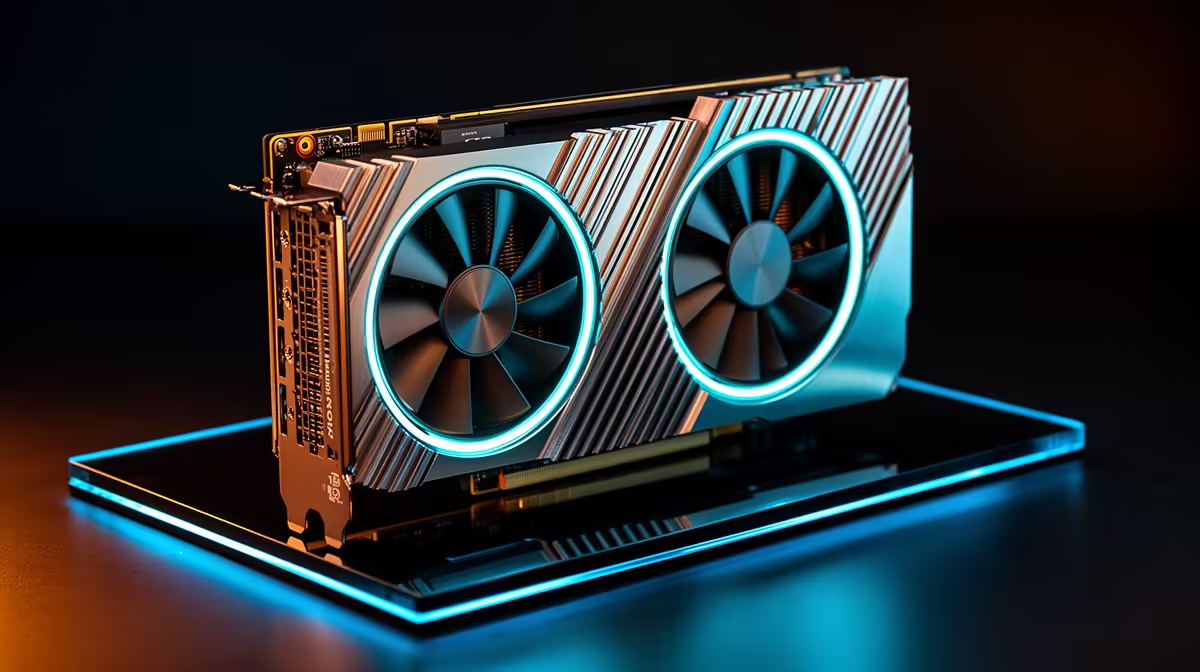
For console gamers moving to PC, paying attention to a graphics card's power draw is worth it when you are sizing your PSU and electricity use, or building compact. A mid-range GPU near R7,000 to R12,000 with sensible power draw often gives the best performance per watt and a simpler, cheaper PSU pairing.
Why Power Draw Matters
Unlike a fixed console, a PC GPU's power draw decides what PSU you need and how much heat and noise the system makes. A card with high power draw demands a bigger, pricier PSU and more cooling. Understanding draw helps you build a balanced, cost-effective rig rather than over-spending on the power side.
When to Prioritise Efficiency
Pay attention to power draw if you have a modest PSU, a compact case, or care about running costs and noise. An efficient mid-range card delivers excellent frame rates per watt, pairs with a sensible 650W unit, and keeps the system cool and quiet, ideal for a first build coming from console simplicity.
Balancing Power and Performance
A flagship card draws far more and needs an 850W+ PSU and serious cooling, justified only if you want top-tier performance. For most console converts, a mid-range card's lower draw means a cheaper PSU, less heat and lower bills, with frame rates that already crush the old console.
FAQ
Why does GPU power draw matter on PC?
It decides your PSU size, heat output and running costs, unlike a fixed console. A card with sensible draw needs a smaller, cheaper PSU and produces less heat and noise.
What PSU pairs with a mid-range GPU?
A quality 650W 80+ Gold unit suits most efficient mid-range cards with headroom. Higher-draw flagship cards push toward 850W or more, which adds cost and heat.
Is an efficient card worth it for a first PC?
Yes. Good performance per watt means a cheaper PSU, less heat and lower bills, while still delivering frame rates that far exceed any console. It is an easy win for new builders.