


1000W PSU Planning for RTX 5090 Builds in SA
1000W for RTX 5090 needs a full-build check, not a simple yes. Review GPU guidance, CPU draw, transient load, connectors, PSU quality, and upgrade plans before deciding.
Read moreA power cut mid-update can corrupt the files being written, leaving Windows unable to boot cleanly, and can trigger an unexpected BitLocker recovery key prompt if the boot chain flags as tampered. A UPS covering the update window, sold at Evetech, avoids both.
Power loss during an update can leave incomplete system files, boot records, firmware or application data. The PC may recover on the next start, roll back, enter repair or fail to boot.
Do not interrupt the first recovery attempt. Use official recovery guidance and keep the device's drive-encryption recovery key available before updates.
Wait while Windows or the device finishes automatic repair or rollback. Repeatedly cutting power can worsen an incomplete process.
Photograph the error code for your own support record. Do not post recovery keys or account details.
If BitLocker asks for a key, retrieve it through the secure account or organisation route that holds it.
Try the operating system's supported startup repair, update removal or restore path. Use official installation media only when required.
Back up accessible files before a reinstall. Keep a component and storage record.
Firmware interruption can require device or motherboard-specific service. Do not flash random files.
Keep each step reversible while the data still matters. Startup repair and a supported update rollback come before wiping the drive. If the machine reaches Safe Mode, copy irreplaceable work to secure storage before experimenting with drivers or cleanup tools. An organisation-managed PC belongs with its IT team because encryption, recovery media and device policy may be centrally controlled.
If the screen stays blank, separate a failed boot from a failed display. Check the normal status lights, diagnostic code and monitor input without dismantling the system. Repeated forced starts can turn one clear symptom into several confusing ones.
Run updates on stable supply with a healthy UPS sized for PC and required screen. The UPS needs enough time for shutdown, but some updates cannot be safely cancelled once writing begins.
Avoid starting a major firmware update when the supply is unstable or the battery is low.
Connect the PC, required display and network device according to the UPS output limits. Then test the supported shutdown action before trusting it. A communication cable without working shutdown software will not close applications for you, and a healthy battery can still be undersized for the update load.
Laptop firmware updates deserve the same care. Keep the charger connected, begin with a healthy internal battery and follow the maker's instructions. Do not close the lid or unplug a dock when the update screen says to wait.
If the PC PSU was damaged during the event, compare Corsair PSU models and current PSU best sellers only after assessment.
Store encryption keys, official installation media and secure backups away from the PC. Test that the backup opens.
Record the edition and device model. A recovery plan built after failure starts too late.
For a custom desktop, save the motherboard model, current firmware version and storage layout. For a work machine, record the approved support contact. Keep those notes with the recovery media rather than on the PC that may refuse to start.
Once recovery succeeds, check update history, system health and recent backups before returning to normal work. A booting desktop can still have an incomplete application update or damaged user file.
No. It can recover or roll back, depending on what was being written.
The boot environment may have changed or failed validation. Use the authorised recovery-key route.
No, unless there is a safety hazard or official support directs it. Let the supported process finish.
Keep encryption keys and backups ready, run updates on stable protected power, and follow the official recovery ladder after an interrupted write.
No. It can recover or roll back, depending on what was being written.
The boot environment may have changed or failed validation. Use the authorised recovery-key route.
No, unless there is a safety hazard or official support directs it. Let the supported process finish. {{PRODUCTS: { facets: { query: "power supply" }, limit: 12, title: "Power Backup for PCs", style: "4" } }}
1000W for RTX 5090 needs a full-build check, not a simple yes. Review GPU guidance, CPU draw, transient load, connectors, PSU quality, and upgrade plans before deciding.
Read more
RTX 5080 Super with a 750W PSU is more comfortable than lower wattage if the unit is quality. SA builders should still confirm GPU guidance, CPU draw, connector type, airflow, and upgrade room.
Read more
How to fix FPS drops after a RX 9070 XT starts with driver cleanup, chipset updates, thermals, and power checks. For SA gaming PCs, confirm PCIe seating, monitor refresh, frame caps, and per-game graphics settings before replacing parts.
Read more
How to fix low FPS Windows 11 Wi-Fi 7 issues starts by checking whether the problem is frame rate or network lag. Test ping, drivers, power settings, Ethernet, and game FPS before adjusting visuals.
Read more
AM5 is smart for SA builders because it supports newer Ryzen CPUs, DDR5 memory, and a longer upgrade path. Compare board cost, cooling, gaming needs, and local part availability before choosing your next PC platform.
Read more
AM5 gives Randburg gaming builders a longer upgrade path. For SA buyers, DDR5 support, newer board features, and future CPU options can justify the platform. Weigh board cost, cooler support, BIOS maturity, and upgrade timing before choosing.
Read more
RTX 5090 on a 550W PSU leaves almost no practical room for OC plans. Treat the setup as constrained, with CPU draw, power spikes, cable quality, thermals, and stability checks more important than chasing extra clocks.
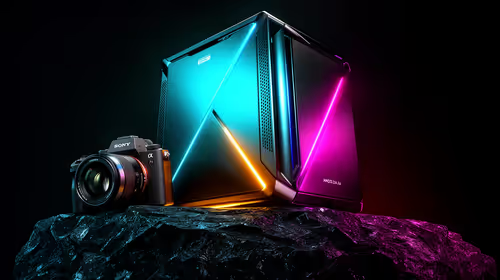
FPS drops on a Ryzen 9 9950X3D build often have a fixable cause. Check settings, drivers, thermals, background tasks, network conditions, and bottlenecks before assuming a part must be replaced.

The difference between PCIe 5.0 and PCIe 4.0 for SA gamers is mostly bandwidth headroom. Compare GPU slot needs, NVMe speed, motherboard support, and upgrade timing before paying extra for a newer platform.

Gaming PC stuck pixel checks in South Africa should confirm the monitor fault first. Use colour tests, screenshot comparison, cable swaps, display menu checks, and clear photos before deciding on support.

AMD's current driver now lists a Radeon RX 9050 4GB, while product coverage details a narrowed memory system. SA buyers should weigh the low VRAM ceiling against current local Radeon options.

Samsung Display has demonstrated a 16-inch 2.5K OLED laptop panel running at 300Hz. SA buyers should wait for a named notebook, full panel specifications and a local price before planning an upgrade.

Microsoft says some Windows 11 game crashes after recent updates are linked to RGB-related drivers. Affected SA gamers should confirm the update and driver before using the published registry workaround.
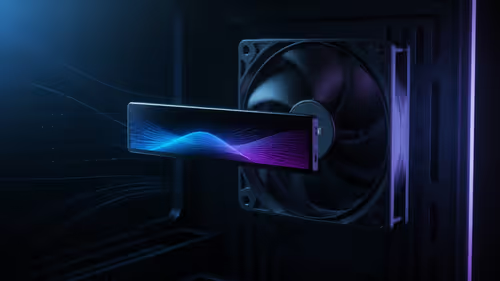
Thermalright's Fan Frame Vision-1 adds a 640x172 status screen to a standard 120mm fan. SA builders should check clearance, USB routing and local support before treating it as an easy upgrade.
1000W for RTX 5090 needs a full-build check, not a simple yes. Review GPU guidance, CPU draw, transient load, connectors, PSU quality, and upgrade plans before deciding.

Wi-Fi 6E vs Wi-Fi 6 matters for 4K video editing when files move across a network. The real-world difference between Wi-Fi 6E and Wi-Fi 6 for video editing in 4K depends on NAS access, cloud uploads, router range, and SA creator workflows.
RTX 5080 Super with a 750W PSU is more comfortable than lower wattage if the unit is quality. SA builders should still confirm GPU guidance, CPU draw, connector type, airflow, and upgrade room.
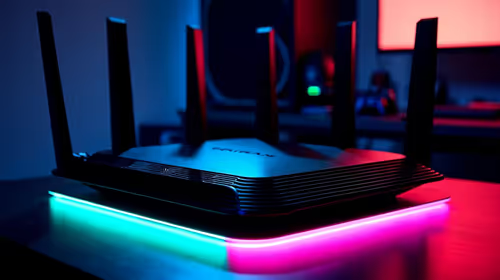
Wi-Fi 6E vs Wi-Fi 6 for Video Editing in 4K comes down to router support, latency, client devices, band support, and home network layout. SA buyers should match the choice to their setup instead of assuming one option always wins.