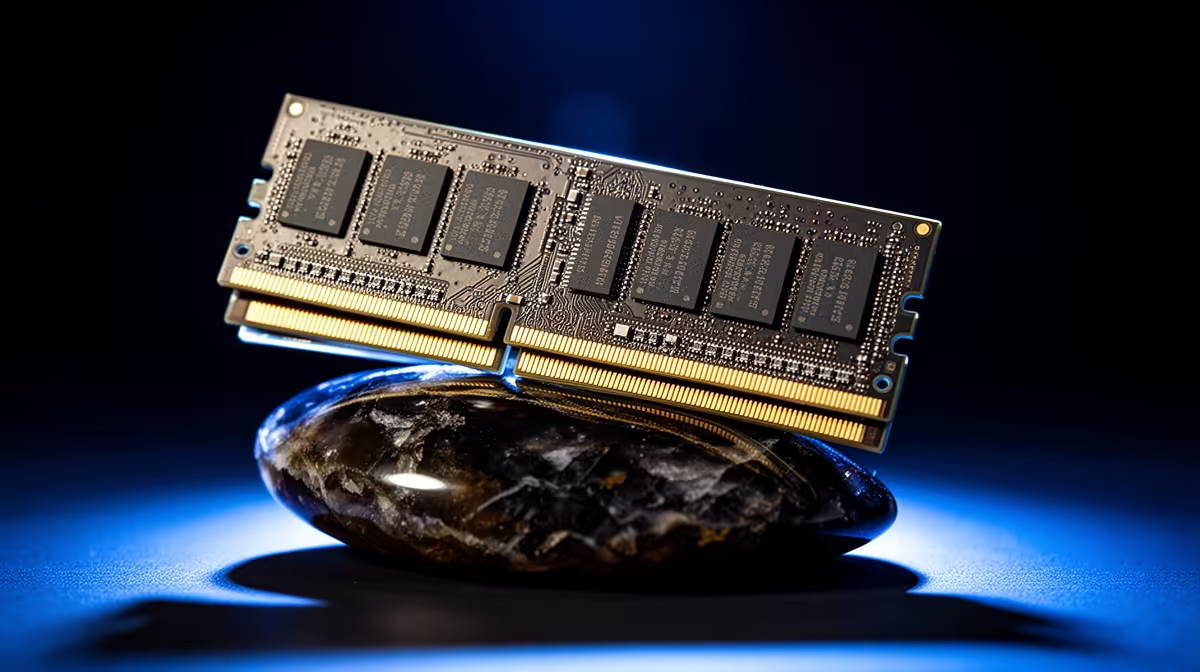
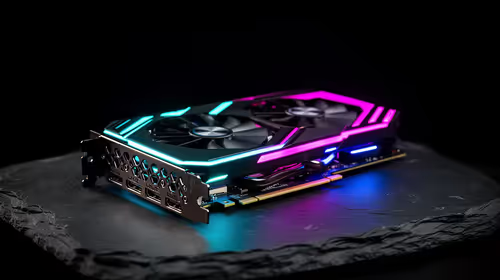
HBM stands for High Bandwidth Memory. It stacks several DRAM dies close to a processor and connects them through a very wide interface, giving AI accelerators far more memory bandwidth than ordinary desktop DDR5. The same major manufacturers serve both markets, so a rush into HBM changes where investment, advanced dies and packaging capacity go.
Quick Answer
HBM demand does not turn a gaming DIMM into an AI product, and the manufacturing paths are not perfectly interchangeable. It does encourage Samsung, SK hynix and Micron to prioritise high-value AI memory and advanced capacity. In 2026, their own earnings material describes strong AI and HBM demand alongside tight memory supply, which supports firmer pricing across the wider DRAM market.
Evetech's DDR5 memory range shows the consumer kits affected by that wider cycle. The memory best sellers provide a current SA view without treating one day's listing as a global forecast.
HBM Is Still DRAM
An HBM package contains stacks of DRAM dies, often combined with advanced base-die and packaging work. It is built for accelerators that need huge bandwidth across a short physical connection.
Desktop DDR5 spreads memory across removable modules and narrower channels connected to the CPU. It is cheaper, replaceable and designed around a different platform.
The products share DRAM manufacturing expertise and some upstream resources, though an HBM stack also needs specialised testing, stacking and packaging.
Why AI Demand Reaches Consumer Memory
Memory makers decide where to put capital, clean-room space, advanced process output and engineering effort. When HBM orders offer strong demand and margins, suppliers expand those lines and product roadmaps.
That does not mean one HBM wafer automatically removes one DDR5 wafer. Node, die design, yield and packaging constraints differ. The pressure comes through company-wide allocation and the time needed to add new capacity.
Samsung said it expected 2026 HBM sales to more than triple from 2025 and was expanding HBM4 capacity. SK hynix and Micron also reported strong high-value AI-memory demand. Those are supplier signals, not a promise about a specific retail kit.
Why More Capacity Takes Time
A memory fab cannot appear because prices rose this month. Clean rooms, tools, process qualification and customer validation take years and heavy investment.
HBM also depends on advanced packaging and known-good dies. A bottleneck after wafer fabrication can limit finished output even when raw DRAM bits exist.
Consumer DDR5 pricing can therefore react before large new capacity arrives. It can also fall when demand, inventory or yields change.
What Reaches an SA Buyer
Global DRAM contract and spot trends are only the first layer. Exchange rates, freight, distributor inventory, kit binning and old stock shape the rand price.
A kit already in a South African warehouse can hold its old cost while global quotes move. The next shipment can arrive at a different replacement cost.
Compare the exact capacity, speed, timings and voltage. A cheap 32GB kit and premium low-latency kit do not track the cycle identically.
FAQ
Is HBM installed as normal gaming RAM?
No. It is packaged close to accelerators or specialised processors, while desktop DDR5 uses removable DIMMs.
Does every HBM order directly remove DDR5 output?
No. Production paths differ, but supplier investment and advanced-capacity choices can tighten the broader DRAM market.
Why can gaming RAM become more expensive?
Concentrated supply, AI-memory demand, inventory, exchange rate and replacement cost can all feed into the final kit price.
Compare the exact DDR5 kit and current SA stock while treating HBM demand as one supply-cycle driver rather than a one-wafer equation.