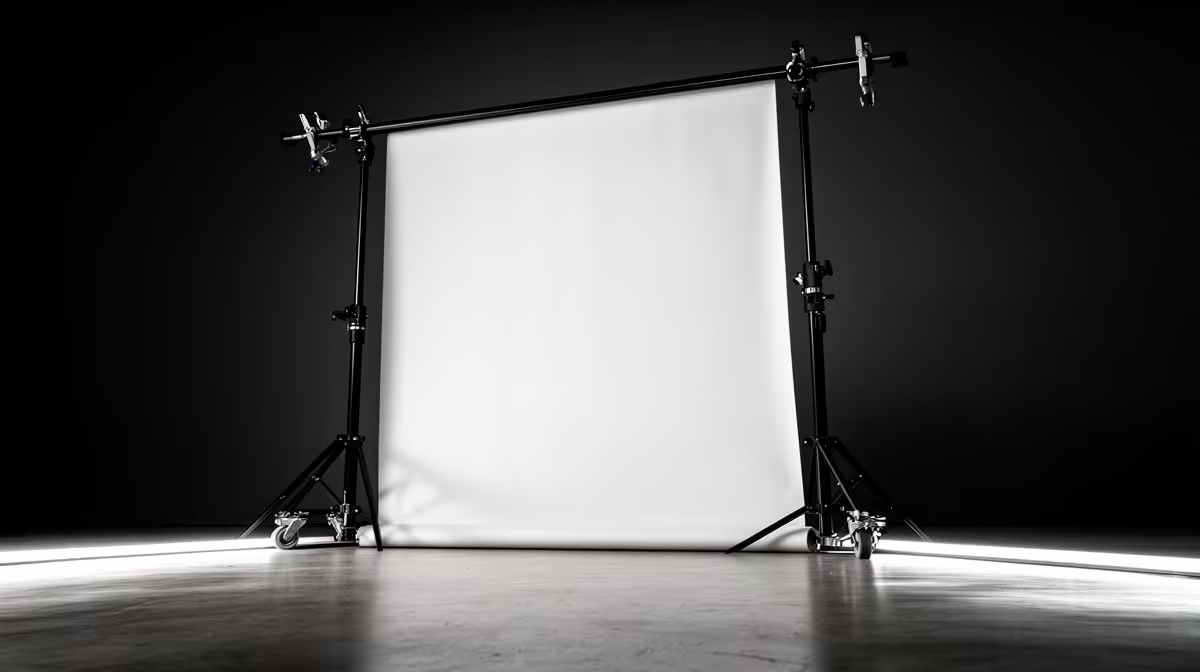
Studio backdrops are heavier and wider than they look in product photos. A full 3-metre fabric drop stretched across a crossbar behaves like a sail the moment any air moves through the room, and that sail is attached to a rig standing 199cm tall with considerable leverage. Heavy-duty clamps and properly rated stands are the two pieces of hardware preventing that structure from toppling onto a camera, a subject, or an expensive bulb.
Quick Answer
Use heavy-duty photography spring clamps, not household bulldog clips, at four points along the crossbar. Pair them with 199cm stands that have wide-splayed legs and put a 5kg sandbag on each leg foot. That combination holds a stretched fabric backdrop securely through normal studio air movement.
🔧 Why Standard Clips Fail on a Loaded Crossbar
A stationery-grade bulldog clip grips by spring tension alone across a narrow jaw. Against a few sheets of paper it performs its job without complaint. Against a muslin backdrop folded once over a crossbar -- already thicker than most clip jaws fully accommodate -- the sustained downward pull of 3 metres of hanging fabric slowly overcomes the spring. Slippage of 20 to 30cm during a shoot is common.
Heavy-duty photography spring clamps are built to a different standard. The spring force is typically two to three times stronger, the jaw opens wide enough for a crossbar-plus-hem combination, and the tip contact area is broad enough to distribute force rather than pinch at one point. Rubberised or padded jaws grip without creasing the fabric surface.
Four clamps distributed along the crossbar -- two near the ends, two at the quarter-points -- spread the hanging load so no single grip point carries the full weight of the drop. Two end clamps only is the most common setup error and the one most likely to result in mid-shoot slippage.
🦺 Stand Height, Leg Design, and Stability
The taller the structure, the further a top-heavy load can swing before the base counters it. A 199cm stand with a softbox or heavy fabric near the top has a high centre of gravity. Widely splayed legs extend the base footprint further from the centre column -- a leg span of 80 to 100cm per direction creates a stable triangle under the load.
Compact stands with narrower legs reduce this margin and require more ballast to compensate. Heavy steel construction absorbs vibration better than thin aluminium, which transmits shocks from a closing door or a knock up to the crossbar where a clip slip is possible.
🏋️ Why Sandbags Are Not Optional
Clamps stop the fabric from sliding off the crossbar. Sandbags stop the whole stand from moving. These are two separate failure modes, and a setup with perfect clamps and no ballast is still at risk when someone brushes past a leg or an air current catches the wide fabric face.
A 5kg sandbag placed over the centre of each leg foot sits low and presses outward, which is exactly where the counter-force needs to go. In rooms with ceiling fans, air conditioning outlets, or open windows, one bag per leg is the minimum and two is better. The cost of skipping this step shows up when a stand falls: a 199cm stand reaching a camera on a nearby surface, or landing on the softbox and cracking the bulb assembly, is a R600 to R900 repair. A sandbag costs R150 to R250.
Frequently Asked Questions
Why do heavy-duty clamps outperform ordinary clips on a backdrop crossbar?
The spring force in a photography-grade clamp is two to three times stronger than a standard office clip, and the jaw geometry accommodates the combined thickness of a metal crossbar and folded fabric hem. Ordinary clips are designed for paper-thickness loads, not the sustained downward tension of a full backdrop drop.
How many clamps are needed across a 3-metre backdrop?
Four is the safe minimum: one near each end and one at each quarter-point. Using only two end clamps is the most common error and puts the full hanging weight through just two grip points, which is where slippage starts.
What leg span makes a stand meaningfully more stable?
A leg spread of 80cm or more per side gives the base footprint enough width to keep the centre of gravity over the triangle formed by the feet even when the crossbar is loaded and extended to its maximum. Narrower legs compress this margin and require more ballast.
Will padded clamp jaws prevent marks on the backdrop fabric?
Yes. Bare metal jaw edges create crease lines in muslin and polyester, particularly under firm tension. Clamps with rubberised or foam-padded jaws apply the same grip force but spread pressure over a wider contact area, preventing the hard fold marks that show up in finished images.
Can strong clamps replace the need for sandbags?
No. Clamps and sandbags address different failure modes. A clamp keeps fabric on the crossbar. A sandbag keeps the stand from moving across the floor or tipping over. A setup with tight clamps and no ballast is still vulnerable to air movement or a brush against the legs.
Ready to keep your studio backdrop locked in place through every shoot? Browse the studio stand and clamp range at Evetech for hardware built to handle full-width backdrop loads without slipping or tipping.