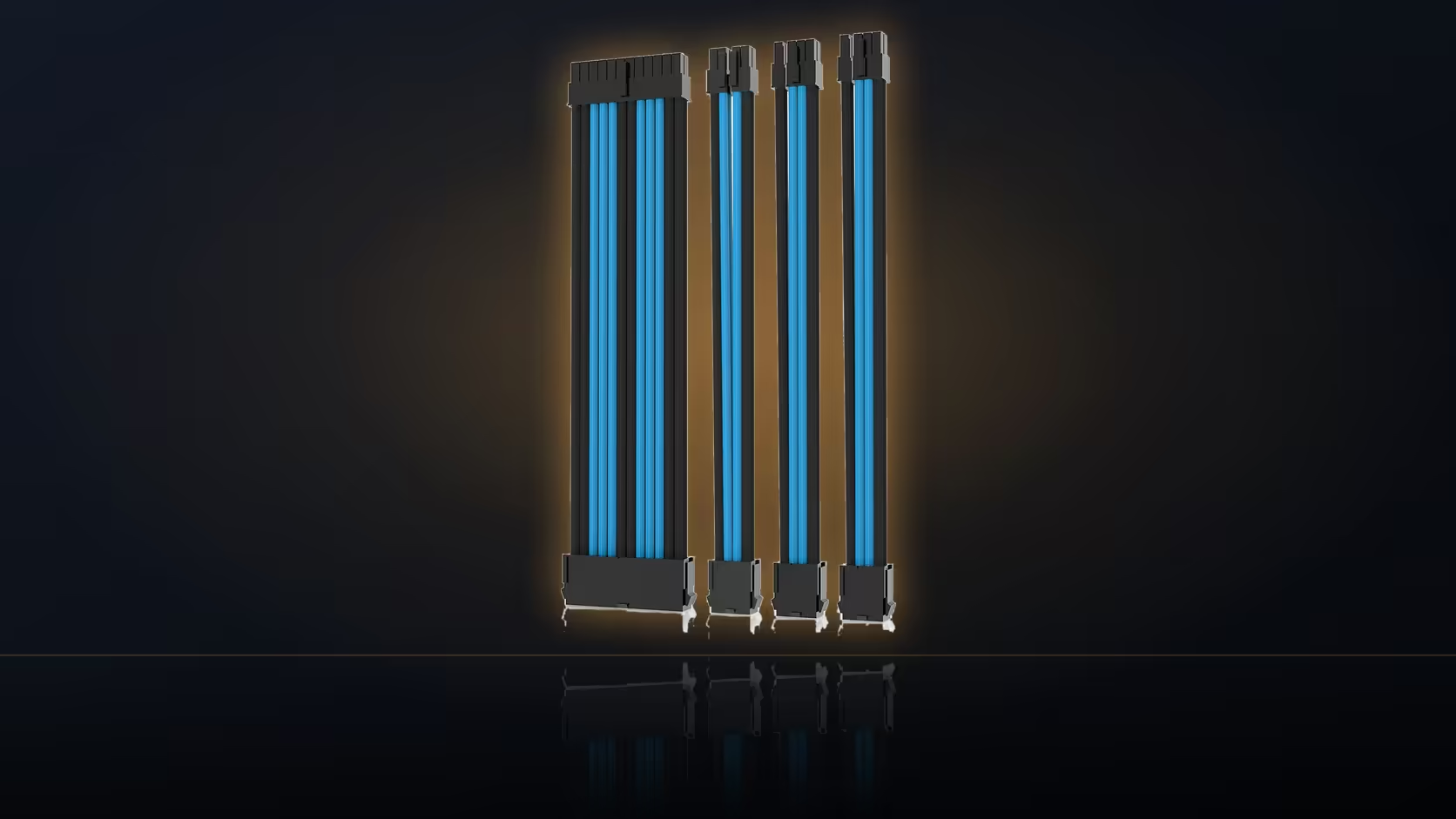
A case window promises a view of the build inside, but how much of that view actually consists of cable depends entirely on the case, not on the kit. Before spending R549 on a sleeved finish, it pays to work out how much of the run a shroud, a solid panel, or an awkward layout is already hiding for free.
Quick Answer
Sleeved extensions only earn R549 if the window actually shows the cable runs. Many builds route nearly everything behind the tray. The kit dresses four runs, and if a shroud or solid panel hides three of them the money works on very little.
👀 Which lead is actually visible
Of the four leads this kit dresses, the graphics extension is usually the most exposed, since it crosses open space between the card and the power supply shroud with nothing covering it. The main board lead, by contrast, often runs mostly behind the tray before it reaches the 24-pin socket, so a large share of its length is never seen at all. Power supply shrouds change this picture considerably, hiding the run between the unit and the cutout and leaving only a short section above it on show - which means a shrouded build gets less visual return from the kit than an open one.
🪟 No window, no return
If the side panel is solid rather than glass, the entire visual case for this kit disappears. The cables still function exactly the same either way, but the spend is buying a finish the build never displays to anyone. That is worth stating plainly rather than assuming everyone already knows it: R549 on cable sleeving for a build nobody looks inside is money that would do more elsewhere. Builds with the glass panel mounted on the opposite side flip the usual logic too - the tray side becomes the visible one, and cable joins normally tucked away out of sight become exactly what the window shows.
🧵 Combs matter more on a short run, not less
Even where only a short section shows through the window, cable combs still earn their place in the box. A brief visible stretch makes uneven spacing obvious rather than forgivable, since there is nowhere for a mistake to hide along a short run. Combs hold the strands parallel so the gap between them stays even across whatever length is actually on display, which is precisely the situation a partially-hidden build creates. For builds without much window to show off, ties and cable channels are a cheaper route to tidiness, though they leave the factory cable colour in place rather than changing the finish the way this kit does. Have a look at cable solutions for other options if a full sleeved kit turns out to be more than your window justifies, or compare against individually sleeved premium cables if a showcase build eventually wants a custom set instead.
Frequently Asked Questions
Which of the four leads is usually the most visible?
The graphics lead, because it crosses open space between the card and the shroud. The main board lead often runs mostly behind the tray.
Do power supply shrouds change the answer?
Considerably. A shroud hides the run between the unit and the cutout, leaving only the short section above it on show.
Is a solid side panel a reason to skip the kit?
If nobody sees inside, the visual case disappears. The cables still work, but the spend is buying something the build never displays.
What about builds with the glass on the right?
Then the tray side is what shows, and cable joins normally hidden there become the visible surface. Plan the join positions accordingly.
Do the combs help on a short exposed section?
They do, because a short run shows spacing errors clearly. Combs hold the strands parallel so the gap stays even across the visible length.
How much run does 30cm actually cover?
Thirty centimetres of sleeved cable added at the end of the existing lead, which in most mid-tower layouts covers the whole exposed section.
Is there a cheaper way to tidy visible cable?
Ties and channels cost less and improve routing, but they leave the original cable colour on show. The kit changes the finish itself.
Not sure how much your build's window actually shows?
Have a look at Evetech's power supply range and weigh a sleeved kit against what your case realistically displays.