CPU cooling sets how quietly and consistently your chip holds its boost clocks, so matching the cooler to the actual heat output beats chasing the biggest radiator on the shelf.
Quick Answer
For a home-lab server, a quality dual-tower air cooler or a 240mm AIO handles most modern CPUs, costing roughly R600 to R2,500. Match the cooler's rated TDP to your chip and your case clearance before paying for a 360mm loop you may not need.
Match The Cooler To The Chip
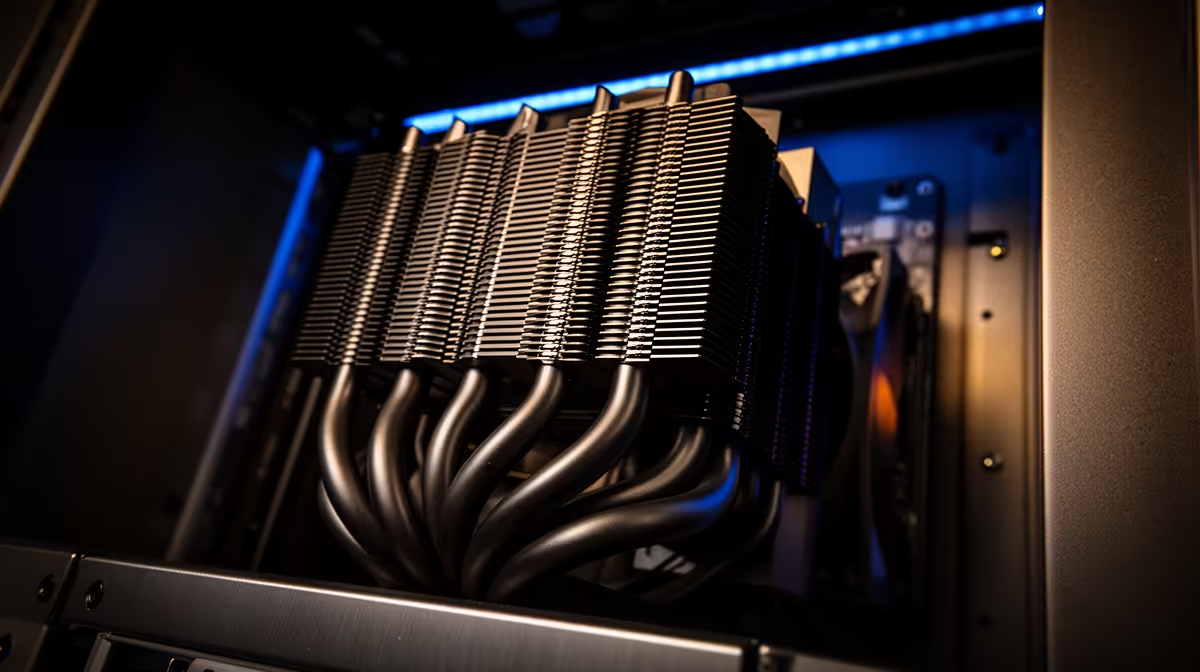
A cooler's job is to clear the heat your CPU puts out under sustained load. For a home-lab server, a solid 150W to 220W-rated air cooler keeps a mid-range chip cool and quiet, while heavy all-core workloads on a high-end CPU lean toward a 240mm or 280mm AIO. Buying far more cooler than the chip needs just adds noise sources and cost without lower temperatures in practice.
Air Vs Liquid
A good air cooler is simple, reliable and has no pump to fail, which is why it suits long-term builds. A 240mm or 360mm AIO clears more heat from a hot CPU and frees space around the socket, but adds a pump and the small long-term risk that comes with it. Check tower height against your case and RAM clearance against tall memory before committing to air.
Noise And Mounting
Fan quality and a PWM curve decide how quiet the cooler runs, which is the whole point for a home-lab server. Larger heatsinks and slower-spinning fans move the same air with less noise than small fast fans. A secure backplate mount and good contact pressure matter as much as the fin stack, so favour coolers with a proper bracket for your socket rather than push-pin clips.
FAQ
Air cooler or AIO liquid cooler?
A quality air cooler is reliable, quiet and has nothing to fail, which suits most builds. Choose a 240mm or larger AIO only for hot high-end CPUs or when you want a clear area around the socket.
How do I know a cooler is enough for my CPU?
Compare the cooler's rated TDP to your CPU's sustained power draw and leave some headroom. A 150W to 220W air cooler handles most mid-range chips; heavy all-core workloads on top CPUs want a larger AIO.
Will a big cooler fit my case and RAM?
Not always. Check the cooler's height against your case's clearance and confirm it does not overhang tall RAM. Low-profile RAM or a slightly offset tower avoids the most common clearance clash.
cooler's rated TDP to your CPU, check case and RAM clearance, then favour larger slow fans for quiet running.