


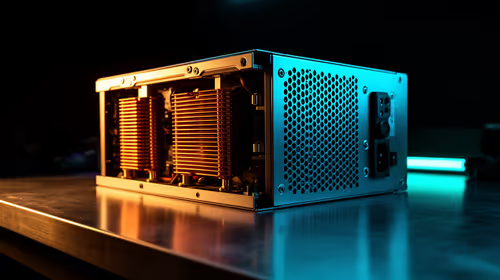
1000W PSU Planning for RTX 5090 Builds in SA
1000W for RTX 5090 needs a full-build check, not a simple yes. Review GPU guidance, CPU draw, transient load, connectors, PSU quality, and upgrade plans before deciding.
Read moreFoil-and-braid shielding wraps the conductors in two layers, absorbing noise before it reaches the signal. The DP114 relies on this dual shielding to keep 8K and high refresh output stable near other electronics.
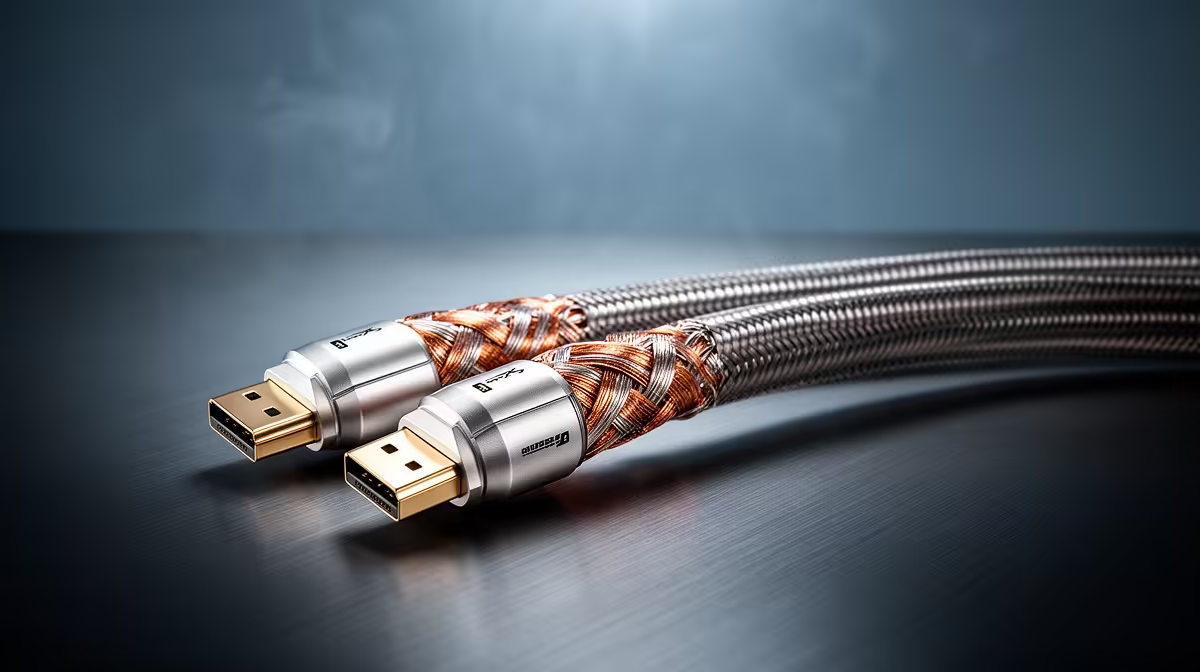
Every desk with a PC on it is full of small sources of electrical noise: the power supply, RGB fans, a nearby phone charger, even fluorescent lighting overhead. None of that noise is a problem for a well shielded cable, but an unshielded or thinly shielded one can pick it up as visible interference on screen. An 8k displayport cable that pairs two separate shielding layers, such as the UGreen DP114 selling for R299, is engineered to keep that ambient noise out of the picture entirely rather than hoping it stays low enough to ignore.
The UGreen DP114, priced at R299, uses foil-and-braid shielding, two layers working together to block electromagnetic interference from reaching the signal conductors, which keeps 8K and high refresh rate output stable even on a desk crowded with other electronics.
Foil shielding is a thin, continuous metallic layer wrapped directly around the conductors, offering full coverage against higher-frequency interference with no gaps in the wrap. Braid shielding is a woven mesh of metal strands layered over or under the foil, which is more effective against lower-frequency interference and adds a degree of physical durability the foil layer alone does not provide. Used together, as they are on the DP114, the two layers cover a wider range of interference types than either would alone, which is why "foil-and-braid" is treated as a meaningfully better spec than a single-layer shield.
Checking the DP114 product page confirms this dual-layer approach is part of the cable's stated build rather than an assumption based on the DisplayPort name alone.
When shielding fails to block enough interference, the result usually shows up as faint horizontal lines, colour banding, or brief flickers that seem to correlate with something else in the room switching on or off, like a fan speeding up or another device drawing more power. These symptoms are easy to misdiagnose as a monitor fault or a GPU driver issue, when the actual cause is a cable letting outside noise reach the signal. Better shielding is one of the more overlooked fixes for intermittent display glitches that do not show up in every troubleshooting guide.
South African homes often put PC desks in multi-use rooms, sharing power circuits and floor space with appliances, routers, and other electronics that were never designed with a gaming rig's cabling in mind. That shared electrical environment is exactly where shielding quality shows its value, since a cable running near a power strip or router picks up more ambient noise than one in a purpose-built server room. Looking through the wider cable selection available shows how shielding specs vary between otherwise similar-looking cables.
Once the cabling is settled, the accessories category covers the rest of a setup where signal reliability across a crowded desk matters just as much.
Foil is a continuous metallic wrap offering full coverage against higher-frequency interference, while braid is a woven mesh better suited to lower-frequency interference and added physical durability.
Yes, interference symptoms like flickering or faint lines are often mistaken for a monitor or GPU issue when the actual cause is a cable letting outside electrical noise reach the signal.
It matters less than in a crowded multi-device setup, but interference sources like routers and chargers are common enough in most SA homes that shielding remains a worthwhile spec to check.
Generally yes, since the two layers cover different types of interference together, giving broader protection than either layer would provide on its own.
Ready to keep interference out of your display feed for good? The UGreen DP114's foil-and-braid shielding wraps the signal path against nearby cables and devices. Evetech's DisplayPort cable range carries the R299 cable.
Foil is a continuous metallic wrap offering full coverage against higher-frequency interference, while braid is a woven mesh better suited to lower-frequency interference and added physical durability.
Yes, interference symptoms like flickering or faint lines are often mistaken for a monitor or GPU issue when the actual cause is a cable letting outside electrical noise reach the signal.
It matters less than in a crowded multi-device setup, but interference sources like routers and chargers are common enough in most SA homes that shielding remains a worthwhile spec to check.
Generally yes, since the two layers cover different types of interference together, giving broader protection than either layer would provide on its own.
1000W for RTX 5090 needs a full-build check, not a simple yes. Review GPU guidance, CPU draw, transient load, connectors, PSU quality, and upgrade plans before deciding.
Read more
RTX 5080 Super with a 750W PSU is more comfortable than lower wattage if the unit is quality. SA builders should still confirm GPU guidance, CPU draw, connector type, airflow, and upgrade room.
Read more
How to fix FPS drops after a RX 9070 XT starts with driver cleanup, chipset updates, thermals, and power checks. For SA gaming PCs, confirm PCIe seating, monitor refresh, frame caps, and per-game graphics settings before replacing parts.
Read more
How to fix low FPS Windows 11 Wi-Fi 7 issues starts by checking whether the problem is frame rate or network lag. Test ping, drivers, power settings, Ethernet, and game FPS before adjusting visuals.
Read more
AM5 is smart for SA builders because it supports newer Ryzen CPUs, DDR5 memory, and a longer upgrade path. Compare board cost, cooling, gaming needs, and local part availability before choosing your next PC platform.
Read more
AM5 gives Randburg gaming builders a longer upgrade path. For SA buyers, DDR5 support, newer board features, and future CPU options can justify the platform. Weigh board cost, cooler support, BIOS maturity, and upgrade timing before choosing.
Read more
RTX 5090 on a 550W PSU leaves almost no practical room for OC plans. Treat the setup as constrained, with CPU draw, power spikes, cable quality, thermals, and stability checks more important than chasing extra clocks.
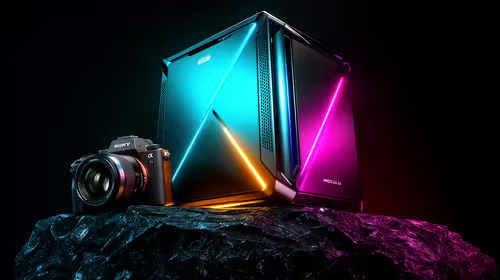
FPS drops on a Ryzen 9 9950X3D build often have a fixable cause. Check settings, drivers, thermals, background tasks, network conditions, and bottlenecks before assuming a part must be replaced.

The difference between PCIe 5.0 and PCIe 4.0 for SA gamers is mostly bandwidth headroom. Compare GPU slot needs, NVMe speed, motherboard support, and upgrade timing before paying extra for a newer platform.

Gaming PC stuck pixel checks in South Africa should confirm the monitor fault first. Use colour tests, screenshot comparison, cable swaps, display menu checks, and clear photos before deciding on support.

AMD's current driver now lists a Radeon RX 9050 4GB, while product coverage details a narrowed memory system. SA buyers should weigh the low VRAM ceiling against current local Radeon options.

Samsung Display has demonstrated a 16-inch 2.5K OLED laptop panel running at 300Hz. SA buyers should wait for a named notebook, full panel specifications and a local price before planning an upgrade.

Microsoft says some Windows 11 game crashes after recent updates are linked to RGB-related drivers. Affected SA gamers should confirm the update and driver before using the published registry workaround.
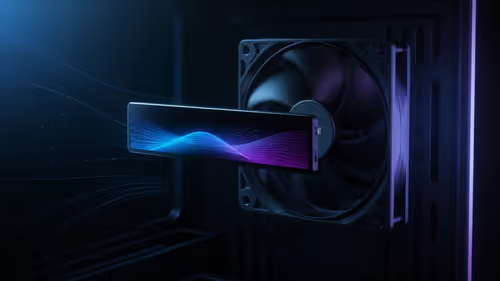
Thermalright's Fan Frame Vision-1 adds a 640x172 status screen to a standard 120mm fan. SA builders should check clearance, USB routing and local support before treating it as an easy upgrade.
1000W for RTX 5090 needs a full-build check, not a simple yes. Review GPU guidance, CPU draw, transient load, connectors, PSU quality, and upgrade plans before deciding.

Wi-Fi 6E vs Wi-Fi 6 matters for 4K video editing when files move across a network. The real-world difference between Wi-Fi 6E and Wi-Fi 6 for video editing in 4K depends on NAS access, cloud uploads, router range, and SA creator workflows.
RTX 5080 Super with a 750W PSU is more comfortable than lower wattage if the unit is quality. SA builders should still confirm GPU guidance, CPU draw, connector type, airflow, and upgrade room.
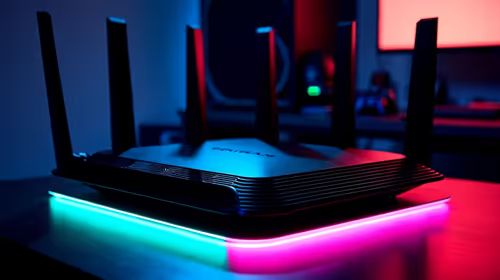
Wi-Fi 6E vs Wi-Fi 6 for Video Editing in 4K comes down to router support, latency, client devices, band support, and home network layout. SA buyers should match the choice to their setup instead of assuming one option always wins.