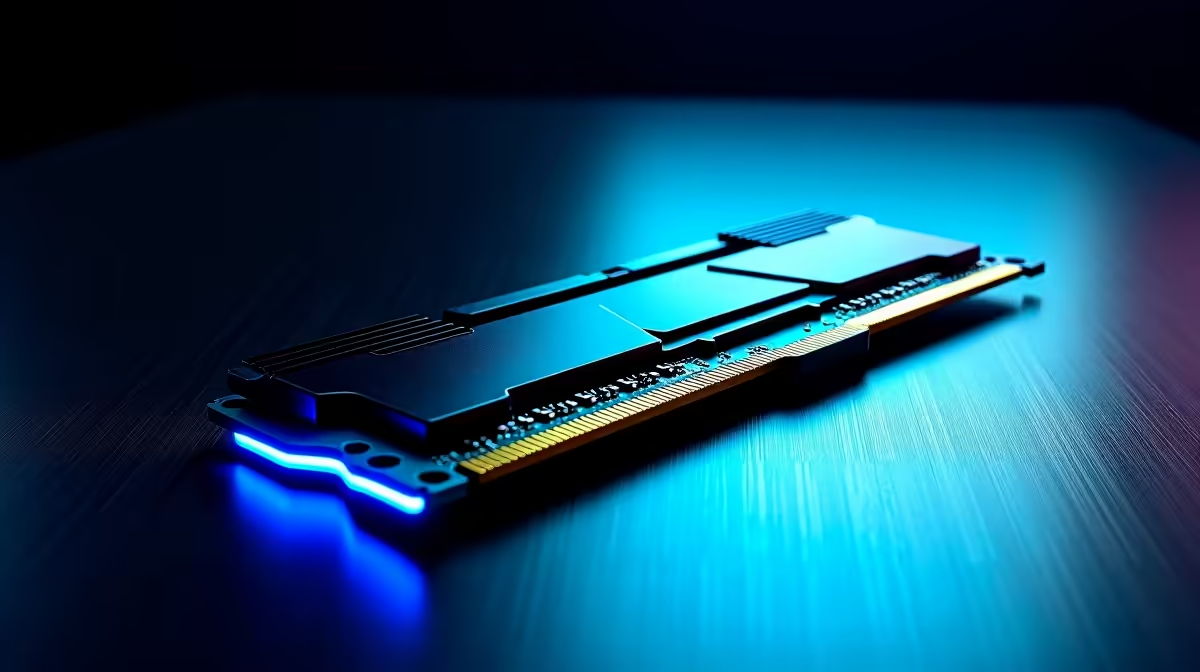
Memory speed is one of those specs that quietly doubled while most people were still arguing about it, and DDR6 versus DDR5 is the next jump waiting in the wings. The headline is simple: DDR6 starts roughly where high-end DDR5 finishes and climbs from there, promising about double the peak bandwidth of the RAM in most current machines. The question worth answering is where that extra speed actually shows up in real use.
Quick Answer
DDR6 is specified to start at 8,800 MT/s and scale up to 17,600 MT/s, while mainstream DDR5 runs at 4,800 to 6,400 MT/s. That makes DDR6 roughly double the peak bandwidth of current-generation memory. The benefit is largest in bandwidth-hungry workloads such as workstation rendering and AI tasks; for everyday gaming the gain is smaller but still real on memory-sensitive titles.
The Raw Numbers Side By Side
The cleanest way to compare the two is the MT/s figure, which measures mega-transfers per second, essentially how fast the memory shuttles data. DDR5 launched around 4,800 MT/s and mainstream kits today sit between 4,800 and 6,400, with enthusiast modules pushing higher. DDR6 is specified to begin at 8,800 MT/s, already above where most DDR5 kits operate, and to scale up toward 17,600 MT/s at the top of the standard.
That is the source of the "roughly double" claim. At the peak of each standard, DDR6 moves about twice the data per second, which translates directly into bandwidth, the amount of information the memory can feed the processor in a given moment.
If you are building or upgrading right now, DDR5 remains the current standard, and the DDR5 memory range at Evetech is where to size a kit to your board and workload.
Where The Extra Bandwidth Actually Matters
Bandwidth is not equally useful to every task. The workloads that hammer memory hardest see the biggest gains. Workstation rendering, large dataset processing and AI and machine-learning tasks constantly stream data in and out of memory, so they feel a near-doubling of bandwidth strongly. Integrated graphics also benefit, because they borrow system memory and are often starved by it.
For gaming, the picture is more nuanced. Most games are limited more by the graphics card than by memory bandwidth, so the jump from fast DDR5 to DDR6 will not double frame rates. Certain memory-sensitive titles, especially simulation and strategy games with large worlds, do respond to faster memory, but the gain is incremental rather than transformative. Treat DDR6 as a meaningful step for heavy productivity and a modest one for pure gaming.
What This Means For Buyers Today
DDR6 is the next standard, not the current one, so a new platform and motherboard will be required to use it, just as DDR5 needed its own boards. That makes it a future consideration rather than something to wait on if you need a machine now. DDR5 is mature, widely available and well-priced in Rand, and a fast DDR5 kit pairs well with current processors.
The sensible read is to build on DDR5 today if you need performance now, and to keep DDR6 in mind as the upgrade horizon for a future platform refresh. For a quick sense of what South African buyers are actually fitting, the memory best sellers show the popular DDR5 capacities and speeds right now.
Frequently Asked Questions
Is DDR6 twice as fast as DDR5 in practice?
In peak bandwidth, roughly yes, with DDR6 scaling to about 17,600 MT/s against mainstream DDR5 at 4,800 to 6,400. Real-world gains depend on the workload; bandwidth-heavy tasks see the most, gaming sees less.
Can I put DDR6 in my current motherboard?
No. DDR6 requires a new platform with compatible memory slots and a controller, just as DDR5 needed its own boards. Existing DDR5 systems cannot be upgraded to DDR6 by swapping sticks.
Should I wait for DDR6 before building?
If you need a system now, build on DDR5, which is mature and well-priced. DDR6 will arrive on future platforms, so it is an upgrade horizon rather than a reason to delay a current build.
Does faster memory help gaming much?
Modestly. Most games lean on the graphics card more than memory bandwidth, so the gain is incremental. Memory-sensitive titles like large-scale simulation and strategy games benefit more than fast-paced shooters.
Building on today's standard while DDR6 is still on the horizon? Match a kit to your board and workload in the DDR5 memory range at Evetech and get the bandwidth your system can use right now.