Quick Answer
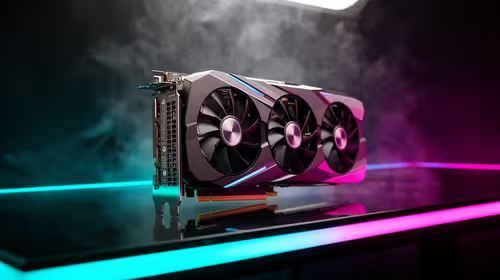
RTX 5080 Super is extreme overkill for Dragon Ball Sparking Zero. the 60 fps fighting-game cap means RTX 4060 is already more than enough; RTX 5080 or RTX 5090 adds no gameplay gain; SA buyers should only choose this GPU if they also play heavy 4K AAA games, render, stream or use a 240Hz-plus monitor. For a Dragon Ball Sparking Zero-heavy library, an RTX 4060 or RX 7600-class card in the R5,000-R9,000 band is the sensible ceiling.
Settings That Actually Matter
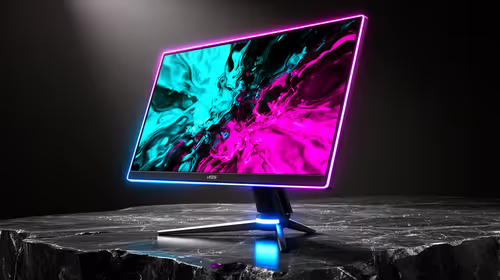
Start with resolution, upscaling mode, texture quality and ray tracing before chasing every Ultra toggle. 16GB RAM and a responsive 144Hz display keeps the system from stuttering while the GPU is busy. A Ryzen 7 7800X3D, Ryzen 7 9800X3D or Core i7-class CPU is a better match for RTX 5080 Super than an old quad-core platform.
FPS Expectations For SA Buyers
At 1080p, RTX 5080 Super will often be wasted because the CPU or frame cap takes over. At 1440p and 4K, it makes more sense, especially on 165Hz, 240Hz or ultrawide monitors. If Dragon Ball Sparking Zero has a 60 fps cap or very light visuals, the extra spend creates almost no visible gain.
Build The PC Around The Card
Use a quality 850W-1000W PSU, strong case airflow and a 1TB or 2TB NVMe SSD. A card in this class can expose weak cooling, cramped cases and old CPUs quickly. In SA, also plan delivery, warranty path and monitor choice before deciding that the GPU itself is the only cost.
FAQ
Is RTX 5080 Super worth it for Dragon Ball Sparking Zero?
Only if the rest of your library or monitor can use it. For light or capped games, RTX 4060-class hardware already feels the same in play.
What CPU should I pair with RTX 5080 Super?
Use Ryzen 7 7800X3D, Ryzen 7 9800X3D or a current Core i7-class CPU. This keeps 1% lows steadier at 1440p and high refresh.
What budget should I plan for the full PC?
Plan beyond the GPU price. A sensible SA build around RTX 5080 Super usually needs 32GB RAM, a quality PSU, NVMe storage and a strong monitor, so the full tower can land well above R35,000.
Settings Check
Set the monitor target first, then tune resolution, upscaling and ray tracing around that number before judging GPU value.