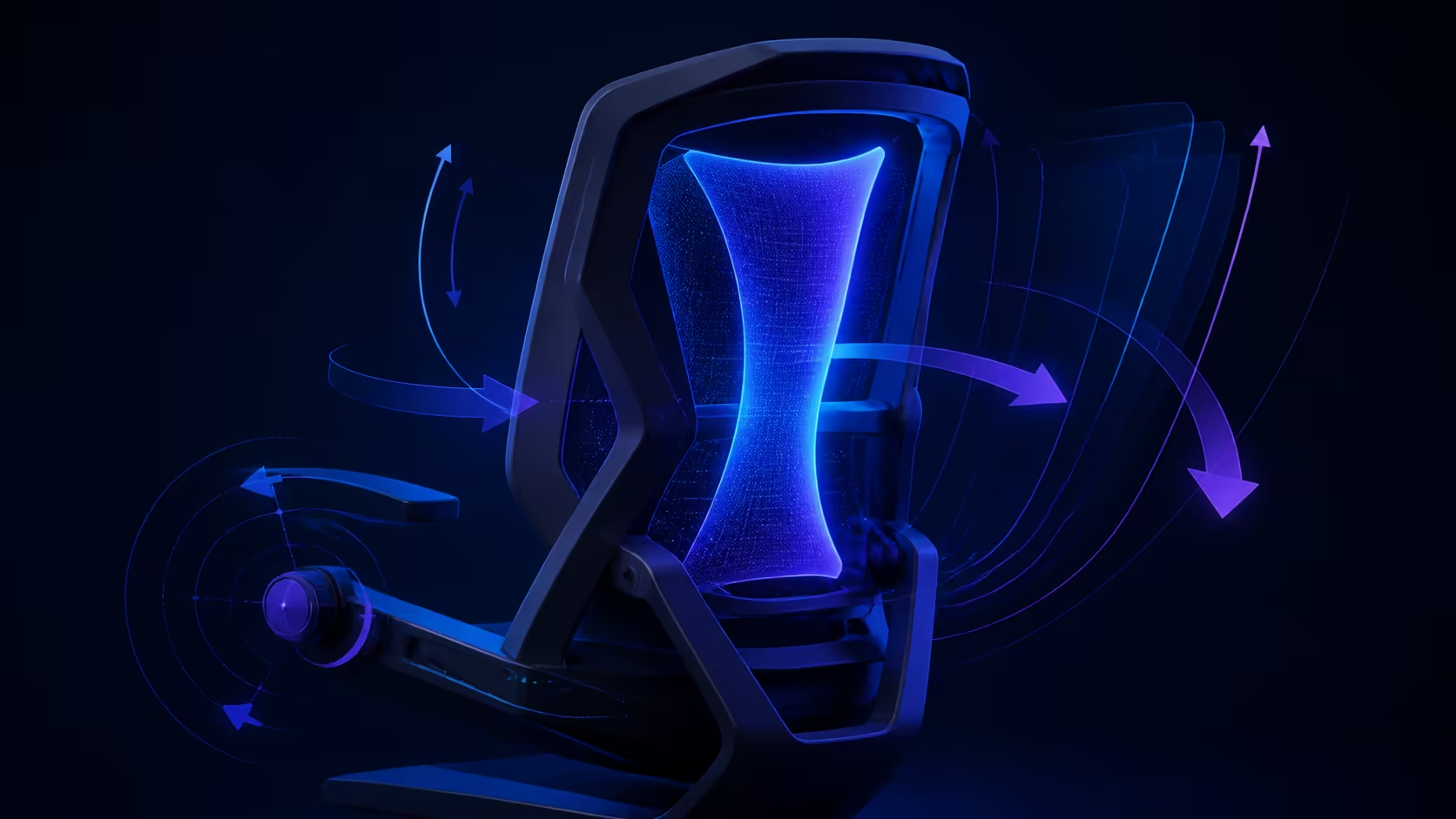
An 8D lumbar support adjustment works best as a measured fit exercise, not a search for the strongest pressure. Begin from an ordinary seated posture, alter one setting, and judge it while typing rather than during a brief showroom lean.
Quick Answer
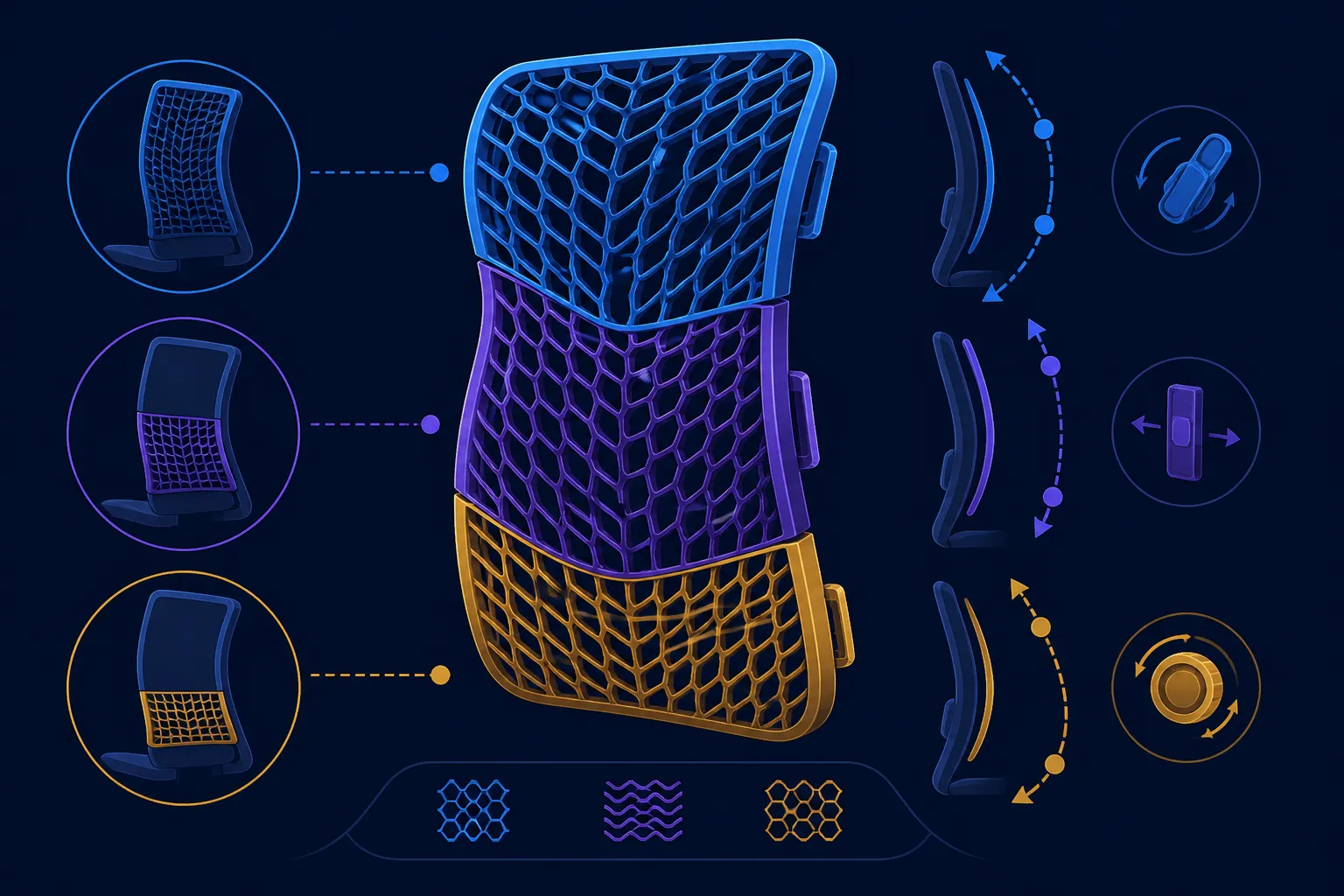
The E3 Ultra's 8D lumbar system adjusts through three wrapping zones, 40-degree wing rotation, one inch of depth, 1.6 inches of height and 14-degree dynamic support.
Start with the lumbar support near neutral, sit fully back, and make one small change at a time. Use the chair for several normal tasks before moving the control again. The HBADA E3 Ultra costs R9,599 and gives you 8D adjustable lumbar support for this personal setup process.
🧭 Establish a neutral reference
Place both feet securely, let the backrest carry your torso, and position the keyboard so the shoulders can settle. A lumbar setting cannot compensate for a seat that is too far from the desk or a screen that repeatedly pulls you forward.
Notice the location of contact before judging its strength. Support should meet the lower back without forcing the pelvis ahead. If you cannot describe what changed after an adjustment, return to the reference position and try a smaller move.
🎛️ Change only one variable
The 8D label signals adjustability, but it does not by itself describe the order or mechanics of every control. Learn the physical controls on the exact chair first. Then separate position changes from pressure changes so each test has a clear result.
Use Evetech's HBADA seating collection to compare how other models approach personal support. Record the setting that feels balanced during focused work rather than chasing a dramatic first impression.
⏱️ Test through real desk work
A five-minute sit rarely reveals how a setting behaves through email, meetings and concentrated input. Give each sensible position enough time to notice whether you remain against the backrest or gradually escape its contact.
Revisit the setting after changing desk height, footwear or monitor placement. Those surrounding conditions alter posture, so a previously useful lumbar position may need refinement without implying that the chair has failed.
✅ Keep comfort claims realistic
Adjustment can improve how a chair fits a person, but it cannot diagnose or treat back pain. Persistent, severe or worsening symptoms belong with a qualified health professional, not a stronger chair setting.
When comparing the E3 Ultra with Evetech's wider office chair selection, value the 8D system according to how easily you can find and repeat a workable position. That practical control matters more than the number alone.
Before finalising the setup, repeat the neutral-to-preferred change twice on different days. A position that is easy to rediscover is more useful than one found by a long sequence of random movements. Shared users should keep separate references, because one person's contact point is not a compromise setting for everyone.
Treat the R9,599 decision as a complete-chair purchase. Lumbar range deserves attention, but seat fit, desk clearance and intended-user capacity can still decide suitability. Place unanswered essentials beside the price and resolve them before the comfort trial becomes a buying conclusion.
After cleaning or moving the chair, rebuild from neutral rather than assuming the previous contact survived unchanged. A small environmental shift can matter even when the adjustment reference looks familiar.
Set vertical contact first, then depth, wing wrap and dynamic angle. Testing those axes separately makes the eight-way design understandable and prevents a tight wrap from being mistaken for better support. Save the combination that remains comfortable during upright work and recline.
Frequently Asked Questions
What is a sensible starting point for 8D lumbar tuning?
Begin near a neutral setting with your hips against the backrest and feet supported. Make the first change only after arranging the desk for relaxed shoulders.
What lumbar feature does the E3 Ultra provide?
HBADA equips the E3 Ultra with adjustable lumbar support carrying an 8D designation. The useful outcome is a position you can reproduce for routine work.
How quickly should support settings be changed?
Pause long enough to type, read and reach normally before deciding. Rapid changes make it difficult to identify whether position, pressure or desk layout caused the difference.
Does 8D describe a particular adjustment mechanism?
The label communicates a broad adjustment concept, not every control's operation. Inspect the chair itself and follow its instructions before applying force to any part.
Can lumbar adjustment treat back pain?
No chair adjustment promises a medical result. Stop forcing a setting that increases symptoms, and seek professional advice when discomfort persists or concerns you.
How much does this HBADA chair cost?
The white HBADA E3 Ultra is priced at R9,599. Assess that amount against the lumbar control you will actually use and the rest of your workstation needs.
Ready to compare lumbar adjustment with your desk routine in mind?
Explore Evetech's office-chair categories after noting the neutral position and test tasks that matter to your working day.