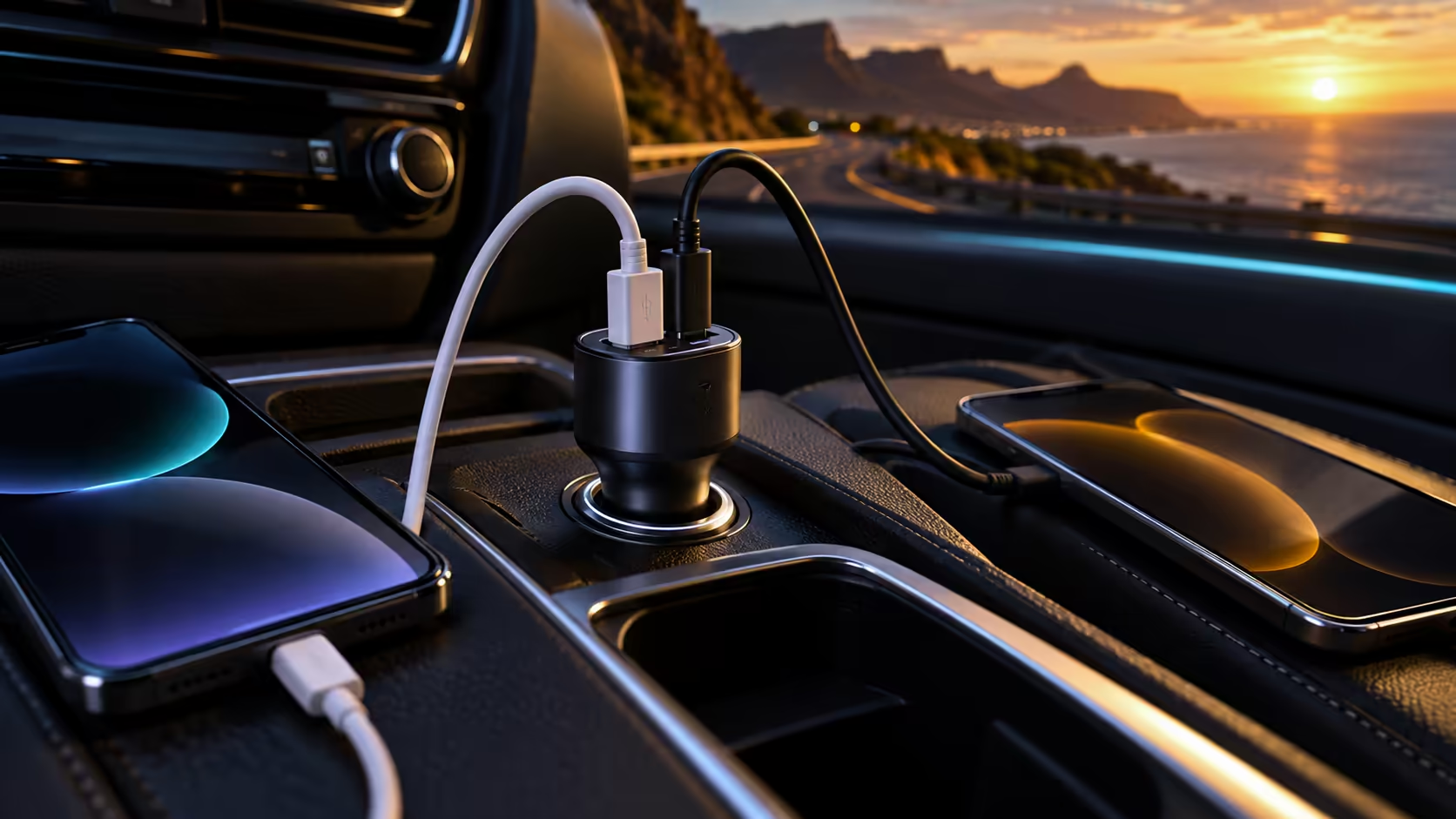
Keeping a phone from overheating in a car is mostly about where it sits and how it charges, not about buying a specific gadget. The two biggest contributors, direct sun and the charging process itself, are both things a driver has real control over.
Quick Answer
Keep the phone out of direct sunlight, ideally mounted somewhere air can move around it rather than resting flat on a hot dashboard, and let a PPS-capable port handle the fine voltage matching that keeps charging heat down. A parked car in a South African summer can reach a cabin temperature well past 50C in direct sun, and a phone starting a charge already heat-soaked has far less thermal headroom than one starting cool. Anker's 30W USB-C PPS port on its R349 two-port charger is built with exactly this in mind.
☀️ Sun exposure matters more than most people expect
A phone resting on a dashboard in direct sun absorbs heat from two directions at once, ambient cabin air and direct radiant heat from the sun through the windscreen, which together can push a dashboard surface past 70C on a hot day even when the outside air reads a mild 25C. A phone that starts a charging session already warm from that exposure has less room before it hits its own thermal limit, usually somewhere around 45C, and starts throttling.
Moving the phone to a mount lower on the dashboard, angled away from direct sun, or simply keeping it in a shaded cupholder during a parked stop, meaningfully reduces this before charging even begins.
🔋 Why PPS specifically helps here
Standard fixed-voltage charging picks from just 5V, 9V, 15V or 20V, leaving a gap between the supplied voltage and what the battery actually wants at a given moment, and that gap gets converted to heat inside the phone. PPS keeps closing that gap continuously through the session instead of settling for one rough approximation, so the phone ends up doing noticeably less of that conversion work itself.
That advantage compounds exactly in the scenario overheating complaints usually describe: a phone already warm from a hot cabin, being asked to fast-charge at the same time. Shaving heat off the charging side of the equation buys back thermal headroom precisely when the phone has the least of it to spare.
Frequently Asked Questions
Does airflow around the phone actually make a measurable difference?
Yes. A phone in open air near a vent or in a well-ventilated mount cools more effectively than one resting flat against a hot dashboard surface with no airflow.
Should I stop charging a phone if it feels hot?
If a phone becomes uncomfortably hot to hold, most phones automatically throttle or pause charging on their own as a protective measure, so manual intervention is rarely necessary but never harmful either.
Does a car's own thermal protection stop a charger from overheating too?
Yes. A properly built charger includes its own temperature protection that reduces or cuts output before internal components reach an unsafe level.
Is a case around the phone making the heat problem worse?
Some thick cases do trap heat compared with a bare phone, so removing a case during a hot, active charging session is a reasonable step if overheating is a recurring issue. The same thinking applies to other small accessories and earbuds left charging in direct sun alongside the phone.
Ready to keep your phone cooler on hot South African drives?
Have a look at the car charger range for a port with fine voltage control built in.