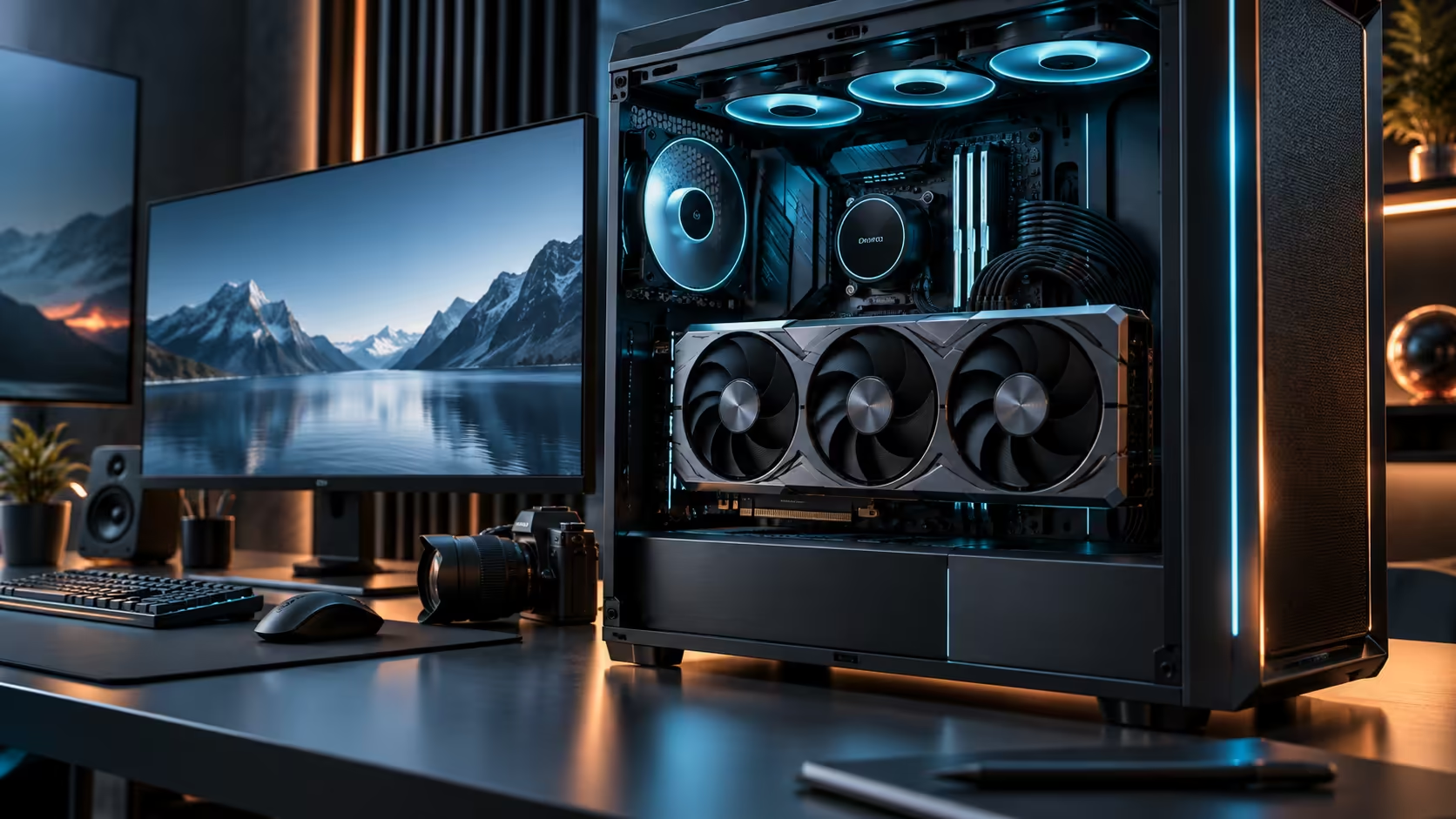
Cabling four monitors to one card looks simple until the second and third screens refuse to light up, and the fault is almost never the monitors. Getting multiple displays running on a modern graphics card comes down to buying the right cables and working through Windows in the right order, not luck.
Quick Answer
Buy certified cables matched to each port's actual standard, connect one screen at a time rather than all four at once, and use Windows Display Settings to arrange them only once each one is confirmed detected. A card such as the ROG Astral Edition 20 handles this cleanly at R119,999, provided the cables and the connection order are right.
🔌 Buying cables that actually match your ports
An HDMI 2.1 cable rated 48Gbps and a DisplayPort 2.1 cable rated for a similar figure are not interchangeable despite looking similar in a shop, since the connector shape itself is different. Buy for the specific port, not "the newest standard" in general, and check the rated bandwidth printed on the packaging rather than trusting a bare version number.
A cable bought years ago for an older monitor is the most common source of a mismatch, since it may be rated for a fraction of what a current 4K or high-refresh panel needs. Replace old cables rather than reusing them for a new monitor purchase, even if the connector shape still fits.
⚠️ Two physical-layer mistakes that cause "no signal"
The first is a cable pushed in but not fully seated, particularly on DisplayPort connectors, which use a small locking tab that can catch on the edge of the port without clicking home. Push firmly until you feel the click, then give it a light tug to confirm it holds.
The second is routing a signal through more than one adapter or extension in sequence, for instance an HDMI-to-DisplayPort adapter feeding into a switch. Every extra adapter in the chain is a place bandwidth or signal integrity can degrade, and two adapters stacked together fail far more often than either does alone. Where a direct cable exists for your exact pairing of card output and monitor input, it beats an adapter chain every time.
🧰 Setting it up in Windows, one screen at a time
Connect your first monitor and confirm Windows shows a picture before plugging in the second, rather than cabling all four and troubleshooting a fully populated desktop where you cannot tell which connection is at fault. Press Windows key plus P to check the display mode is set to Extend before adding further screens.
Once every monitor is connected and detected, open Settings, then System, then Display, where each screen appears as a numbered box. Drag the boxes around until their arrangement matches where each monitor actually sits on your desk, and set the resolution and refresh rate for each screen individually from the dropdown beneath it, since Windows sometimes defaults a newly added screen to a lower setting than it actually supports.
If a screen still refuses to appear after this, disconnect it, reseat the cable at both ends, and try the connection again before assuming the port itself has failed. Check the monitor range for panels that list their exact input types clearly if you are still shopping, the cable range for certified leads once you know exactly what each port and monitor requires, and the graphics card lineup if the card itself is still the part you are deciding on.
Frequently Asked Questions
My monitor works fine at 60Hz but will not reach its rated 144Hz, why?
Almost always an underrated cable. A cable that carries 4K at 60Hz without issue can still lack the bandwidth for the same resolution at a much higher refresh rate, which is a separate figure on the packaging worth checking specifically.
Should I connect all my monitors before or after installing graphics drivers?
After. Install and update the graphics driver first with at least one monitor connected, then add the remaining screens, since a driver update sometimes resets display arrangement and settings anyway.
Is it safe to use an HDMI to DisplayPort adapter?
Only the active, powered kind designed for that specific conversion direction, and only when a direct cable genuinely is not an option. A passive adapter between the two standards typically does not work at all.
Why did Windows put my new monitor in the wrong position on my desktop?
Windows guesses the arrangement from connection order rather than reading your desk layout. Fix it manually in Settings, then System, then Display by dragging the display boxes to match reality.
Do I need matching cable lengths for a multi-monitor desk?
No, length has no effect on signal quality within a cable's rated distance. Buy each cable to fit its own run rather than matching lengths for appearance.
Ready to wire up a multi-monitor desk without a return trip for the wrong cable?
Match each cable to its exact port standard, then connect and confirm one screen at a time.