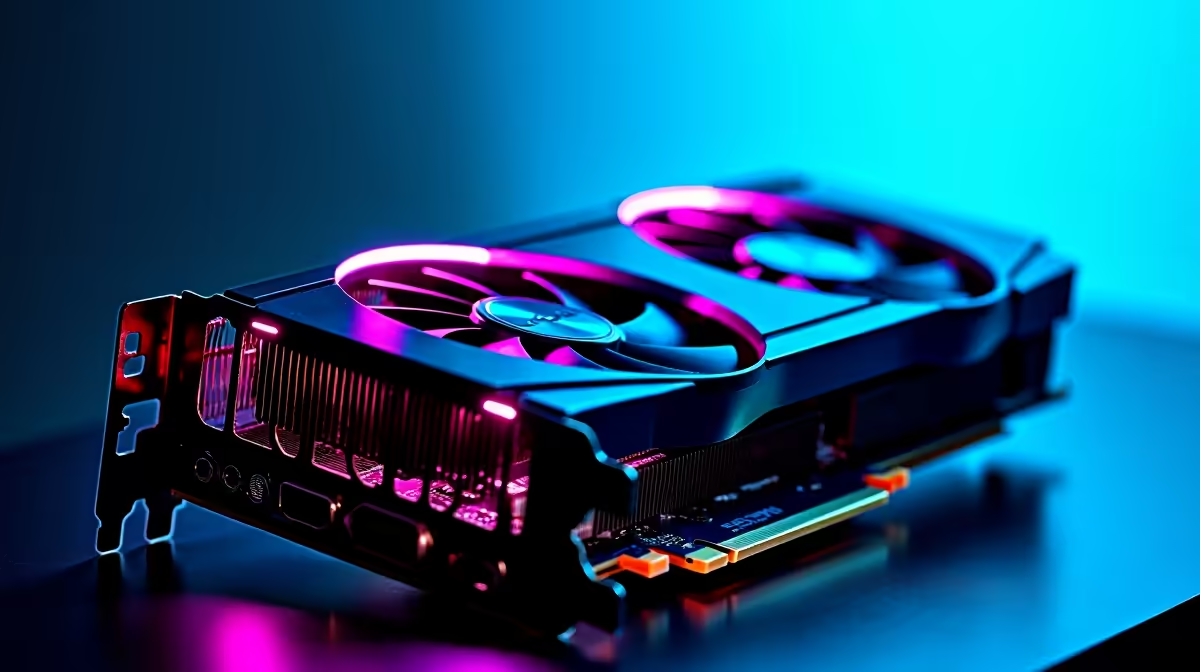
Why Custom Fan Curves Matter for Your RTX 5070
If you’ve just got your hands on an RTX 5070, you’re probably eager to squeeze every bit of performance out of it. But did you know you can improve both cooling and noise levels simply by customising your GPU’s fan curve? South African gamers and tech buyers often face hotter summers and cramped setups — a tailored fan curve keeps your RTX 5070 cool and quiet without sacrificing power. 🔧
Before diving in, consider your cooling setup. If you're still using the stock cooler, checking out Evetech's range of CPU coolers could enhance overall airflow in your rig.
Step 1: Prepare Your Tools and Software
You’ll need trusty software like MSI Afterburner or EVGA Precision X1. These free tools let you graphically map out fan speeds versus temperature. The interface is user-friendly, especially for beginners. Download and install one before continuing.
Also, think about your overall system—especially your GPU. If you’re eyeing upgrades, browse the latest graphics cards available locally. South African prices and stock can vary, so snagging the right card means more consistent performance.
Step 2: Understanding Your Current Fan Profile
Launch your software and open the fan curve editor. You’ll see a graph showing temperature on the x-axis and fan speed on the y-axis. Your default curve likely ramps up aggressively after 70°C, balancing noise and heat.
First, monitor your GPU temperature during a demanding gaming session or stress test. Note if it spikes or if fans ramp up loudly — which tends to happen during competitive online play or GPU-intensive tasks.
Step 3: Customising the Curve for Your Needs ⚡
Now, slowly start adjusting the curve:
- Lower fan speeds below 50°C for quieter idle times.
- Set a gradual increase from 50°C to 70°C to avoid sudden fan noise jumps.
- Above 70°C, ramp up fans swiftly but not max out immediately to balance noise and cooling.
This custom profile keeps your RTX 5070 cooler without the usual fan scream, especially useful in confined rooms or during SA’s warmer months.
Custom Fan Curve Pro Tip
your fan speeds 5-10% at each temperature point to find the sweet spot between quietness and cooling. Remember: every rig differs, so test carefully!
Step 4: Testing and Refining Your Fan Curve
After making adjustments, monitor temps using GPU-Z or similar. Play your favourite titles or use benchmarks to verify temps stay safe (preferably below 80°C during load). If temps rise too high, nudge fans up incrementally.
Don’t forget about your full build. Evetech’s pre-built PC deals include cases and cooling solutions optimised for airflow — great if you want a ready-to-go system that supports your custom fan tuning.
Step 5: Maintaining Your Cooling Performance 🚀
Regularly clean your PC’s fans and heatsinks to prevent dust build-up, which can tank cooling efficiency. If you’re using a laptop, consider options from Evetech’s notebooks for sale in South Africa with advanced cooling designs if mobility and gaming power are priorities.
Ready for Cooler, Quieter Gaming?
Take control of your RTX 5070’s performance and silence your setup today. Shop now at Evetech for top-tier GPUs and accessories that keep your gameplay smooth.