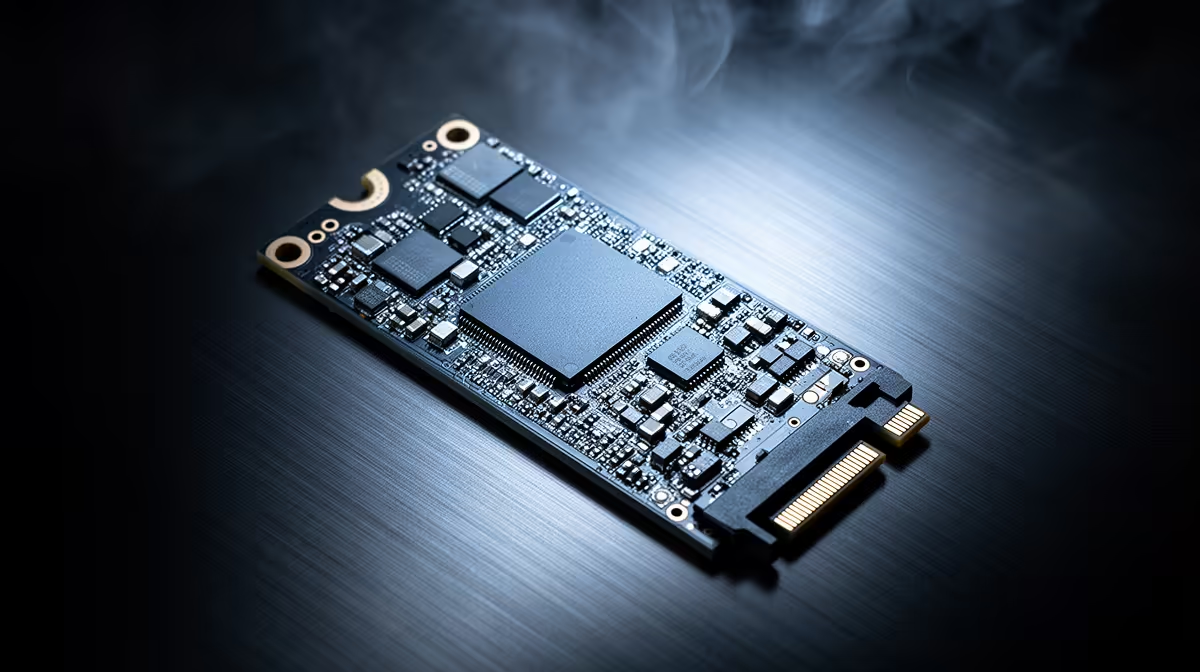
A Gen 5 NVMe SSD should not cause fps drops on its own, so the fix is usually in Windows, the driver, or a single overlooked toggle.
Quick Answer
To fix fps drops on a Gen 5 NVMe SSD setup, make sure shader caches and DirectStorage assets live on the fast drive, not a slow secondary. Most cases clear up once these are right, and you should be back to a steady framerate that holds its target.
First checks for Gen 5 NVMe SSD
Start with the basics. Make sure shader caches and DirectStorage assets live on the fast drive, not a slow secondary. Update the motherboard BIOS so the Gen5 controller negotiates full PCIe 5.0 x4 speed. These two steps resolve the majority of fps drops cases on a Gen 5 NVMe SSD, because the default Windows and driver settings are often the real cause rather than the storage itself.
Driver and Windows settings
Next, check the Gen5 heatsink contact, because thermal throttling above 70C tanks sustained reads. Keep Windows 11 fully updated and turn off any background overlays or capture tools that hook into games, since these are a common source of fps drops. A clean driver install often does more than any single in-game setting when chasing a steady framerate that holds its target.
When it is not the Gen 5 NVMe SSD at all
Sometimes the Gen 5 NVMe SSD is a red herring. Fps drops often hides a CPU bottleneck, a background process, or memory running below its rated speed. Run the RAM at EXPO or XMP, close startup clutter, and confirm the GPU sits in the CPU-linked slot before blaming the storage.
FAQ
Can my monitor or refresh rate cause fps drops?
It can. Confirm Windows is at the panel's full refresh and enable VRR, since a mismatched refresh and framerate is a common cause of fps drops.
Will a clean driver install help with fps drops?
Often, yes. A clean install strips out conflicting leftovers that cause fps drops. Pair it with an updated Windows 11 build and rated memory for the best result.
Is fps drops a hardware fault?
Usually not. Fps drops on a Gen 5 NVMe SSD setup is almost always settings, drivers or thermals. Only suspect hardware after the checks above come back clean.
Gen 5 NVMe SSD checks are done and you have a steady framerate that holds its target, lock in the settings so the fix sticks after the next update.