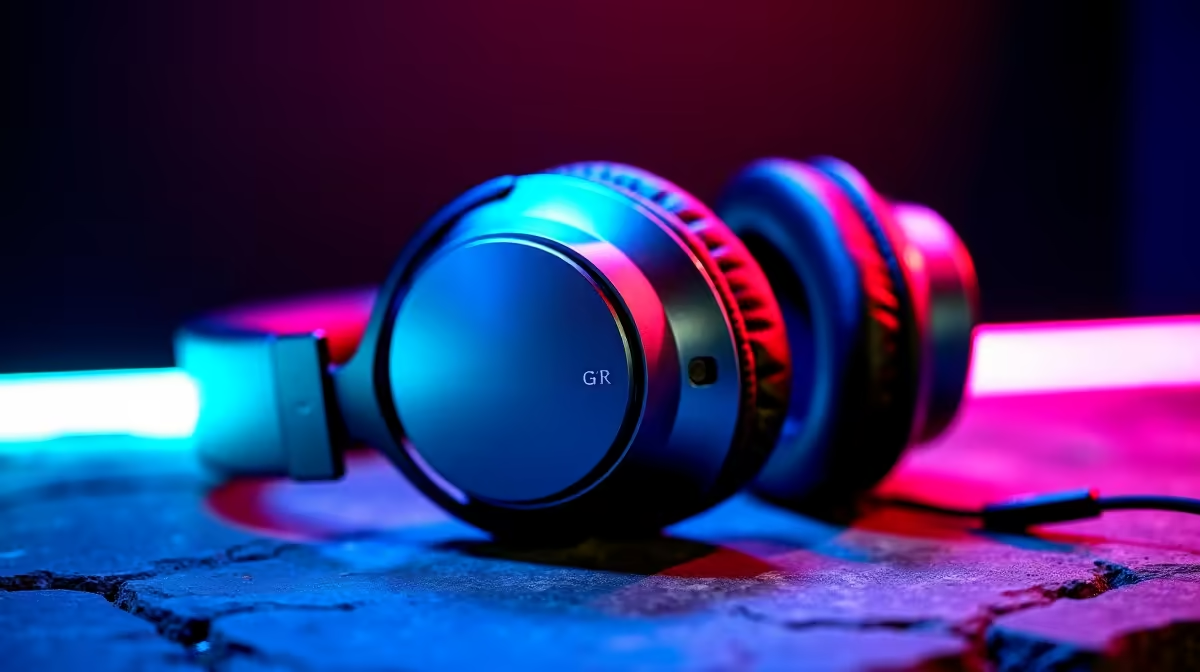
A new wireless gaming headset should make games feel sharper, so low FPS right after the upgrade is frustrating - but it's almost always a setup gap rather than a bad part. Here is the order to work through before you spend anything.
Quick Answer
On this build, low FPS after an upgrade points to a config gap - an old display cable forcing a low refresh, V-Sync locking you to 60fps, or in-game settings still on a previous preset. Each is a free fix worth tens of frames. It matters locally because it stops you buying around a problem that a single setting change would have solved for free.
How to Pin Down Low Fps on a wireless gaming headset
Confirm the wireless gaming headset is actually doing the work: in the game's GPU/CPU overlay, check which part is at 95-100% load. If neither is, a power plan or frame cap is throttling you. If the GPU sits idle while frames stay low, the wrong GPU is selected or Resizable BAR is off. Each is a free fix worth real frames.
The wireless gaming headset Checklist for Smooth Play
A wireless gaming headset on its 2.4GHz dongle adds only a few ms; switching it to Bluetooth introduces 100-200ms audio delay. Set the headset as the default device, disable spatial/processing effects you don't use, and match the sample rate in Windows sound settings. Plug the dongle directly into a rear USB port rather than a hub so the link stays clean. As a yardstick, use the 2.4GHz USB dongle for gaming and reserve Bluetooth for phone calls and music, so use that as your pass/fail line rather than chasing a perfect number.
When a Fix Becomes an Upgrade
Treat the result as a buying guide. A problem that vanishes with a different cable, port, or sync setting costs nothing to fix. A problem that only shifts with more capable hardware tells you exactly what to budget for. That keeps SA spending sensible - you upgrade the wireless gaming headsets or supporting part the test pointed at, instead of guessing and over-buying.
FAQ
How do I know if it's a network problem causing low FPS?
Run a wired Ethernet test against your Wi-Fi: if the cable removes the issue, it was the wireless link. Watch ping and packet loss during play - under 30ms ping and well under 1% loss is the target for online gaming.
What single setting helps low FPS the most on this setup?
For most users it's the sync and frame-cap combination: turn V-Sync off, cap frames a few below your refresh rate, and enable a low-latency mode. Use the 2.4ghz usb dongle for gaming and reserve bluetooth for phone calls and music.
Does my display cable affect low FPS?
It can. Plug the dongle directly into a rear USB port rather than a hub so the link stays clean. A cable that can't carry your panel's full refresh quietly caps performance and makes motion feel worse than the hardware should.
anything, run the baseline test above. Note down which single change fixed the low FPS so you can re-apply it after the next driver or Windows update. Only browse new Wireless Gaming Headsets at Evetech if a clean, fully-tuned setup still falls short.