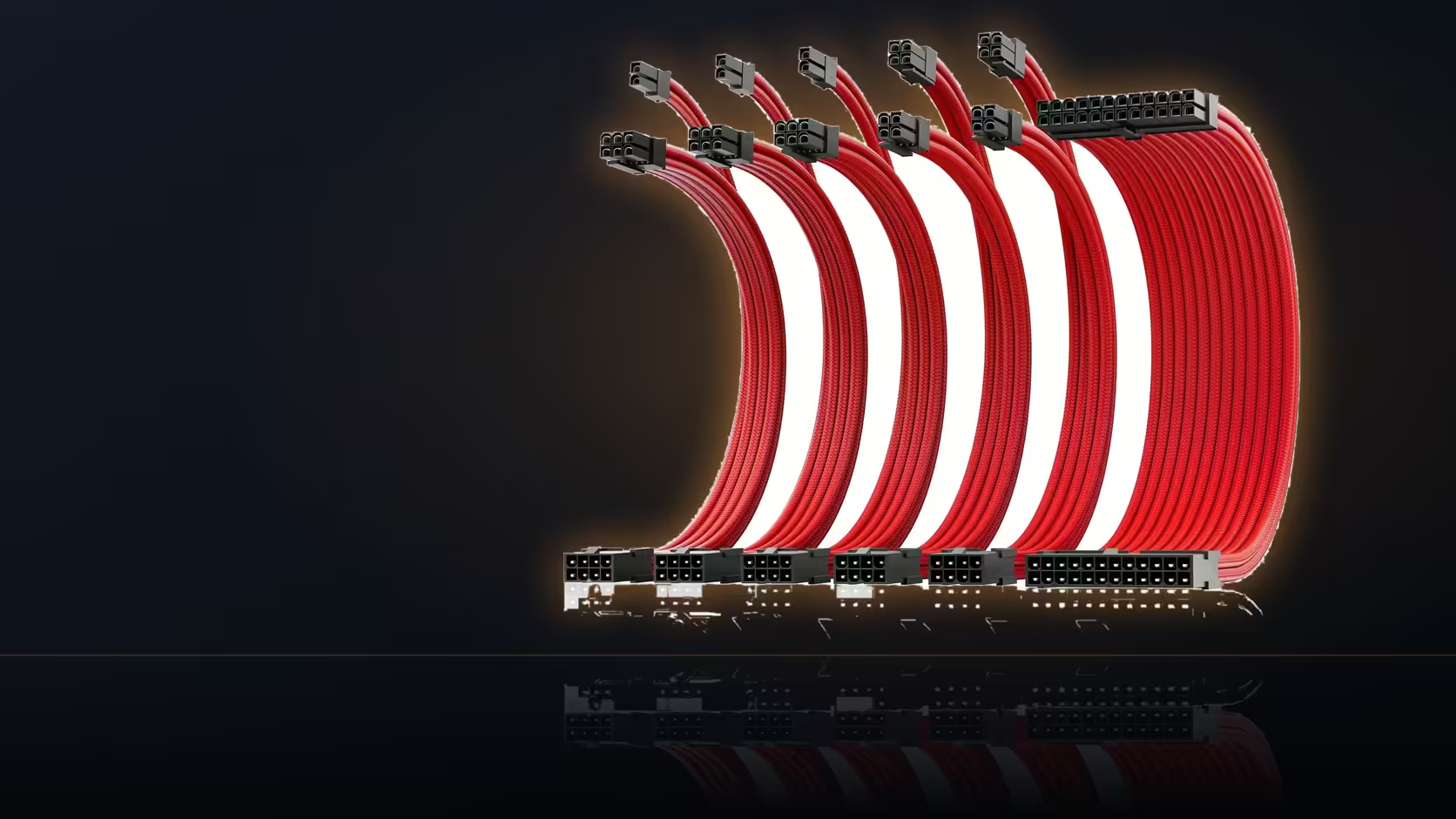
A single eight-pin socket on a graphics card changes the maths on a six-piece cable kit considerably, and not in the kit's favour. Buying six leads for a build with sockets for only four of them is an easy mistake to make without doing the count first.
Quick Answer
A single card socket leaves two of the three card leads unused. That makes the six-piece kit oversized here, and the four-piece set covers the same visible runs for less. Buy six only when a second processor socket gives the extra leads a job.
🃏 What actually gets fitted on a one-socket card
With a card drawing through a single eight-pin plug, only one of the kit's three PCIe extensions has anywhere to go - the other two stay boxed indefinitely, since there is no second or third socket on the card for them to serve. The board lead and processor lead still fit and do their job normally in this scenario; the coverage gap sits entirely on the graphics side of the build, where two-thirds of what you paid for has no immediate use.
💰 The price gap that matters here
The six-piece kit starts at R799 against R549 for the four-piece set - a R250 difference that becomes hard to justify once you know a chunk of the larger kit's contents will sit unused. On a single-socket card with no second processor input either, the four-piece kit dresses every visible run for meaningfully less money, making it the more sensible buy rather than paying extra for capacity the build has no way to use.
⚙️ Where the six-piece kit earns its price anyway
A second power socket on the processor side of the board changes this calculation entirely, even if the card itself only draws through one plug. That second EPS lead alone can justify stepping up to the larger kit, since the four-piece set has no answer for a dual-input board regardless of how the graphics side looks. It is worth checking both variables independently rather than assuming card socket count is the only thing that matters.
🔩 Conductor gauge is a genuine difference too
Beyond lead count, the two kits are not identical specifications scaled up or down - the six-piece family is quoted at 16AWG copper, a step thicker than the four-piece kit's 18AWG. That is a real difference in the cable itself, not just in how many pieces come in the box, worth factoring in if conductor thickness matters to your build for any reason beyond appearance. Owning spare leads carries no real downside beyond the money spent on them either: cables store indefinitely with no meaningful degradation, and a spare card lead becomes genuinely useful the moment a future graphics card upgrade brings extra sockets along with it. cable solutions lays out both kit sizes for a direct comparison, while individually sleeved premium cables prices what a fully custom set built to your exact card would cost instead.
Frequently Asked Questions
How many card leads would actually be fitted?
One. The other two stay in the box, since there is nowhere on a single-socket card for a second or third lead to go.
Does the kit still cover the rest of the build?
It does. The board lead and the processor leads all fit normally, so the coverage gap is only on the card side of the build.
When is the six-piece kit the right buy anyway?
When the board carries a second processor socket. That alone can justify it, even on a card that draws through one plug.
Is there any harm in owning spare leads?
None beyond the money. Spares store indefinitely and become useful the moment a card upgrade brings extra sockets with it.
How much more does six cost than four?
The six-piece starts at R799 against R549 for the four-piece, so the gap is meaningful on a build that cannot use the extra leads.
Does conductor size differ between the two kits?
Yes. The six-piece family is quoted at 16AWG and the four-piece at 18AWG, which is a genuine difference beyond the lead count.
What should decide the choice?
Counting sockets with the panel off. The number of processor and card plugs your build exposes is the whole answer.
Not sure if six leads suit a single-socket card?
Check Evetech's power supply range and count your build's actual sockets before choosing between the two kit sizes.