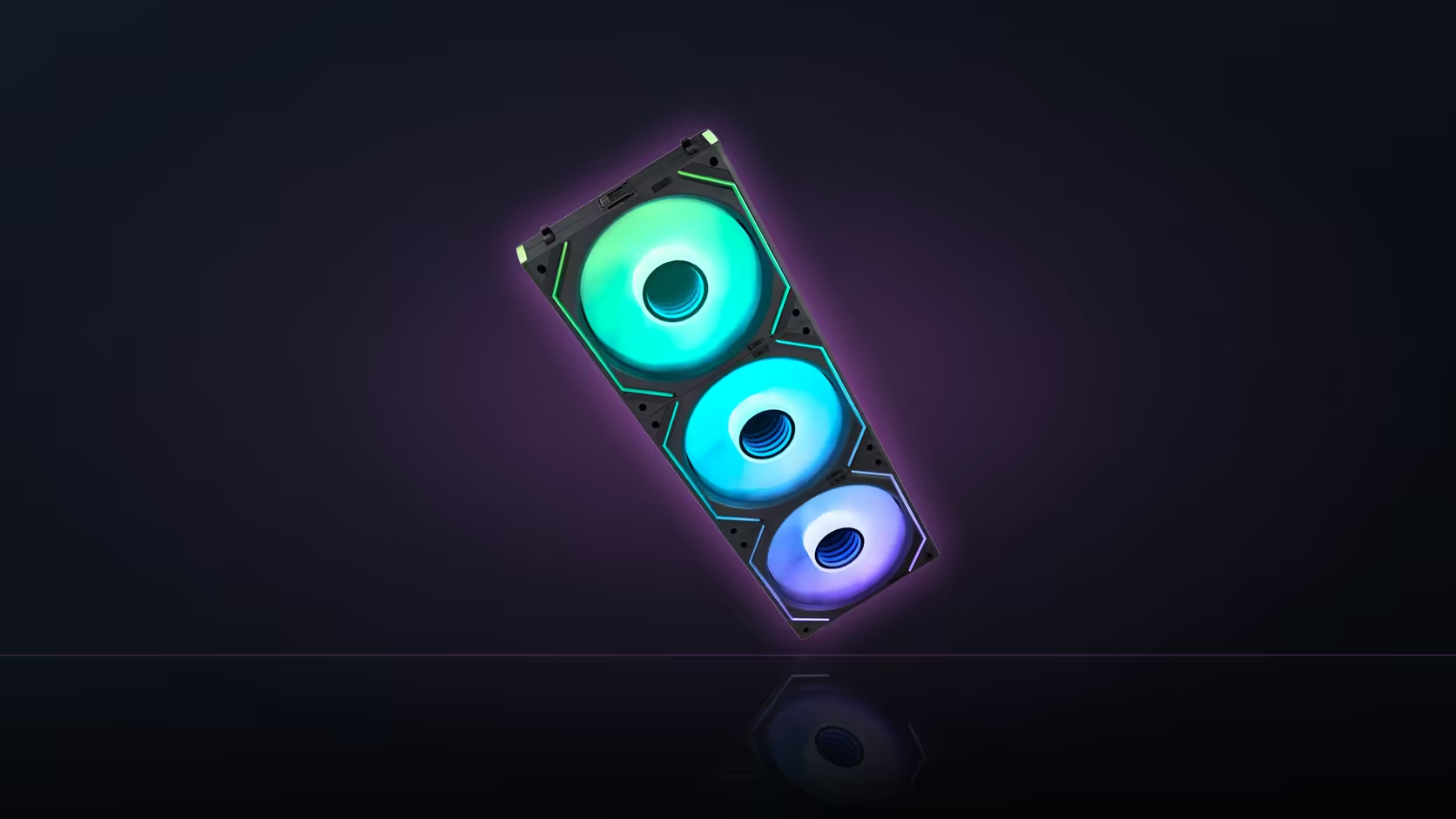
Fifty thousand hours sounds like a lot until you try to picture what it actually means for a PC that spends most of its life switched off overnight. The 50,000-hour bearing rating attached to AsiaHorse's Dawn Pro fans is a real engineering figure, not marketing filler, but knowing what it rates and what it does not rate changes how much weight it should carry in a buying decision.
Quick Answer
Dawn Pro's 50,000-hour hydrodynamic bearing rating describes expected bearing life under the manufacturer's own test conditions, which for a machine used a handful of hours a day translates into several years of continuous accumulated running before the figure is even approached. Whether that justifies choosing this fan over a cheaper option, priced at R269 single or R699 as a three-pack, depends more on what else the fan offers than on the bearing figure alone.
⏳ What the number is actually measuring
A bearing-life rating is an engineering estimate of how long that specific component is expected to run under defined conditions before wear becomes a meaningful risk. It is not a promise that any individual fan will last exactly that long, and it says nothing about the LEDs, the frame, or anything else in the assembly. Treat it as one data point about one part.
🧮 Putting the hours into everyday terms
A gaming rig running six hours a day accumulates roughly 2,190 hours a year, which means reaching 50,000 hours would take well over two decades at that pace, ignoring downtime entirely. A machine left on continuously reaches the figure far sooner, closer to six years. Either way, for most household case fans the rating comfortably outlasts the rest of the build around it.
⚖️ Weighing it against the rest of the spec
A bearing rating rarely decides a purchase on its own. Airflow, noise behaviour, lighting, and price all sit alongside it, and two fans with the same rated bearing life can still feel very different to own. The 50,000-hour figure is worth knowing, but it is one line in a longer comparison, not the deciding one. If the bearing rating tips a decision, a pass through case accessories for mounting hardware or a fan hub is worth doing at the same time.
Frequently Asked Questions
What does the bearing rating actually describe?
Expected bearing life under the manufacturer's stated test conditions, a durability estimate rather than a guaranteed service life for any given unit.
How long is that in real daily use?
At continuous operation it works out to roughly six years; at a handful of hours a day, considerably longer than that.
Does the rating guarantee the fan will not fail?
No. Dust, heat, and how the fan is mounted all influence real-world outcomes regardless of the published figure.
Is a hydrodynamic bearing better than simpler designs?
It is a fluid bearing type generally associated with quieter running and longer service life compared with basic sleeve bearings.
Do other fans in the AsiaHorse range share this figure?
Several list the same 50,000-hour figure, including models that describe the bearing under the abbreviation HDB rather than spelling it out.
Should the rating be the deciding factor in a purchase?
It is worth knowing, but airflow, noise and lighting usually matter more day to day, so weigh it alongside those rather than on its own.
What warranty accompanies this bearing rating?
A separate 1 Year Local Warranty applies, unrelated to the engineering figure itself.
Comparing fan durability against the rest of your build's specs?
Check Evetech's case fan and accessory range to see what fits alongside a long-rated bearing.