Two robot vacuums can look identical and clean your floor in completely different ways. The difference sits in how they see the room. LiDAR vs vSLAM describes the two dominant navigation methods: one fires laser pulses from a raised turret to map your home in total darkness, the other reads your space through a camera and needs light to do it. The choice shapes how reliably the robot cleans, especially at night.
Quick Answer
LiDAR uses a spinning laser turret to build a precise 360-degree map in complete darkness and finishes mapping in a single pass. vSLAM uses a camera and computer vision, which needs ambient light and can lose up to 40 percent accuracy in dim rooms. For most South African homes with mixed lighting and dark corners, LiDAR is the safer pick.
How each method sees your home
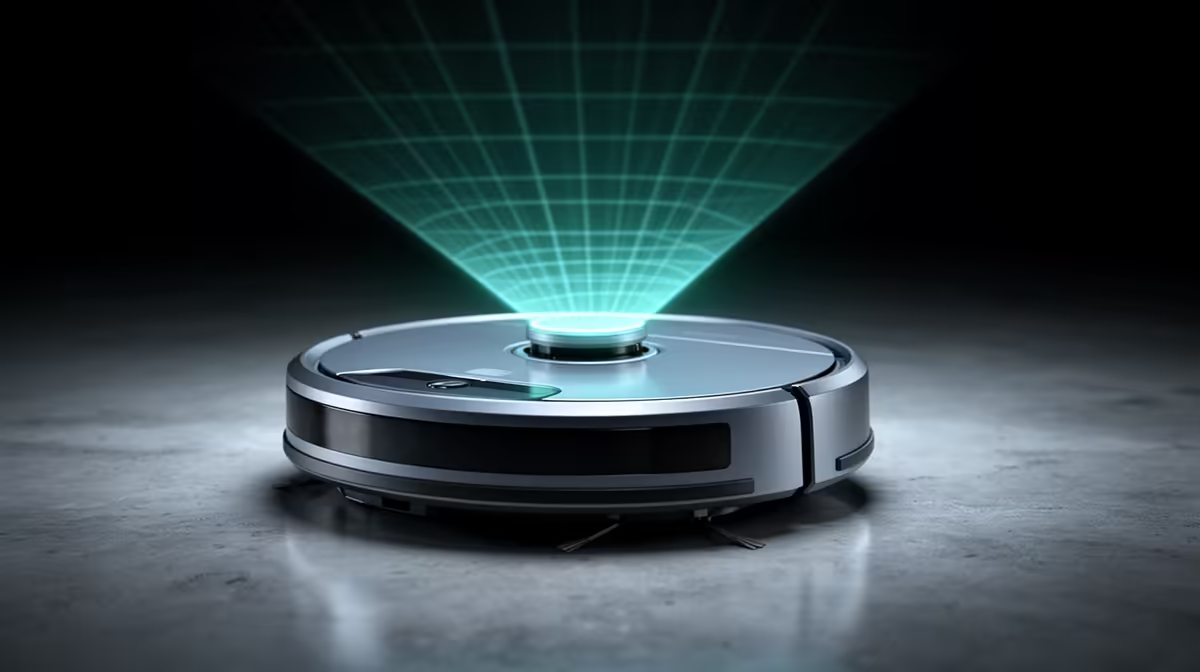
LiDAR works by bouncing laser light off surfaces and timing the return. A small spinning turret on top of the robot fires pulses in every direction, measuring distances to build a sharp 360-degree map. Because it makes its own light, it does not care whether the room is sunlit or pitch black, and it maps accurately on the first pass.
vSLAM, short for visual simultaneous localisation and mapping, uses a camera instead. It reads visual landmarks around the room, walls, furniture, ceiling features, and stitches them into a map as it moves. The catch is light. In dim conditions camera accuracy can drop by up to 40 percent, which makes navigation errors and missed patches more likely during a night clean.
Where each one wins
LiDAR's strengths are accuracy and darkness. It maps faster, produces more precise layouts, and runs reliably regardless of lighting, which is why it is the dependable choice in homes with dark hallways, blackout curtains or evening cleaning schedules. Its one downside is the raised turret puck, which adds height and can stop the robot sliding under very low furniture.
vSLAM's advantage is that low profile. Without a turret, the robot sits flatter and can reach under couches and cabinets a LiDAR unit cannot. In a home with strong, consistent lighting, varied wall textures and frequent furniture changes, a good vSLAM model can navigate well. But in the typical household with mixed lighting and clutter, it is the more error-prone of the two. To build out the connected home these run within, the smart home and appliances range covers the wider ecosystem, while spares and filters are easy to grab from the accessories best sellers.
Frequently Asked Questions
Which works better in the dark, LiDAR or vSLAM?
LiDAR. It uses its own laser light, so it maps and cleans accurately in complete darkness. vSLAM relies on a camera and ambient light, and its accuracy can fall sharply in dim or unlit rooms.
Why do LiDAR vacuums have a raised bump on top?
That puck houses the spinning laser turret that fires pulses in every direction. It is what enables precise 360-degree mapping, but it also raises the robot's height slightly.
Can a vSLAM vacuum get under low furniture better?
Often yes. Without a raised turret, vSLAM models sit flatter and can slip under lower couches and cabinets that a taller LiDAR unit cannot reach.
Which maps a room faster?
LiDAR. It captures precise distance data in a single pass and builds an accurate layout quickly. Camera-based vSLAM systems generally take longer and produce simpler maps.
Which should I buy for a typical home?
For most homes with mixed lighting, dark corners and some clutter, LiDAR is the safer bet for avoiding jams and missed spots. vSLAM suits bright, consistently lit spaces or where a very low profile matters most.