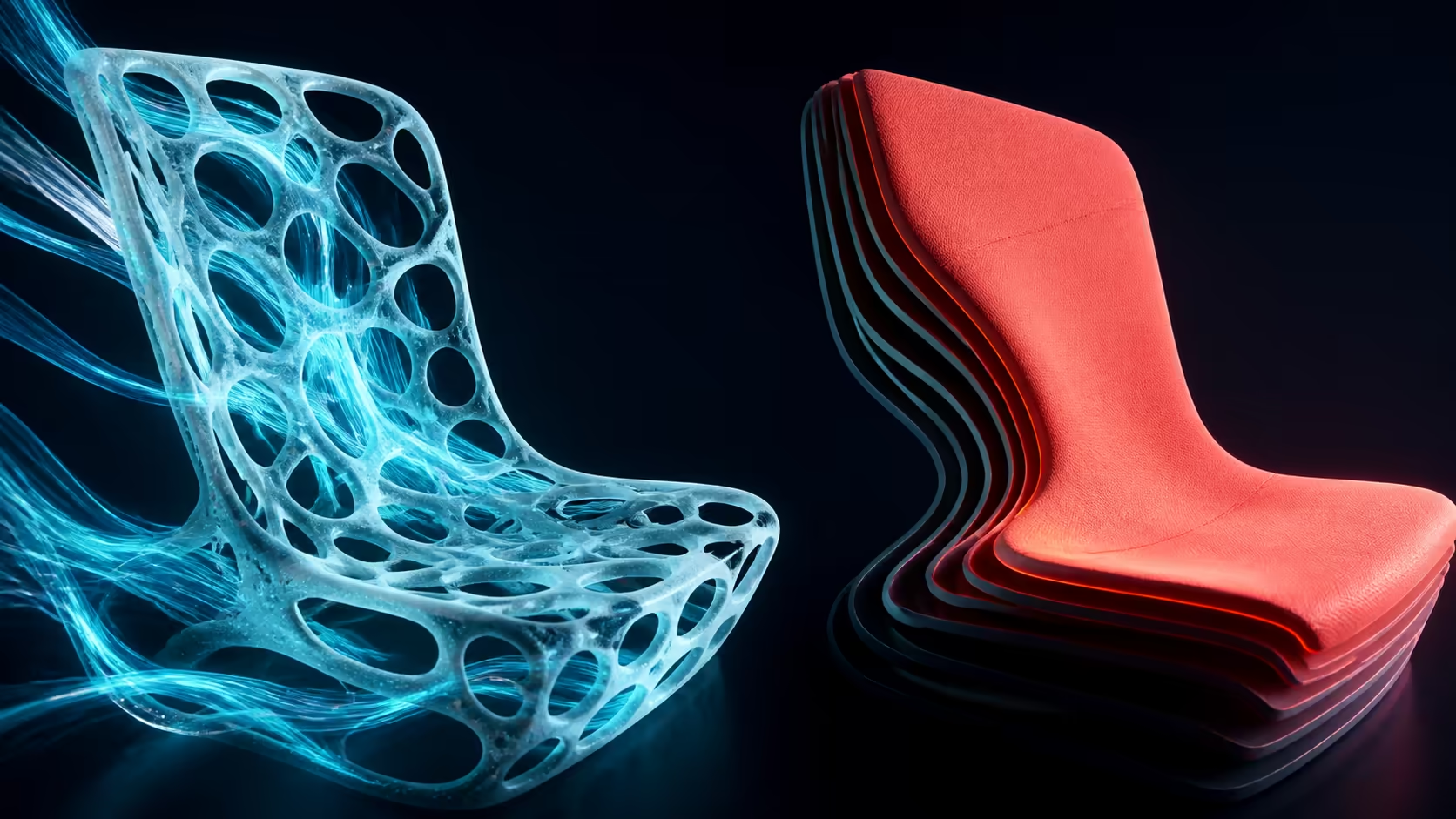
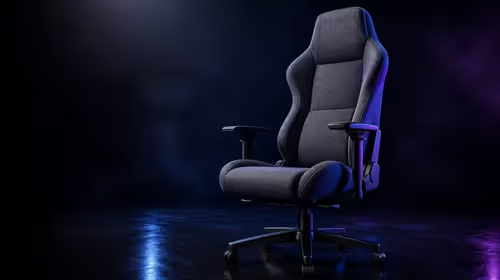
Choosing between mesh and foam office chair seats starts with airflow, pressure feel and the way each material supports a particular body. A broad material label cannot settle comfort, because construction and personal preference shape the result.
Quick Answer
The E3 Ultra uses a full nylon-and-yarn mesh cushion with 16.5% breathable construction, while foam provides a closed cushioned material.
Mesh commonly allows more air movement, while foam can provide a cushioned contact surface; neither guarantees better everyday comfort. The R9,599 E3 Ultra belongs on the mesh side with full nylon-and-yarn coverage and breathable construction.
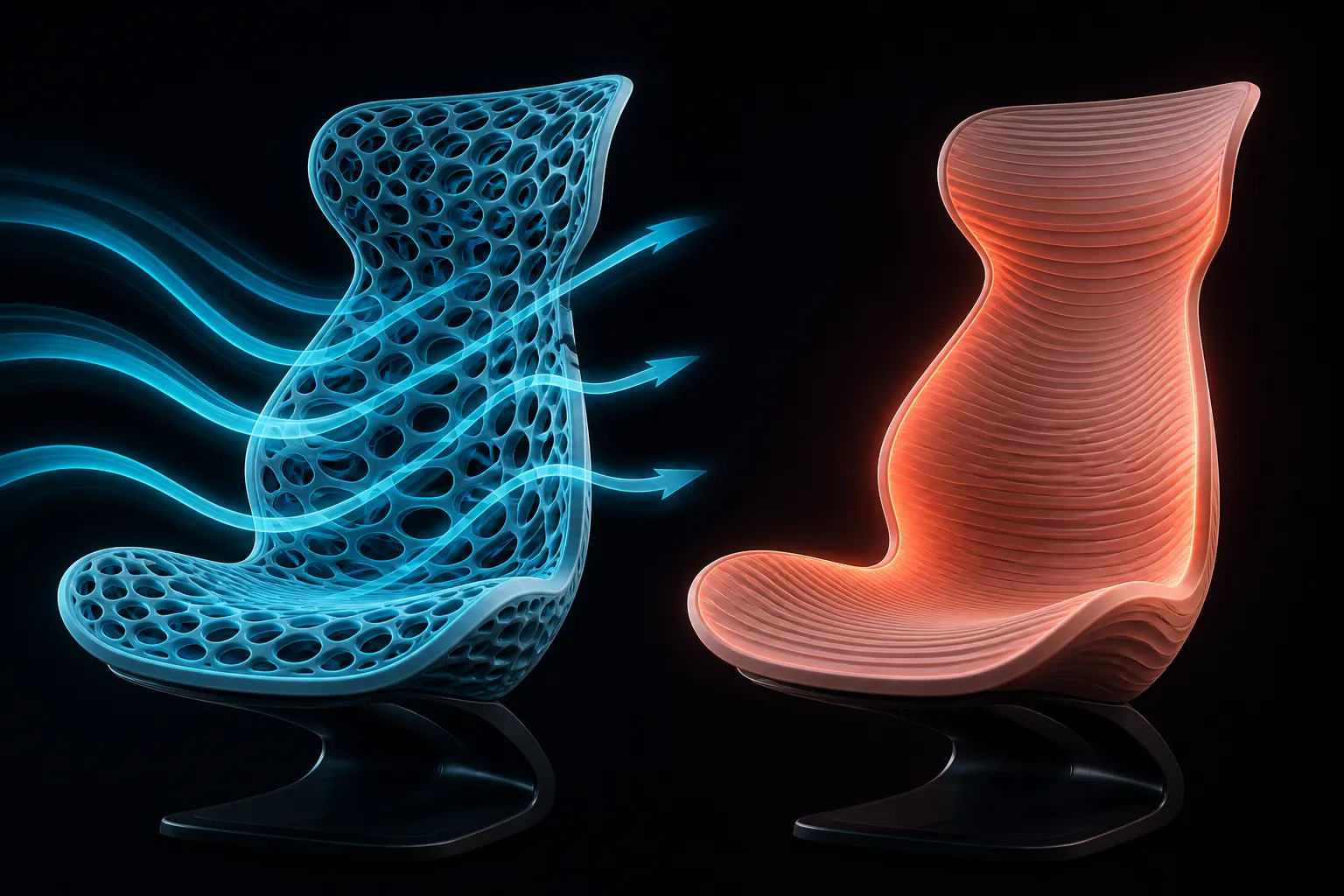
🌬️ Separate airflow from temperature promises
An open mesh structure can let air circulate through the seating surface. The effect still depends on weave, clothing, room conditions and how much of the body contacts the chair. "Breathable" is therefore a characteristic to test, not a fixed temperature outcome.
Foam generally blocks through-flow but may use contours or coverings that change how the surface feels. Ask what touches the user rather than judging from a photograph or category name.
🧽 Compare contact and care
Foam thickness, firmness and covering can affect pressure distribution, while mesh tension and frame edges can influence support. Those properties vary by design, so the material family alone gives an incomplete answer.
Cleaning also differs. Use a method suitable for the E3 Ultra's open nylon-and-yarn mesh rather than borrowing care instructions from a foam or upholstered chair in Evetech's HBADA seating category.
🪑 Keep adjustability in the trial
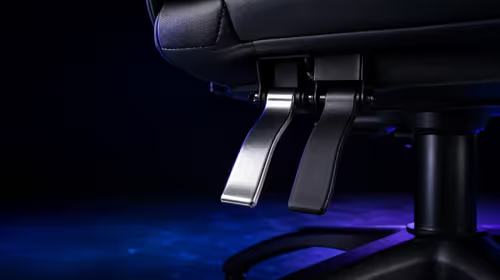
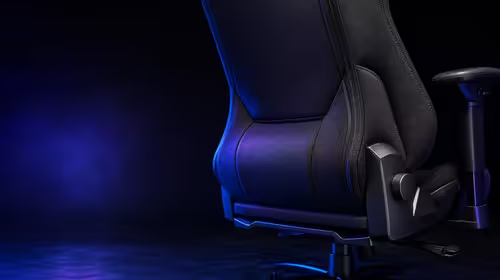
Material does not work in isolation. A seat can feel different after changing lumbar contact, arm position or backrest angle. The E3 Ultra's known nylon-and-yarn mesh should therefore be evaluated with its 8D lumbar adjustment and 140-degree recline in useful positions.
Use the same desk height, clothing and task duration for both seats. A fair trial avoids crediting the material for a benefit created by a different posture or workstation arrangement.
☀️ Test for South African conditions
Room temperature, sunlight and seasonal clothing change perceived warmth. Trial the chair where it will be used, preferably across more than one type of work session. Consider maintenance needs as well as the first touch.
Evetech's broad office-chair range provides a useful material comparison set. Record airflow, edge pressure, surface feel and cleaning requirements separately so one appealing characteristic does not hide a poor overall fit.
A buyer comparing online should request close material details instead of relying on white-chair styling or broad category placement. Identify the load-bearing surface, coverings and areas where a frame can meet the body. Those answers make an eventual in-person or returns-based fit test more focused.
Do not let thermal preference hide capacity and dimensions. A seat may feel cool yet fail the intended user's measurements, or a cushioned model may suit contact while blocking desk access. Resolve basic fit before deciding how much Rand value to assign to airflow.
If the room changes greatly between seasons, plan a second trial rather than expecting one warm-day result to settle the purchase. Record clothing and ventilation beside each observation so the surface is compared on consistent terms.
Its seat also slides 1.97 inches to fit different leg lengths. Compare airflow, edge pressure, thigh support and recovery after standing. The E3 Ultra belongs clearly on the mesh side, although the material still cannot guarantee comfort for every user.
Seat-depth adjustment should always be set before comparing pressure at the front edge.
Recheck depth after every long session.
The 16.5% breathable mesh construction gives this comparison a defined open-surface candidate instead of a category guess.
Frequently Asked Questions
Which question matters most when comparing seat materials?
Ask which complete seat supports the user through the intended tasks and room conditions. Material is one input alongside shape, tension, cushioning and fit.
Can material alone guarantee comfort?
No. Two mesh seats or two foam seats can behave differently, and personal proportions and posture affect the experience.
Is the HBADA E3 Ultra seat mesh or foam?
Its precise seating material is full nylon-and-yarn mesh with a 16.5% breathable construction. Compare that open surface directly with the foam candidate.
How should airflow be evaluated?
Test in the actual room with ordinary clothing and a representative sitting period. Do not infer a fixed cooling result from the word mesh.
Why verify material before choosing cleaners?
Liquids, tools and agitation that suit one surface may harm another. Use care guidance written for the exact seat material and finish.
Which E3 Ultra adjustments can be compared?
Its lower-back support is 8D adjustable, its armrests have 720-degree omni range, and its backrest reclines as far as 140 degrees.
Ready to compare seat materials under the conditions that matter?
Browse Evetech office chairs after defining your airflow, contact-feel and cleaning priorities for the actual workspace.