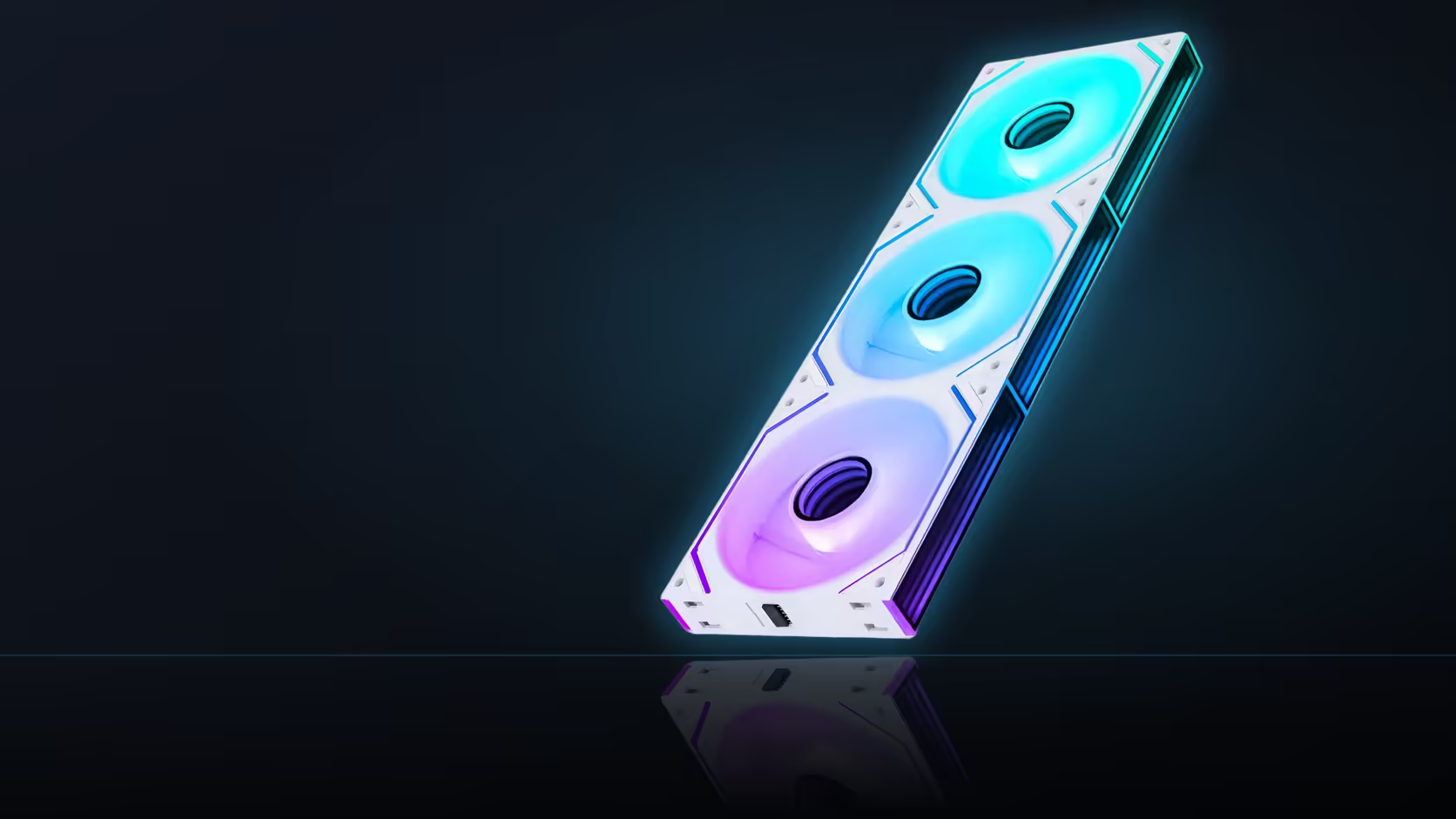
Put three different AsiaHorse fans side by side in a windowed panel and the differences show immediately, even when every spec sheet says "ARGB" in the title. The infinity-mirror ring effect is not universal across this range, and knowing which families actually share it decides which three you can mix without the row looking mismatched.
Quick Answer
Dawn Pro, Nyota Ultra and Amici 5GT all carry an infinity-mirror ring effect, so those three sit together most comfortably in a row. The Nyota A12 uses a plain LED ring without the mirror depth, and the Amici Pro lights its ring only while leaving the blades dark - mixing across those different groups is the combination most likely to show in a photo.
🪞 The three that actually match
Dawn Pro, Nyota Ultra and Amici 5GT each describe an infinity-mirror ring in their listings, which layers the LEDs to create a sense of depth rather than a flat glowing circle. That shared effect is what makes these three the safest combination for a visible row of fans - even where the exact LED counts differ between them, the underlying visual language is the same. Dawn Pro is rated at 71 CFM, Nyota Ultra at 58.5 CFM, and Amici 5GT at 61.5 CFM, so airflow performance also lands in a broadly similar band across the three.
⚪ Where the Nyota A12 differs
The Nyota A12 lights a straightforward 16-LED ring without the layered mirror effect the other three share. It is not a worse fan - it moves a comparable 61.5 CFM and daisy-chains cleanly across a three-pack - but it reads visually flatter next to a mirror-ring fan, and that difference is exactly the kind of thing that only becomes obvious once two fan types are mounted next to each other rather than compared on a spec sheet.
🖤 And where the Amici Pro differs again
The Amici Pro takes a third approach entirely: its infinity-mirror ring lights while the blades themselves stay completely dark, giving a ring-only look rather than a fully illuminated fan face. That is a deliberate aesthetic choice AsiaHorse offers as its own family, and it looks distinct enough from both the plain-ring Nyota A12 and the fully-lit Dawn Pro, Nyota Ultra and Amici 5GT group that mixing it into either of those rows is its own visible mismatch.
👁️ Why mixing shows more in a row than scattered
A single mismatched fan in a top-mounted exhaust position rarely draws attention, since the eye is not comparing it directly to anything else. Three fans lined up as intake in the same panel is a different situation entirely - any difference in ring style, LED density or brightness is directly comparable across adjacent units, and that side-by-side comparison is what turns a minor spec difference into something a visitor actually notices. If a build genuinely needs fans from two different families - perhaps for stock or budget reasons - separating them into different zones of the case, rather than one continuous row, is the more forgiving layout, and dressing the gap between zones with a piece from the case accessories range can soften the transition further.
💸 Cost is rarely the deciding factor
Price differences within this range are modest enough that budget alone should not force a mismatched row. A single Amici 5GT comes in at R199 and a single Nyota Ultra at R249, so staying within one matching family for a three-fan row typically adds well under R200 to the total compared with mixing two cheaper options from different families. For anyone weighing this against the wider case fan range, the mirror-ring group is the more consistent starting point for a visible bank of intake fans.
Frequently Asked Questions
Which AsiaHorse fan families use an infinity mirror?
Dawn Pro, Nyota Ultra and Amici 5GT all describe an infinity-mirror ring, so those three share that layered depth effect.
What does the Nyota A12 use instead?
A plain 16-LED ring, which lights evenly but without the layered depth the three mirror-ring models produce.
How does the Amici Pro differ from both?
Its ring lights while the blades stay dark, giving a ring-only look that is distinct again from either the plain-ring or fully-lit families.
Do the LED counts match exactly across the mirror-ring group?
Not precisely - the Amici 5GT lists 24 LEDs while the Nyota Ultra lists 16, so density differs even within the matching group.
Does mixing families ever work visually?
Across separated zones of a case it usually does, since the eye compares fans standing directly side by side far more readily than fans in different areas.
Which combination looks worst in practice?
Different ring styles placed in one continuous row, where the visual difference sits directly in view across three or more adjacent fans.
Does price differ much between the matching options?
Not significantly - a single Amici 5GT is R199 and a Nyota Ultra R249, so staying within one family rarely adds much to the total.
Planning a matched row of fans?
Browse Evetech's case fan range to see which AsiaHorse families share the same lighting style before you order a set.