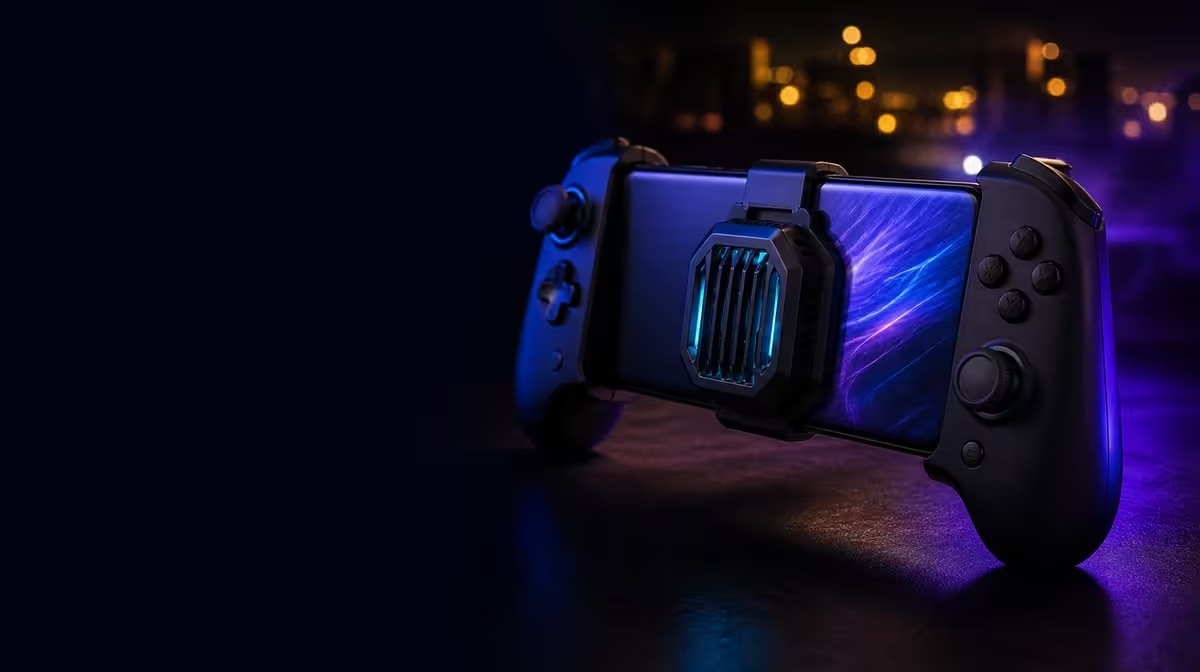
Competitive mobile play punishes variation more than it rewards a long feature list. Cooling and fast mobile esports controls matter because they support repeatable phone behaviour and crisp physical input across practice blocks. For R1,199, the GameSir X3 Pro combines an integrated cooler, Hall sticks and E-Sports Micro Switch Triggers in one stretchable unit.
Quick Answer
Cooling can help a phone manage sustained load, while Hall sticks and micro-switch triggers give the player consistent directional and digital-style input. The X3 Pro costs R1,199, but no controller can remove network conditions, game processing or the practice needed for reliable competitive execution.
❄️ Consistency begins with the handset
Seat the phone evenly against the cooler and keep all airflow openings clear. A warm phone may behave differently late in a session, so use the same training section and note response at fixed intervals. Room temperature, graphics settings and charging must stay consistent if the comparison is to mean anything.
The cooler cannot correct network latency or a game server issue. It addresses the physical thermal arrangement around the handset. South African players comparing integrated layouts can start with Evetech's mobile controller selection.
⚡ Fast controls still need disciplined inputs
The X3 Pro's micro-switch triggers provide a clear actuation point for rapid on-or-off commands. Press only far enough to register and release consistently. Hall sticks handle directional movement through magnetic sensing, reducing a contact-wear path without replacing calibration.
Use a neutral-input test before every important practice block. Then run short drills that separate movement, trigger timing and gyro correction. Restoring all features at once makes a missed action difficult to diagnose.
🎯 Build a repeatable match profile
Start with dual rumble reduced while testing 6-axis gyro so vibration does not disturb small physical corrections. Save the final settings and avoid changing sensitivity after one poor round. Competitive value comes from a profile that behaves predictably under pressure.
Build the profile around a short sequence of measurable drills. Track target transitions for Hall-stick control, missed resets for the triggers and fine corrections for gyro. Repeat each task after the phone has warmed so early-session results are not mistaken for full-session consistency.
Then combine the inputs in a match-length run. Keep graphics settings and brightness stable, route the cable away from the hands and note whether the phone remains seated against the cooler. A stable physical rig frees attention for decision-making rather than constant adjustment.
Use a separate profile for relaxed play if stronger rumble or a different sensitivity is more enjoyable there. Competitive settings do not need to govern every session.
Evetech's gaming accessories department helps players consider cable routing and the rest of a mobile station. The popular accessories collection provides more setup context, while practice remains the part no accessory can perform.
Include recovery in the training schedule. Hands and phone both need pauses between long blocks, and performance measured under mounting fatigue does not describe pure control response. A five-minute break can make the next drill more useful.
Save a screenshot of the final settings and name the profile by game. This prevents a later experiment from overwriting the competitive baseline. Retest after major game updates before assuming the same values still create the same behaviour.
The R1,199 X3 Pro offers multiple tools for consistency, but disciplined repetition remains the deciding factor. Cooling supports the phone, switches define actuation and magnetic sticks report direction; practice joins those systems into a match-ready routine.
Use the same warm-up before every comparison. Five minutes of familiar movement and trigger work reduces the chance that a cold first round is mistaken for a controller problem.
After practice, disconnect and inspect the phone seating. A competitive routine should finish with hardware ready for the next block, not abandoned under cable strain.
Frequently Asked Questions
Can the cooler reduce online lag?
No. It supports the phone's thermal conditions; network timing and remote game systems are separate.
What do micro-switch triggers contribute in competition?
They offer a distinct, short actuation for digital-style commands. Consistent release and timing still require practice.
Why are Hall sticks useful over repeated sessions?
Their magnetic sensing avoids a rubbing position track, helping address contact-related drift while settings and mechanics remain relevant.
What is the X3 Pro's competitive price point?
The GameSir X3 Pro is R1,199 with cooling, gyro, dual rumble and its main control features together.
Ready to turn mobile features into a repeatable practice setup?
Review Evetech's controller category and choose a layout that stays comfortable through your real training routine.