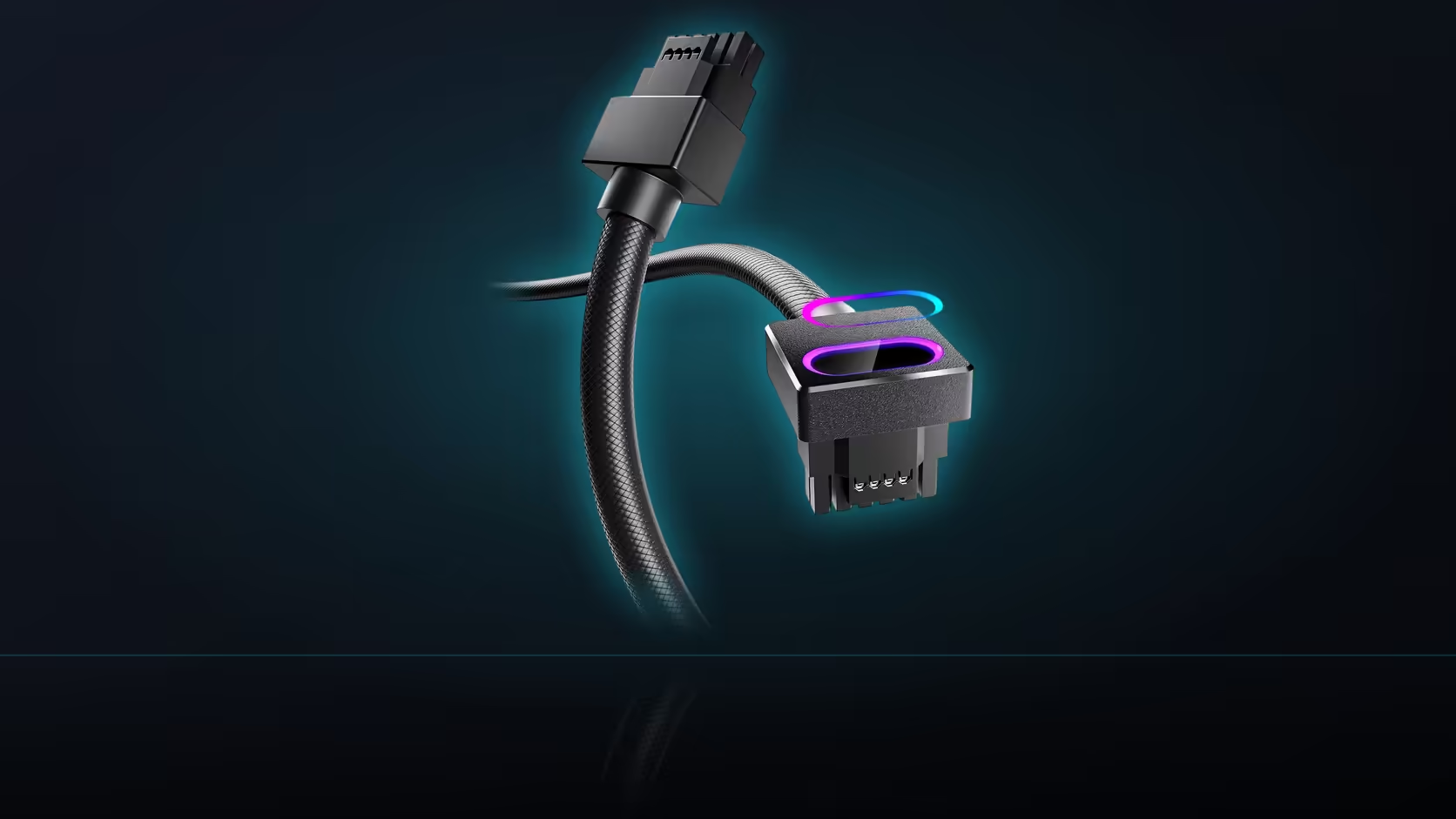
A cable does not remember anything once it is unplugged and set aside. If a Hydrus 16-pin cable ever moves from one build to another - sold on, handed to a friend, reused years later in a new machine - the caution AsiaHorse attaches to it about specific power supply brands does not travel automatically. Somebody has to carry that information forward deliberately.
Quick Answer
If this R699 AsiaHorse cable changes builds, the caution about Lian Li and Sharkoon power supplies needs to move with it, since the cable itself carries no label recording the warning. Passing that information on in writing is what stops it being fitted, unknowingly, to exactly the pairing AsiaHorse advises against.
Why this needs saying at all
The caution lives entirely in AsiaHorse's product listing, not on the cable itself in any physical form. A cable sitting loose in a parts drawer, or handed off in a plastic bag to someone else, carries no visible reminder that it should be avoided with two specific power supply brands. That information exists only where it was originally published - and once the cable leaves that context, nothing about the object itself preserves it.
A simple way to record it
A short note tucked into the original packaging, if it survives, or a line added to your own build documentation is enough: which cable this is, and which two brands AsiaHorse cautions against pairing it with. It does not need to be elaborate - it just needs to exist somewhere that travels with the cable rather than staying locked in a listing nobody thinks to revisit.
Why this matters more for a secondhand cable
Anyone acquiring this cable used has, by definition, no direct relationship with the original listing where the caution was stated. They are relying entirely on whatever information came with the physical item - which is exactly why the note matters most in precisely the situation where it is easiest to skip.
Is the caution likely to be updated over time?
It reflects whatever AsiaHorse has reported up to the point it was published, and reports of this kind can be revised as more information comes in. Checking the current listing at the point of reuse, rather than relying purely on a note written months or years earlier, is worth doing if the cable's next home is a genuinely new build.
What else deserves the same treatment
The brand caution is not the only detail worth carrying forward. The native 16-pin port requirement, the 480W rating, and the compatible card list (RTX 40-series, RTX 5080, RTX 5070, explicitly not the RTX 5090) all matter just as much to a new owner as the brand caution does - all four are conditions the cable depends on regardless of which build it ends up in next.
Does keeping the original box help?
It genuinely does, since original packaging is the natural place for a note to sit alongside the product it describes, rather than getting separated the way a loose slip of paper easily can. If the box is gone, any documentation kept with your own build notes achieves the same result.
If the next build uses a named brand anyway
The recommendation stands regardless of which build the cable ends up in: use a different pairing where Lian Li or Sharkoon is involved, which in practice usually means the cable supplied with that specific unit rather than this one.
Browse comprehensive cable solutions for the cable range, and graphics card accessories covers everything else the build needs.
Frequently Asked Questions
Why does this caution need to be recorded rather than just remembered?
Because it lives entirely in the original product listing, not on the cable itself, so it can easily be lost once the cable changes hands.
What is the simplest way to record it?
A note in the original packaging, or a line in your own build documentation, naming the cable and the two brands to avoid pairing it with.
Does this matter for a cable being reused in your own future builds?
Yes, though it matters most for a secondhand cable, where the next owner has no direct relationship with the original listing at all.
Is the caution likely to change over time?
It reflects whatever AsiaHorse has reported at the time of writing, so checking the current listing on reuse is worth doing.
What other details should travel with the cable besides the brand caution?
The native port requirement, the 480W rating, and the compatible card list - all matter just as much as the brand caution to a new owner.
Does keeping the original box actually help with this?
Yes, it is a natural place for a note to stay attached to the product rather than getting separated the way loose paper can.
What if the cable ends up in a build using one of the named brands?
The recommendation still applies: use a different pairing, generally the cable that shipped originally with that specific supply.
Passing a Hydrus cable along to a different build?
Note the brand caution and the compatibility requirements before it changes hands, then browse Evetech's cable range for anything new you need.