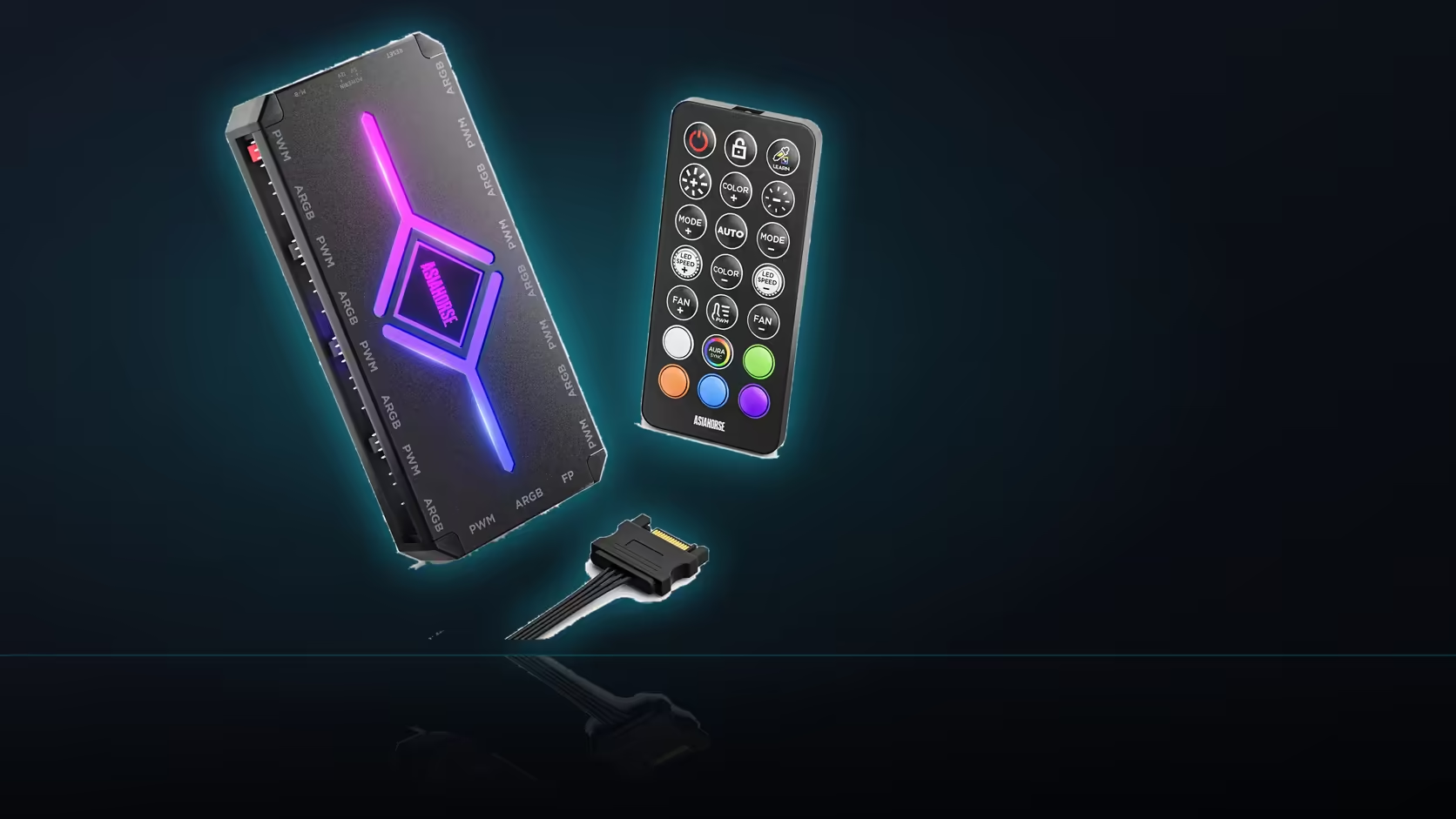
Nine ports per bank sounds generous until you count what a typical build actually needs, and the honest answer for a lot of machines is fewer than nine. Buying an ASH-S1 for capacity you will not use is still a valid choice, but it is worth being deliberate about it rather than assuming bigger is automatically better.
Quick Answer
Nine ports per bank is only useful relative to what the build has to connect - count every fan and every lit device first. A machine with four fans and two lighting items is paying R349 for headroom it may never fill, while a nine-fan build with several lit accessories uses the ASH-S1's full capacity comfortably. Either way the product page is currently hidden with no confirmed stock date.
🔢 What to count before buying
Two separate totals matter here: every fan needing a speed connection, and every addressable device needing a lighting connection. Fans are usually easy to count since they are visible in the case layout, but lit devices are easy to undercount - fan rings, cable covers, strips and any other 5V 3-pin accessory all belong on that second list. Getting both totals down on paper before ordering the hub avoids either buying more capacity than needed or discovering mid-build that nine ports were not actually enough.
✂️ When a splitter beats a hub
For two or three fans, a simple splitter off a single board header is usually cheaper and simpler than adding a whole hub and its SATA connection to the case. Splitters do have a practical ceiling though - current draw and untidy cabling both become issues once you push past a handful of fans on one splitter chain. The crossover point where a dedicated hub starts making more sense than splitters is usually somewhere around five or six fans, depending on how much lighting is also involved.
📐 The LED total is a separate limit
Port count is not the only ceiling to plan against - the ASH-S1 is also rated for up to 377 LEDs in total across its lighting bank, which is a separate figure from how many ports are populated. A build could use every one of the nine addressable ports with modest single-LED-count devices and stay well under that limit, or fill just two or three ports with long strips and get close to it. Check your actual fan count against Evetech's case fan range before committing to a hub, and if the tally comes out modest, the NZXT fan controller may suit a smaller-capacity build better.
Frequently Asked Questions
What should be counted before buying?
Every fan needing a speed connection, and every addressable device needing a lighting connection, as two separate totals.
What counts as a lit device?
Fans with rings, light strips, cable covers and anything else connecting over a 5V 3-pin addressable lead.
Is spare capacity worthless if unused?
Not entirely, since builds grow, though paying for nine ports to use three is worth recognising as a choice.
Would splitters be cheaper for a small build?
For two or three fans they usually are, and they avoid adding a unit and a SATA connection to the case.
At what point does a hub clearly win?
Once the connections outnumber what the board and a couple of splitters can carry comfortably.
Does the LED total matter separately from port count?
It does. The 377-LED ceiling applies across every device plugged into the hub combined, quite separately from how many ports are still free.
Not sure if nine ports is overkill for your build?
Count your fans and lit accessories, then browse Evetech's case range to see how the layout lines up.