Quick Answer
For data science coursework in SA, a no-regret docking station is a USB-C or Thunderbolt dock with Gigabit Ethernet, 65W-85W power delivery, and a 4K at 60Hz output (around R1,000-R2,500 at Evetech). Stable networking and a second screen matter far more than premium gaming features for notebook work.
The specs that actually matter for data work
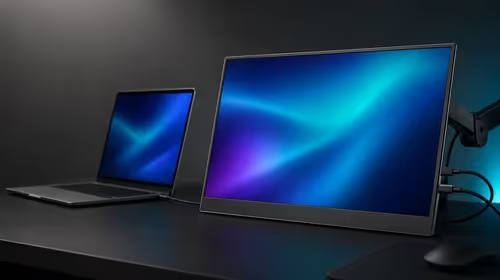
Data science means moving datasets, syncing to cloud storage, and reading notebooks beside their output. A dock with stable Gigabit (or 2.5G) Ethernet keeps large dataset transfers reliable, 65W-85W power delivery charges an ultrabook through long sessions, and a 4K at 60Hz output adds a second screen so you can view code and results together. That combination supports real coursework.
What to skip
You do not need dual 4K at 120Hz or 140W power delivery; data work does not stress the display, and the analysis runs on the CPU and RAM, not the dock. Put any saved budget into 16GB or 32GB of memory (around R750-R1,900) and a fast SSD, which actually speed up loading and processing data.
SA buyer notes
Buy locally for warranty and confirm the Ethernet is native Gigabit, not USB 2.0 limited. A dependable mid-tier dock plus a memory upgrade beats a flagship dock for data work.
FAQ
What dock matters for data science coursework?
A USB-C or Thunderbolt dock with Gigabit Ethernet, 65W-85W power delivery, and a 4K at 60Hz second-screen output, around R1,000-R2,500.
Does the dock speed up my analysis?
No. Analysis speed comes from the laptop's CPU and RAM. The dock only adds networking, ports, and a screen, so invest the saving in memory.
Do I need a second monitor for data work?
It helps a lot. Viewing a notebook on one screen and its charts or output on another speeds up coursework, which is why a 4K 60Hz output matters.
coursework, a R1,000-R2,500 dock with stable Gigabit Ethernet and a 4K 60Hz second screen is the no-regret pick; put any saved budget into RAM, which speeds up processing big datasets.