Universities can administer NSFAS learning-material support through different approved processes, which is why one student talks about a voucher while another sees funds through an institution or payment channel. That difference does not prove every university offers both choices. Your written 2026 award and institution notice decide the method, retailer limits and purpose.
Quick Answer
Ask the funding office whether your support is paid through the institution, an NSFAS-approved channel, a supplier order or a voucher. Request the rules for adding your own money, changing retailer and unused value. Do not assume you can demand another method because a friend at a different university received it.
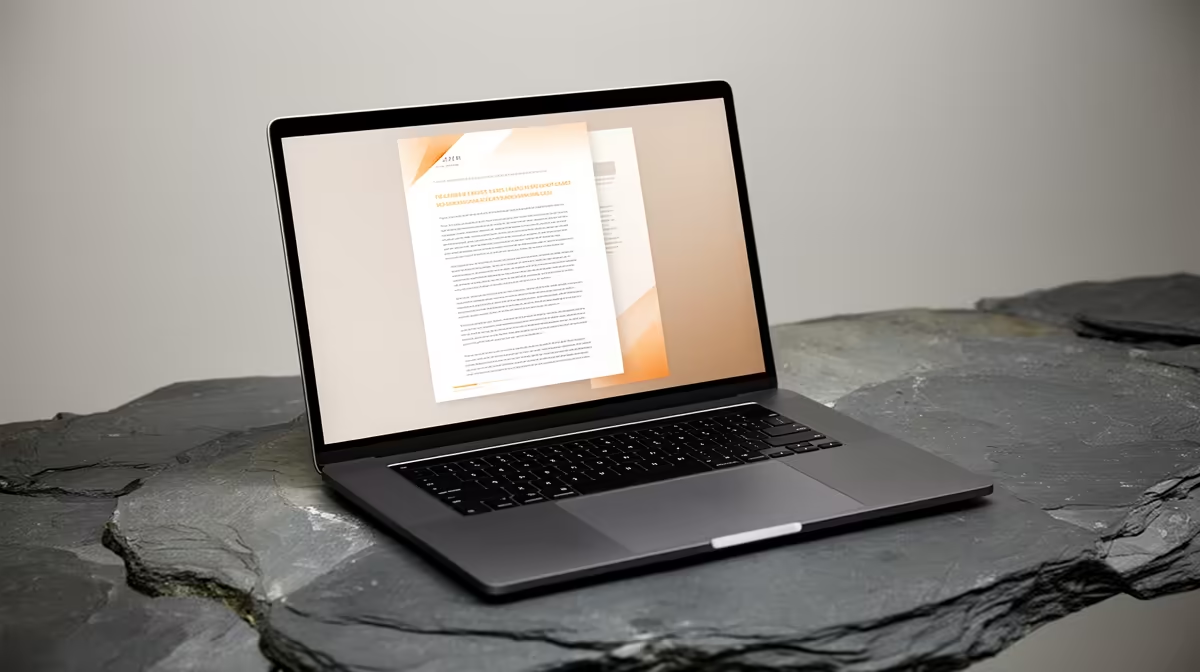
Use laptop best sellers and current laptop deals only after you know which products and sellers the method permits.
Why Processes Differ
NSFAS sets national funding guidelines, while institutions exchange registration data and can play a role in allowance administration. Payment arrangements also change across years and student categories.
The 2026 university guideline describes the learning-material allowance and its academic use. It does not mean every campus must show the student the same checkout experience.
TVET rules should be checked separately. Private institutions are not automatically covered by the public university process; verify NSFAS funding eligibility with the authority.
Voucher Versus Account Payment
A voucher can limit seller, product, expiry and top-up rules. A direct payment can offer more shopping flexibility while remaining intended for approved learning materials.
Neither route is always faster. Verification, registration, institution data and supplier fulfilment can delay either one. Ask about your specific case.
Questions to Put in Writing
Ask which brands and specifications qualify, whether delivery is included, who provides the warranty and how a return works. Confirm whether you can add personal funds at checkout.
Do not state that a retailer accepts a voucher until the current authorised list or merchant confirms it. Payment acceptance can change.
Keep the invoice and a copy of the voucher terms. The course specification still matters more than the easiest product to redeem.
Compare the Warranty Route
Ask whether the student deals with the retailer, device supplier, institution or manufacturer when a fault appears. Record collection cost, service location and expected documents. A voucher purchase still needs proof of sale and a clear supplier identity.
For qualifying defective goods, the six-month remedy in CPA Section 56 may be relevant. Whether it applies turns on the transaction and supplier. Keep the invoice and ask the National Consumer Commission or a qualified adviser to assess a disputed claim.
Do not open or modify the laptop before understanding warranty effects. Test keyboard, ports, Wi-Fi, battery charging, storage and course software early, then report faults through the written route.
FAQ
Which method is more common?
There is no useful universal answer for every 2026 institution and category. Check your official funding and campus notice.
Does a voucher limit laptop brands?
It can limit retailers, products or price. Read the exact voucher catalogue and terms.
Can a student request another method?
You may ask, but no change is guaranteed. The institution and NSFAS must confirm what the approved process allows.
Get your institution's NSFAS payment method, product limits and top-up rules in writing before comparing laptops or assuming another campus process applies.