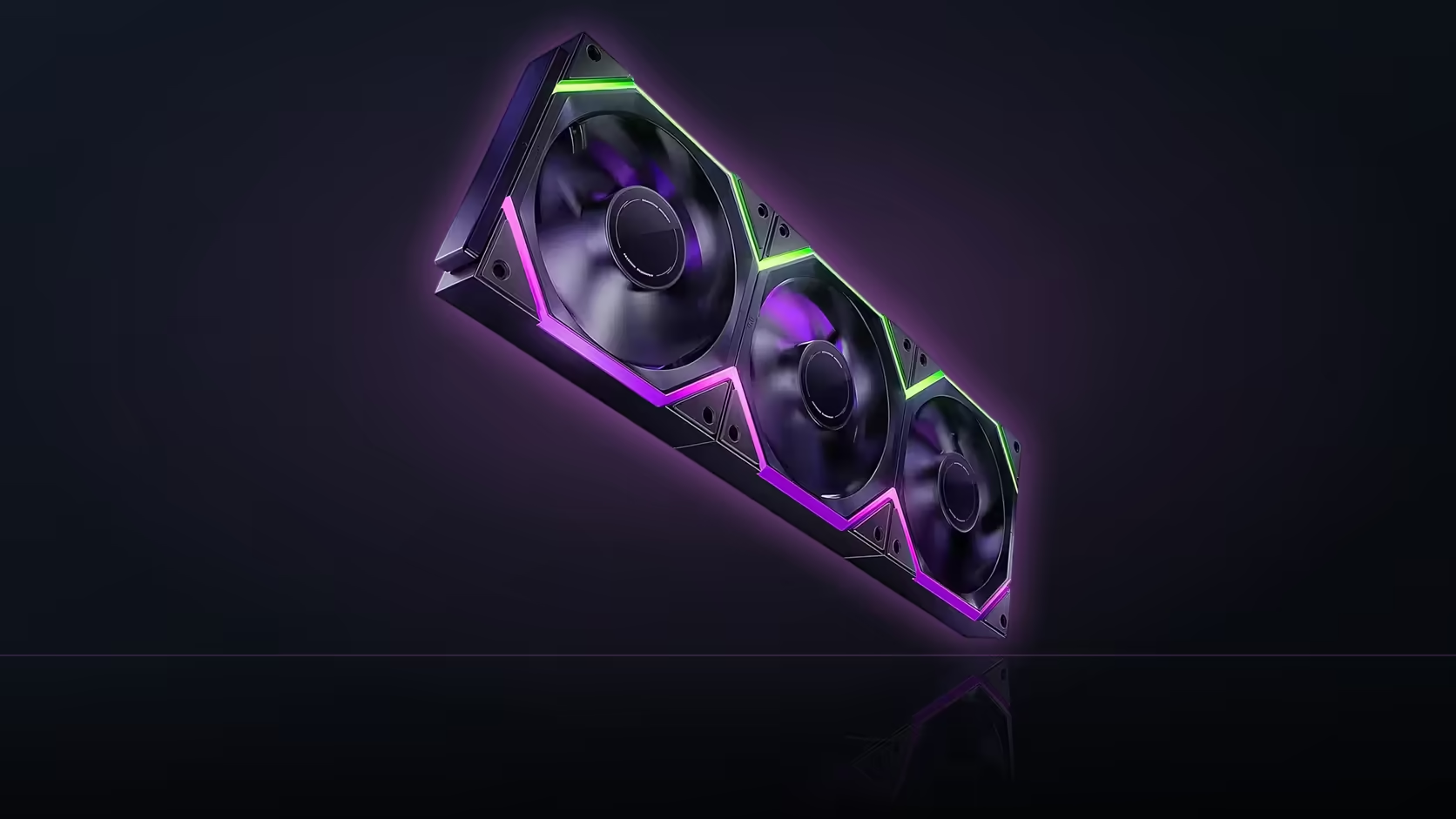
Not every spec gets written down, and the behaviour of a ring's two zones under plain motherboard sync is one of the details AsiaHorse simply does not publish for this fan. The Nyota Pro listing is clear about what standard effects and full independent control each mean, yet it stops short of describing what the second zone actually does while a build waits on that hub decision.
Quick Answer
AsiaHorse's own description of the Nyota Pro states that standard effects run from a motherboard's 5V 3-pin header, and that full independent dual-zone control comes through the separately sold UMBRA hub. What it never states is how the two zones behave relative to each other while running on board sync alone, whether mirrored, offset, or otherwise. At R599 (VAT included) for the three-pack, that particular behaviour is simply not part of the published specification.
📄 What the listing actually confirms
Two facts are stated plainly: standard effects work over the 5V 3-pin header, and full independent control of the two zones is a UMBRA capability. Both statements are specific and neither one describes the in-between state, which is exactly where the second zone's behaviour under board sync would sit.
❓ Why the gap matters to a buyer
A build planned around a particular visual effect, say a colour that fades differently across the two zones, cannot be confirmed from the spec sheet alone. Assuming the zones mirror each other is no safer than assuming they behave independently by default; neither reading has support in what AsiaHorse actually publishes. The honest position is that this detail is unknown until confirmed another way.
🔍 How to actually find out
Two routes exist: asking AsiaHorse or a knowledgeable retailer directly, or simply testing the fans once fitted and running board software over them. For most builds this detail will not matter much, since a scheme that just needs the row to follow the board's colour choice tends to look fine regardless of how the zones split internally. It only becomes important for a design that specifically depends on the two zones reading differently.
🧭 A safer way to plan
Rather than betting on an unpublished behaviour, plan the row around a single scheme that reads consistently whichever way the zones resolve. If independent, deliberate control over each zone is genuinely required, that capability is documented and reserved for AsiaHorse's UMBRA hub, which sits outside Evetech's current range. For a look at other 120mm options while this stays unresolved, Evetech's case fan category is worth a browse, and fan controller hardware in general covers the hub-based side of the question.
Frequently Asked Questions
Does AsiaHorse publish how the zones behave on board sync?
No. The listing confirms standard effects run from the header and that full independent control needs UMBRA, but it does not describe zone behaviour in between.
Should I assume the zones mirror each other?
That assumption is not supported by the published spec, and the opposite is equally plausible; it is best left unconfirmed.
Does this affect most builds?
Usually not, since a row simply following the motherboard's overall scheme tends to look coherent regardless of the internal zone split.
Is UMBRA the documented way to get certainty here?
It is the only route the listing names for full independent control, though it is not something Evetech currently stocks.
Could testing the fitted fans answer this?
Yes, running board software over the installed row is a practical way to observe the actual behaviour firsthand.
Curious how the lighting behaves before you commit?
Have a look at Evetech's case fan range for other 120mm options with more predictable published specs.