Quick Answer
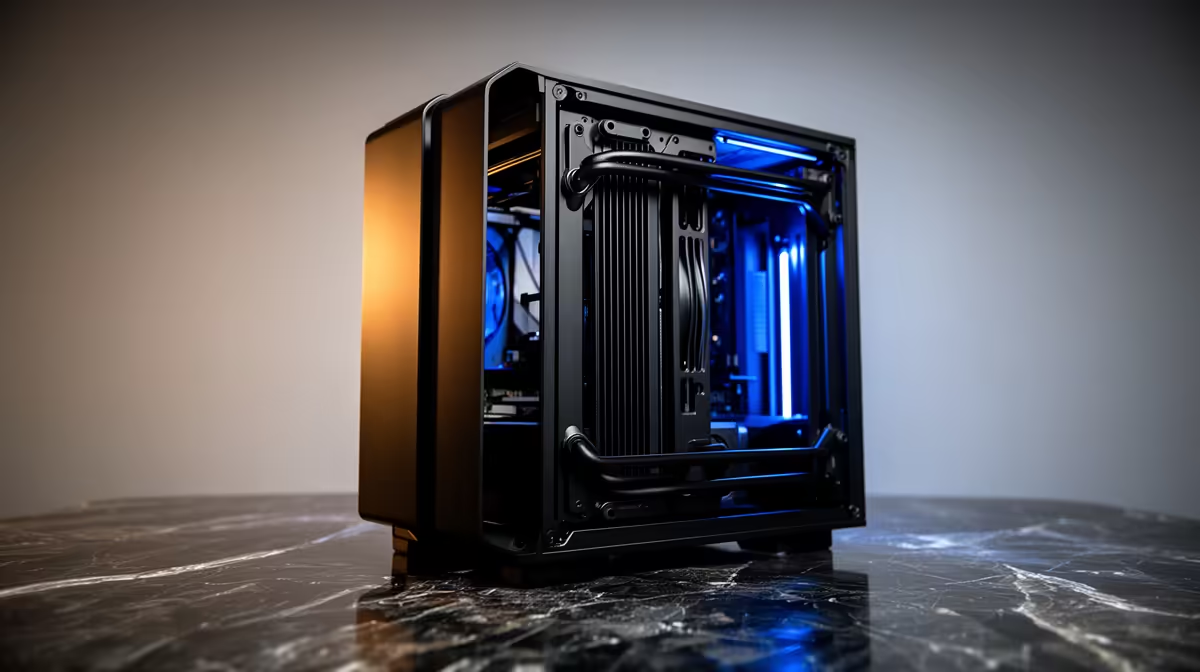
For quiet-setup builders, a case with radiator support is worth paying for if you run a high-core CPU or want low fan speeds, since a 280mm or 360mm radiator cools quietly. A sound-dampened mid-tower with radiator mounts runs R1,200 to R3,000 and clears a 330mm GPU.
When Radiator Support Earns Its Price
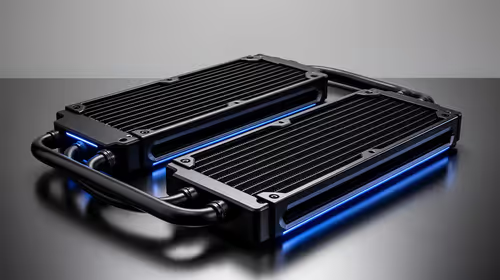
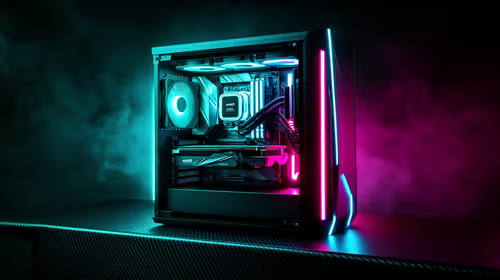
A quiet build aims to keep noise low while cooling effectively, and radiator support helps when you run a hot CPU. A 280mm or 360mm AIO radiator spreads heat across more surface, so its fans spin slower and quieter, near 25 to 30 dBA, than a small air cooler working hard. If your CPU is a high-core chip that runs warm under gaming or creative load, paying for a case with proper radiator mounts lets you cool it quietly. For a modest CPU, a good air cooler may already be quiet enough, so radiator support is optional.
Match the cooling to your chip: radiator support matters most for hot, high-core CPUs in a quiet build.
Quiet Features Beyond The Radiator
A quiet case pairs radiator support with sound-dampening panels, foam lining, and a fan layout that moves air at low RPM. Look for a sound-dampened mid-tower at R1,200 to R3,000 that clears a 330mm GPU and supports a 280mm or 360mm radiator. Large 140mm fans move the same air as 120mm fans at lower speeds, cutting noise. These features together let a build stay near 25 to 30 dBA under gaming load.
Balance Quiet With Airflow
A fully sealed, dampened case is quiet but can trap heat, so the best quiet builds balance dampening with enough airflow to keep the GPU below its throttling point. A 360mm radiator in the front or top, plus a slight positive pressure, keeps temperatures and noise both in check. Set a gentle fan curve so the fans only ramp when a heavy game actually heats the system.
FAQ
Is radiator support worth paying for in a quiet build?
Yes, if you run a hot, high-core CPU. A 280mm or 360mm radiator cools it with slower, quieter fans near 25 to 30 dBA. For a modest CPU, a good air cooler may already be quiet enough.
Does a quiet case hurt cooling?
It can if it is overly sealed, trapping heat. The best quiet cases balance sound-dampening with enough airflow and radiator support to keep the GPU below its throttling point while staying near 25 to 30 dBA.
What makes a PC case quiet?
Sound-dampening panels and foam, large low-RPM 140mm fans, radiator support for slower fan speeds, and a gentle fan curve. Together these keep a build near 25 to 30 dBA under gaming load.
gentle fan curve in a quiet build so fans only ramp under real gaming load; with a 280mm or 360mm radiator, the system can stay near 25 to 30 dBA most of the time.