Quick Answer
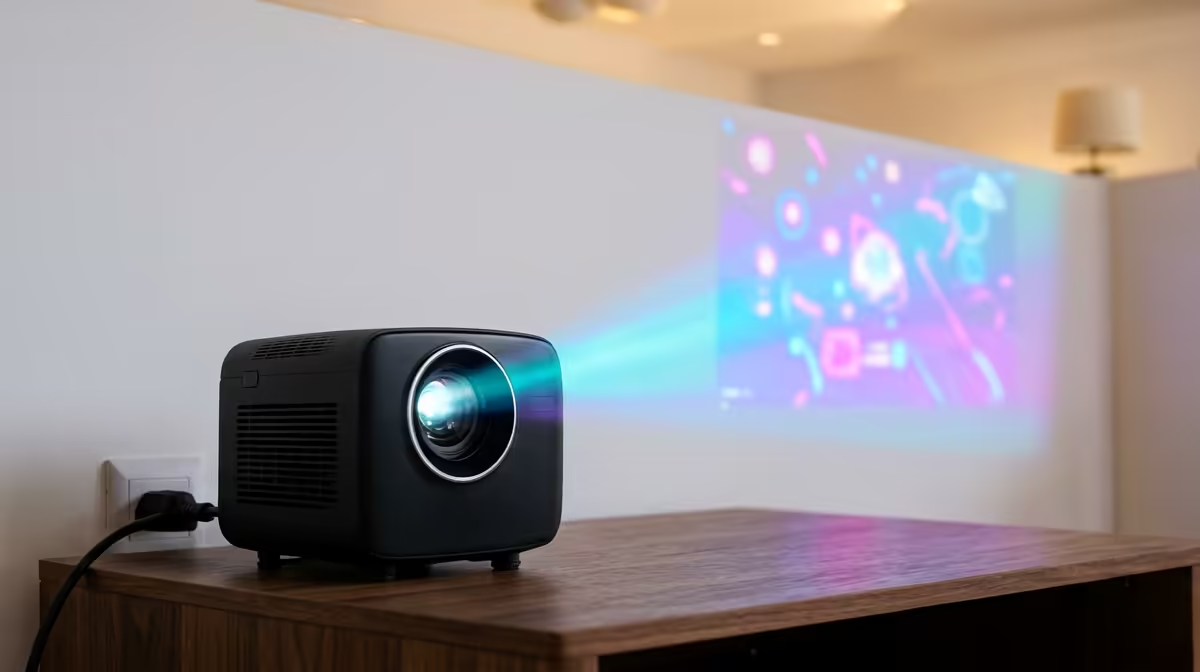
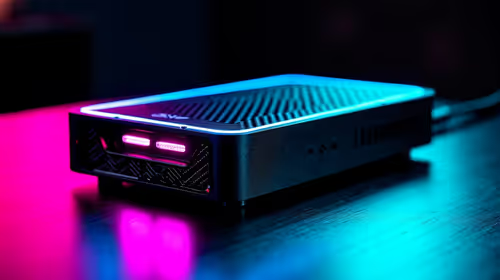
For living-room gamers buying a portable projector, the big SA buyer mistakes are: ignoring real brightness (under 500 ANSI lumens looks washed out), overlooking input lag, and assuming the built-in speaker is enough. Aim for 500-plus ANSI lumens, under 30ms input lag in game mode, and plan for external sound. Budget R4,000-R10,000.
Mistake one: chasing fake brightness numbers
Many portable projectors quote inflated "lumens" figures. Look for ANSI lumens, the honest measure. For a living room with any ambient light, 500 ANSI lumens is a practical floor, and 700-plus is better for evening play with a lamp on. A dim projector washes out in a normal lounge, which is the most common disappointment.
Mistake two: ignoring input lag
For gaming, input lag matters as much as picture. A projector with no game mode can add 50-100ms of lag, making fast games feel sluggish. Look for a game mode that drops input lag under 30ms. Check this spec before buying; the marketing rarely highlights it.
Mistake three: relying on the tiny speaker
Built-in projector speakers are weak and tinny. Plan to connect a soundbar, speakers or a headset via Bluetooth or a 3.5mm/optical output. Confirm the projector has the audio output you need for living-room sound.
FAQ
How many lumens does a living-room projector need?
Look at ANSI lumens, not inflated figures. 500 ANSI lumens is the practical floor for a lounge with some light; 700-plus is better for evening gaming with a lamp on.
Does input lag matter on a projector?
Yes, for gaming. Without a game mode a projector can add 50-100ms of lag. Choose one with a game mode rated under 30ms so fast titles stay responsive.
What does a gaming-capable portable projector cost at Evetech?
Portable projectors with decent brightness and a game mode currently run about R4,000 to R10,000 at Evetech, with brighter, lower-lag models at the upper end.
check the projector's ANSI lumens and its game-mode input lag, the two specs marketing hides. Above 500 ANSI lumens and under 30ms lag is what makes living-room gaming look bright and feel responsive.