Quick Answer
For a backup-and-storage workflow, a streaming microphone's spec floor is a USB cardioid mic with a 48kHz sample rate and 16-bit or 24-bit depth, around R900 to R2,500. Good audio keeps recordings clean and right-sized: a 48kHz 16-bit mono track runs roughly 350MB per hour, so quality and storage planning go together.
The Microphone Spec Floor
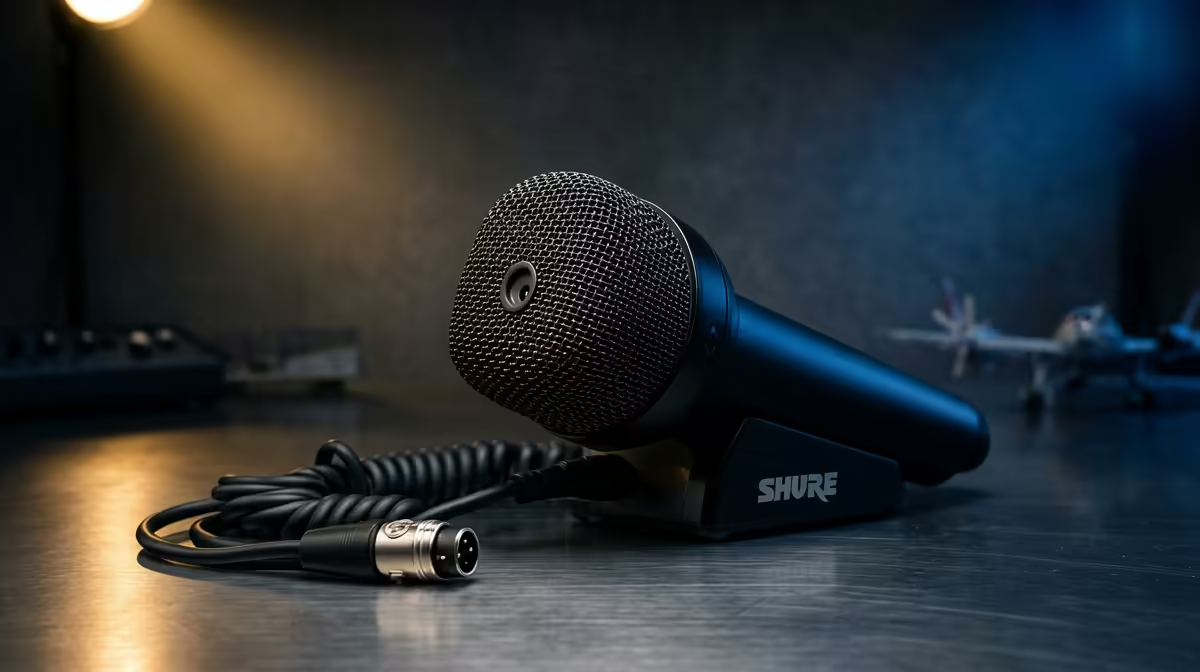
For clear voice capture you stream or archive, the floor is a USB cardioid microphone, which rejects off-axis room noise, recording at a 48kHz sample rate with 16-bit or 24-bit depth. That gives broadcast-grade clarity without a separate audio interface. Models like a HyperX SoloCast, Blue Yeti Nano, or Rode NT-USB Mini class mic sit around R900 to R2,500 and meet this floor comfortably. Below it, cheap mics pick up hiss and room echo that you cannot fully fix later.
A cardioid pattern is the key spec, since it captures your voice and rejects fan and keyboard noise behind it.
Where Audio Meets Storage Planning
Audio quality and storage are linked, because recording settings set file size. A 48kHz 16-bit mono voice track runs roughly 350MB per hour as WAV, while 24-bit pushes that higher; compressing to a sensible bitrate in OBS or your recorder cuts it dramatically. Plan storage around how many hours you keep: a 1TB drive holds thousands of hours of compressed voice but far fewer raw WAV files. Choosing the right format up front avoids both quality loss and runaway storage use.
Set It Up To Capture Clean And Compact
Position the cardioid mic 15cm to 25cm from your mouth on a stand or boom arm, set the gain so peaks sit below clipping, and record at 48kHz. Use a pop filter to tame plosives. For archiving, record raw if you edit heavily, then export compressed for storage. This keeps your audio clean while keeping file sizes, and your backup drive, under control.
FAQ
What is the minimum spec for a streaming microphone?
A USB cardioid microphone at a 48kHz sample rate with 16-bit or 24-bit depth, around R900 to R2,500. The cardioid pattern rejects room noise, giving clean voice capture without a separate interface.
How much storage does recorded audio use?
A 48kHz 16-bit mono voice track runs roughly 350MB per hour as raw WAV, with 24-bit larger. Compressing to a sensible bitrate cuts file sizes dramatically, so format choice drives your storage needs.
Do I need a 24-bit microphone for streaming?
16-bit at 48kHz is enough for clear streamed or archived voice. 24-bit gives more editing headroom but larger files, so use it only if you edit heavily and have storage to spare.
at 48kHz and export a compressed copy for archiving; a cardioid USB mic gives clean audio while compression keeps your backup drive from filling with raw WAV files.