PUBG PC requirements need two kinds of headroom: enough local performance to keep frames even, and a connection test that reflects the route you really play on. A powerful graphics card can make a firefight look smoother, but it cannot shorten the distance between a South African fibre line and a remote game server.
Quick Answer
Compare PUBG's current official requirements with your entire PC, including its CPU, GPU, installed memory, free storage and Windows version. For competitive play, aim above the lowest supported specification so short frame-time spikes are less likely to disrupt a fight. Diagnose network delay and rendering slowdown separately.
✅ Build around consistent frame delivery
An average frame-rate figure can hide brief stutters. PUBG scenes with many players, effects and streaming assets can reveal a system that seemed comfortable in a quiet area. Choose a graphics setting and resolution that leave room for busy moments, then watch frame time during an actual match rather than relying on a menu benchmark.
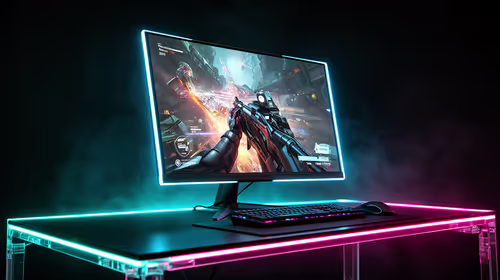
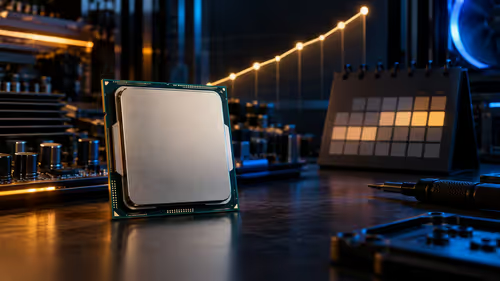
Current gaming PC deals are easiest to compare once you know whether you are targeting a standard 1080p display or something more demanding. Balance matters: graphics power, processor performance, memory capacity and adequate storage work together. Dropping every setting to the floor is rarely as satisfying as selecting a tier that suits the screen from the start.
🔌 Test the machine before blaming the GPU
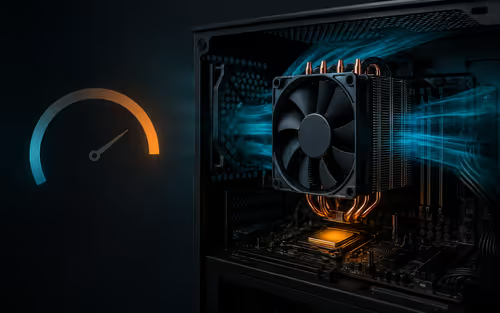
An SSD can reduce loading and asset-access waits, while background tasks can compete for memory, processor time or drive activity. Close unnecessary launchers, overlays and downloads for a clean test. Check temperatures after sustained play, since heat can reduce clock speed even in a system that starts a session strongly.
A gaming laptop deal deserves the same complete-specification check as a desktop. Place it on a firm surface with the vents unobstructed, and compare its actual graphics and processor configuration rather than assuming every laptop carrying the same family label performs alike.
📶 Measure ping as its own problem
Use wired Ethernet for a baseline on the home connection. Record latency variation, packet loss and time of day across more than one session. South African players can encounter different paths as ISP routing and upstream congestion shift, so a single fast round is not proof that a route will stay good.
If the game feels delayed while the frame graph remains stable, concentrate on the connection. If frames dip at the same time with low, steady ping, investigate local settings, drivers, temperatures and background load. Separating those signals avoids chasing the wrong upgrade.
🛡 Keep support evidence when faults repeat
Take note of a repeatable artefact, crash or performance issue across more than one game. Record driver versions, settings and temperatures before seeking help. For a component fault, locally honoured warranty support, proof of purchase and Consumer Protection Act protections are much more useful when the symptom is documented clearly.
Frequently Asked Questions
Which components should I check for PUBG?
Compare the official processor, graphics, memory, free storage and operating-system requirement with the whole PC. The intended resolution and settings also affect the suitable tier.
Why does PUBG benefit from recommended headroom?
Competitive scenes can expose short frame-time spikes. A balanced configuration above the basic target is better placed to keep frame delivery steady in demanding moments.
Can a stronger GPU remove server delay?
No. The GPU renders frames locally, while the internet route, latency variation and packet quality affect online response.
How should South African players test PUBG lag?
Begin on wired fibre, compare routes or regions where the game makes that possible, and observe the frame graph at the same time. That helps separate a route problem from a rendering problem.
Does an SSD improve a PUBG setup?
It can improve loading and file access. The CPU, memory and graphics balance still determine much of the experience during a match.
What can cause sudden frame drops besides weak hardware?
High temperatures, driver trouble, background activity and memory pressure can disrupt a capable PC. Test one variable at a time before replacing parts.
Ready to prepare for steadier PUBG sessions?
Match a gaming PC to your display target, then check wired latency and frame timing as two separate parts of the setup.