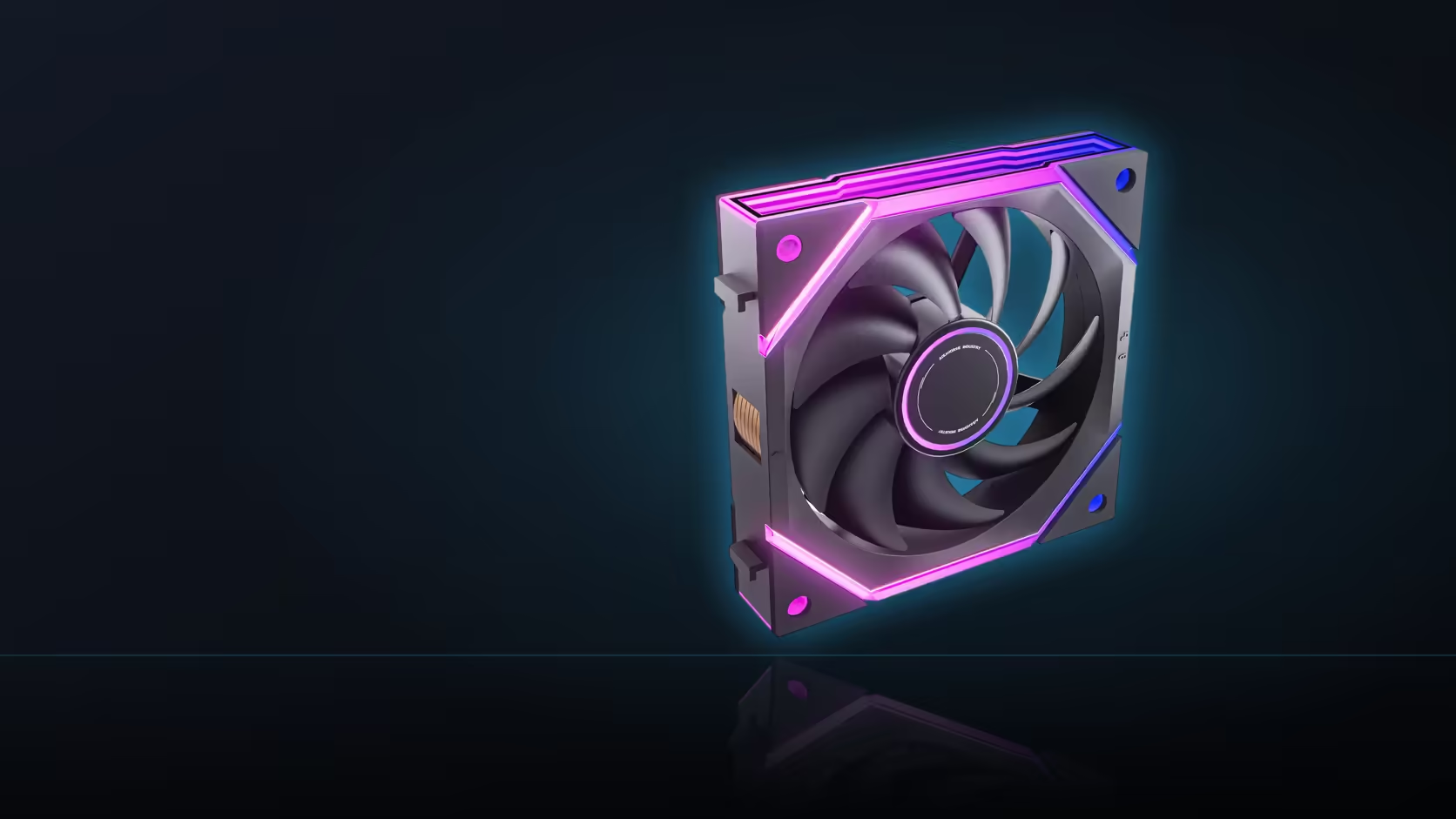
A box that includes the right screws for a job feels like a signal that the product inside was built for that job. With a radiator, that signal is misleading. The Nyota Ultra ships with radiator mounting hardware, and that is a fitting convenience rather than a statement about how the fan actually performs against a dense fin stack.
Quick Answer
The Nyota Ultra includes radiator mounting screws in the box, but no static-pressure figure exists for this model. Having the correct hardware to fit a radiator says nothing about whether the fan works well against one; those are two separate questions the listing does not answer together.
🔩 What the included screws actually give you
Radiators need longer mounting screws than a standard case panel, since they clamp through the fin stack rather than a thin steel surface. Including that hardware in the box saves a buyer from sourcing the right length separately, which is a genuine convenience. It is a statement about fitting the fan to a radiator, not about how well the fan then performs once mounted there.
❓ Why that distinction actually matters
Static pressure describes how well a fan continues to push air through something that resists it, like the dense fin stack on a radiator, as opposed to open air where nothing pushes back. A fan can be perfectly easy to mount and still struggle against that resistance if its design favours open-air airflow over pressure. Screws in the box answer the mounting question; they say nothing about the pressure question.
📊 What is actually published for this fan
The Ultra's listing states 58.5 CFM airflow, an 800 to 2000 RPM PWM speed range, 6 to 30 dBA noise, nine blades, and a hydro bearing. No static-pressure claim exists for this model, which means the listing simply does not offer the figure that would normally settle whether it suits a restrictive radiator mount.
🌡️ How to actually judge suitability
The fan can still be physically mounted to a radiator using the included screws, and plenty of builds will do exactly that. Whether it performs well there is a separate matter that the published specification does not answer, so the only reliable test is measuring coolant or component temperatures in your own build once it is running. Treating the included hardware as a performance endorsement is the mistake worth avoiding here. Browse the case fan range for models with a published static-pressure figure if that comparison matters to your build, and check case accessories for radiator mounting extras.
Frequently Asked Questions
What do the included radiator screws actually provide?
The longer mounting hardware a radiator needs, so the fan can be fitted without sourcing screws separately.
Does including those screws imply the fan suits a radiator?
No. It is a fitting convenience, and no static-pressure figure is published to support any performance claim.
Why does static pressure matter specifically for a radiator?
Because a dense fin stack resists airflow, and a pressure figure describes how well a fan continues to push through that resistance.
Is the airflow figure enough on its own to judge this?
No. Airflow is measured in open air, so it does not predict how the fan behaves pushing through a radiator's resistance.
What figures are actually published for the Ultra?
58.5 CFM airflow, an 800 to 2000 RPM range, 6 to 30 dBA noise, nine blades, and a hydro bearing.
How would I actually judge whether it works on my radiator?
By measuring coolant or component temperatures in your own build, since the published spec does not answer that question directly.
Ready to judge radiator suitability by temperature rather than by the box contents?
Browse Evetech's case fan range and measure your own build once it is mounted.