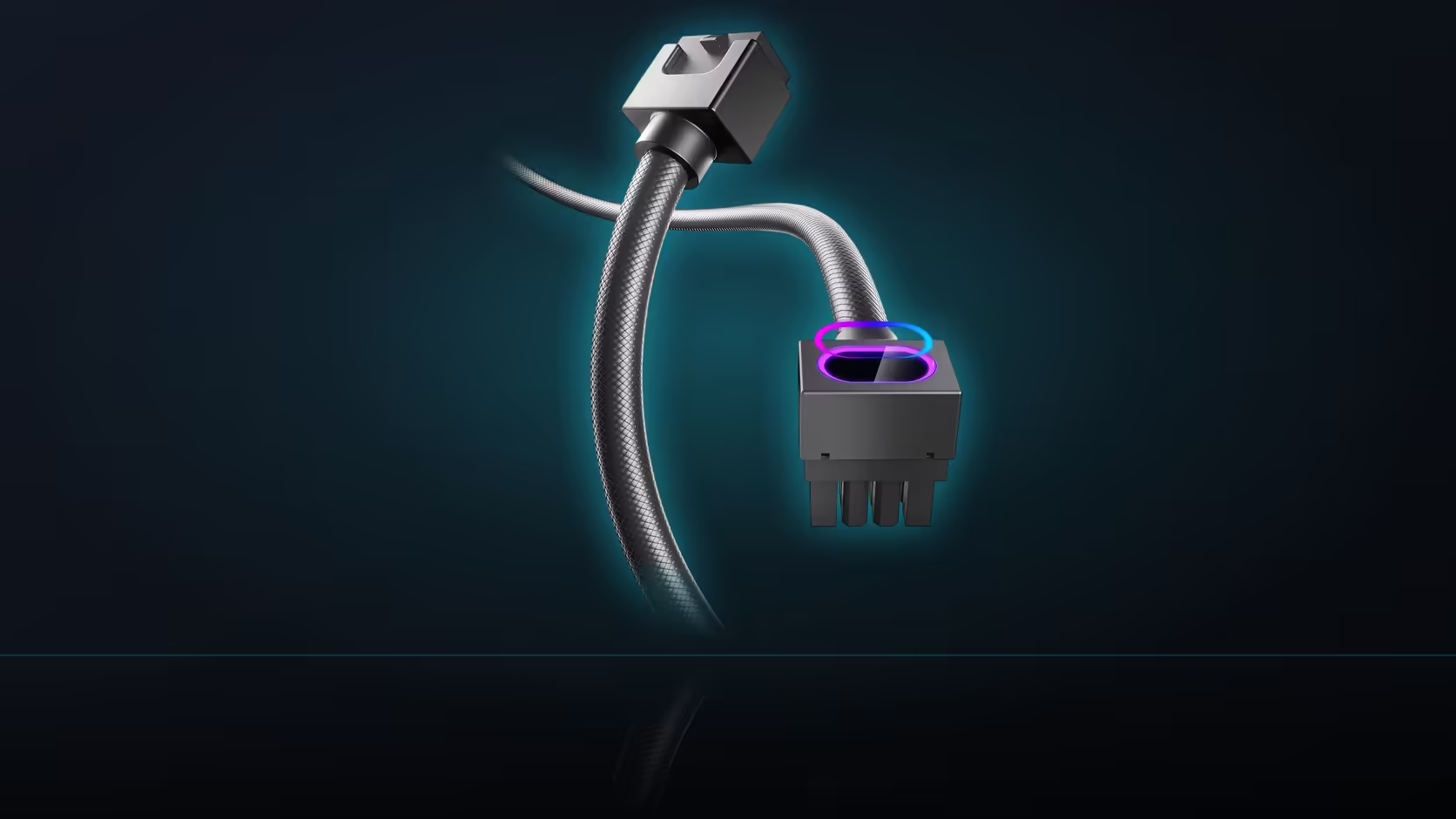
A connector standing straight up above the board demands a certain amount of clear air directly overhead - air that is frequently in short supply at the crowded top edge where the CPU power socket lives. The Hydrus EPS cable's right-angle design solves that specific problem, though not without a trade of its own.
Quick Answer
The EPS version uses a Type A right-angle head, which turns the cable at the socket instead of standing proud of it. That helps in tight top-edge layouts. It also changes how you reach the connector, because the body now sits flat rather than pointing upward.
📏 What the right-angle shape actually gains
The core benefit is height, plain and simple: a connector that turns sideways right at the socket needs meaningfully less vertical clearance above the board than a standard straight connector standing fully upright would require. That difference in required headroom is precisely what makes the right-angle design useful in exactly the situations where a straight connector would struggle.
🏔️ Where that height saving actually matters most
This benefit shows up most clearly under a close-fitting case roof or a top-mounted radiator and fan stack, where a vertical connector risks physically meeting the case panel or the radiator itself before it has fully seated into the socket - a genuine fitting problem a right-angle design simply avoids by never needing that vertical space in the first place.
✋ What the flatter profile costs in return
The trade-off is access: because the head sits flat against the board once seated rather than standing proud of it, there is meaningfully less of the connector body actually exposed to grip when it eventually needs to be removed or reseated for any reason - a real consideration worth weighing against the height it saves.
🔧 Fixed geometry, shared design language, and sequencing the fit
Unlike the ATX side-exit family, which offers a genuine choice between Type T and Type L directional variants, the EPS version's right-angle head is a single fixed Type A geometry with no left-or-right choice offered - there is one design, and it is what you get regardless of which direction your board's particular layout might have otherwise favoured. It shares its underlying right-angle design language with the ATX version of the cable, though the EPS head is scaled specifically to serve an eight-pin socket rather than the larger twenty-four-pin one, and is labelled Type A in its own product name to distinguish it from the ATX family's directional options. The ARGB window's position follows the connector's own geometry too - since the head sits flat rather than raised, the resulting glow sits correspondingly close against the board surface itself rather than being held up and away from it the way a taller, upright connector's lighting might otherwise appear. If a tall cooler genuinely overhangs the processor socket in your build, fitting this connector before the cooler goes on is the sensible sequence to follow, since seating it first removes what is otherwise the hardest and most fiddly part of the entire job once the cooler is already mounted and blocking easy access. cable solutions covers the rest of this connector's own shelf; accents built for a crowded top edge specifically sit at NZXT case lighting.
Frequently Asked Questions
What does the right-angle shape gain?
Height. A head that turns at the socket needs far less room above the board than a straight connector standing upright does.
Where does that help most?
Under a close case roof or a top-mounted cooler, where a vertical connector can meet the panel before it fully seats.
What does it cost in return?
Access. The head sits flat against the board, so there is less of it to grip when the connector needs to come out.
Does the direction of the turn matter?
On the EPS version the head is a Type A right-angle, so the geometry is fixed rather than offered as a left or right choice.
Is this the same head as the ATX version?
Both are right-angle designs, but the EPS head serves an eight-pin socket and is labelled Type A in the product name.
Does it affect where the lighting shows?
The window is in the head, so a flat head puts the glow close against the board rather than raised above it.
Should I fit it before the cooler?
If the cooler overhangs the socket, yes. Seating the connector first removes the hardest part of the job.
Fitting a connector into a crowded top-edge layout?
Have a look at Evetech's power supply range and check your cooler clearance before ordering.