Rust PC requirements reward a balanced build because a crowded server asks more of a machine than a simple loading screen does. Your processor, graphics hardware, memory and drive all meet different parts of the workload while structures, players and terrain are changing around you.
Quick Answer
Use Rust's current official requirements as a baseline, then aim beyond the minimum if you expect busy servers, longer sessions or higher visual settings. An SSD helps the game fetch assets quickly, adequate RAM reduces pressure on the system drive, and a capable GPU handles the image on screen. South African players should assess local performance and the internet route separately: a smooth PC cannot shorten a distant server path.
🔌 Start with the machine you actually own
Open the Windows system information and identify the CPU, installed memory, graphics adapter and free storage. Laptop branding alone is not enough because variants can have very different parts. Leave enough room on the drive for the game, updates and normal Windows operation; a nearly full disk makes troubleshooting unnecessarily messy.
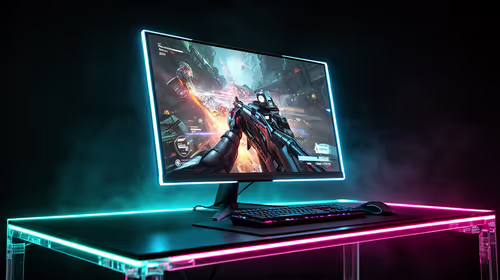
When comparing complete systems, gaming PC deals provide a useful view of how processor, memory and graphics choices fit together. Judge a candidate against the server size, resolution and visual target you have in mind, rather than against a single headline specification.
🧩 Memory and storage have different jobs
RAM holds data the game and Windows need quickly. When it becomes tight, the system may lean harder on the drive, which can show up as hitching or delayed asset access. That symptom still needs care: background applications, heat and a struggling storage device can look similar.
For an existing desktop, inspect supported type and capacity before considering the memory modules available here. A module must match the motherboard platform; capacity alone does not make it compatible. If loading behaviour is the concern, compare suitable solid-state drives only after confirming the connection type and available slot.
📶 A server problem is not always a PC problem
Rust can feel unresponsive for two very different reasons. Local frame-time trouble is visible even while looking around alone, whereas route latency or packet loss affects communication with the server. Test the same area offline or on a quiet server, then compare it with the busy session that feels wrong.
For South African households, test at the times you normally play. Evening LTE tower contention and fibre routing can change the result from a quiet morning check. Ethernet removes one variable from the home network and makes it easier to see whether Wi-Fi interference is contributing.
🛡 Keep a long-session test honest
Use a repeatable scene and observe temperatures after the system has been under load for a while. Dusty filters, poor cable placement and hot room air can limit sustained performance. Clean the case carefully and leave room around its vents before blaming a single component.
Avoid downloading questionable tweaks that promise a universal Rust fix. Current drivers, a clear baseline and one controlled change provide much better evidence of what helped.
Frequently Asked Questions
Why does Rust need a balanced PC?
Large worlds, player activity, structures and texture data create work for the processor, memory, graphics card and storage. No single component handles the whole load.
Should I target minimum or recommended requirements?
Recommended headroom is the more practical target for busy servers and extended sessions. Minimum requirements are a starting point for compatibility, not a promise of every setting.
Why is fast storage useful for Rust?
An SSD can improve loading and asset access. It does not replace the processor, RAM or graphics capability needed while playing.
Can South African server routes affect combat response?
Yes. A congested or long route adds delay independently of local frame rate, particularly when the server is far from your connection.
Ready to size up a Rust-capable build?
Browse complete gaming PCs, then compare the processor, memory, storage and graphics hardware as one system.