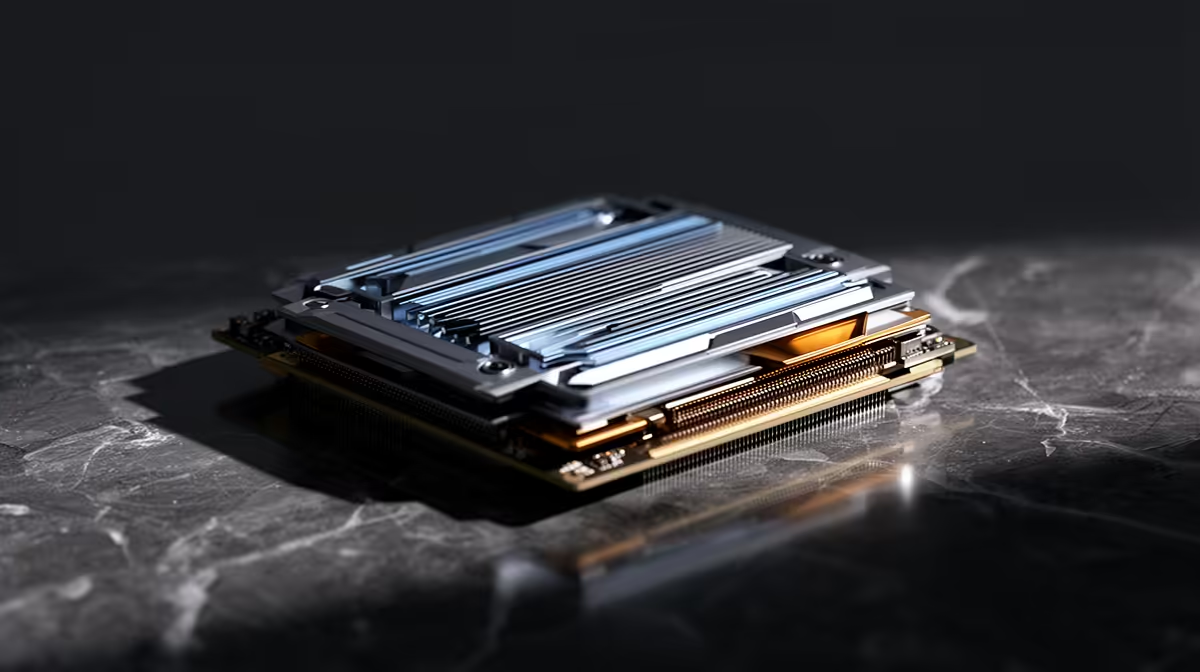
The Ryzen 7 7800X3D is still an exceptional gaming processor because its large cache reduces the delays that hurt CPU-bound games. Its weakness in 2026 is not performance. It is opportunity cost: every Rand spent preserving a small CPU lead is a Rand unavailable for the graphics card or monitor that may change the experience more.
Quick Answer
Yes, the Ryzen 7 7800X3D remains worth buying for high-refresh gaming, especially with a powerful GPU. AMD specifies eight cores, 16 threads, up to 5.0GHz boost and 104MB of total cache on AM5. Evetech's processor category had a median of R6,699 as of July 2026, while the named Ryzen 5 9600X was R4,499, so the X3D premium needs to buy visible CPU-bound performance rather than prestige.
🎯 Resolution decides how much the CPU matters
At 1080p with a fast graphics card, the processor is asked to prepare more frames and the 7800X3D's cache can make a noticeable difference. At 4K, the GPU usually carries more of the load, narrowing the practical gap between a premium gaming CPU and a strong mainstream chip.
That makes the processor a natural fit for 240Hz and 360Hz displays. Buyers can compare the AMD CPU range while keeping the monitor target visible.
🧠 Why the older X3D design still works
AMD pairs eight Zen 4 cores with extra cache, allowing more game data to stay close to the processor. Games that repeatedly access the same working set can benefit strongly. Applications that scale mainly with raw core count or clock speed may favour a different CPU.
The 7800X3D is therefore a specialist with broad gaming strength, not the universal fastest processor for every task. Compare it with Ryzen 7 options if the machine also handles rendering, compilation or heavy production work.
🔭 AM5 gives it a longer useful context
AMD has extended AM5 support through 2029, so the surrounding motherboard and DDR5 memory can outlast this processor. That platform runway reduces the risk of building around an older CPU generation, because a later chip swap does not automatically require a new board.
The Intel processor category remains relevant for comparison, particularly where mixed workloads matter. The correct verdict is workload-based: choose the 7800X3D for gaming-first, high-refresh systems; choose a cheaper CPU when the GPU budget is still constrained.
Frequently Asked Questions
Is the 7800X3D still fast enough for a flagship GPU?
Yes. It remains a strong pairing, particularly at high refresh rates where CPU performance is exposed.
How many cores does it have?
AMD specifies eight cores and 16 threads, with a maximum boost clock of 5.0GHz.
Does it need an expensive motherboard?
No. A compatible AM5 board with suitable power delivery and the required BIOS support is enough; premium board features are optional.
Is it good for productivity work?
It is capable, but its main advantage is gaming cache. Heavier multi-core production may justify a processor with more cores.
Ready to pay for cache only where it changes the result?
Compare AMD and Intel processors at Evetech, then reserve the 7800X3D for a gaming-first build with a monitor and GPU fast enough to expose its advantage.