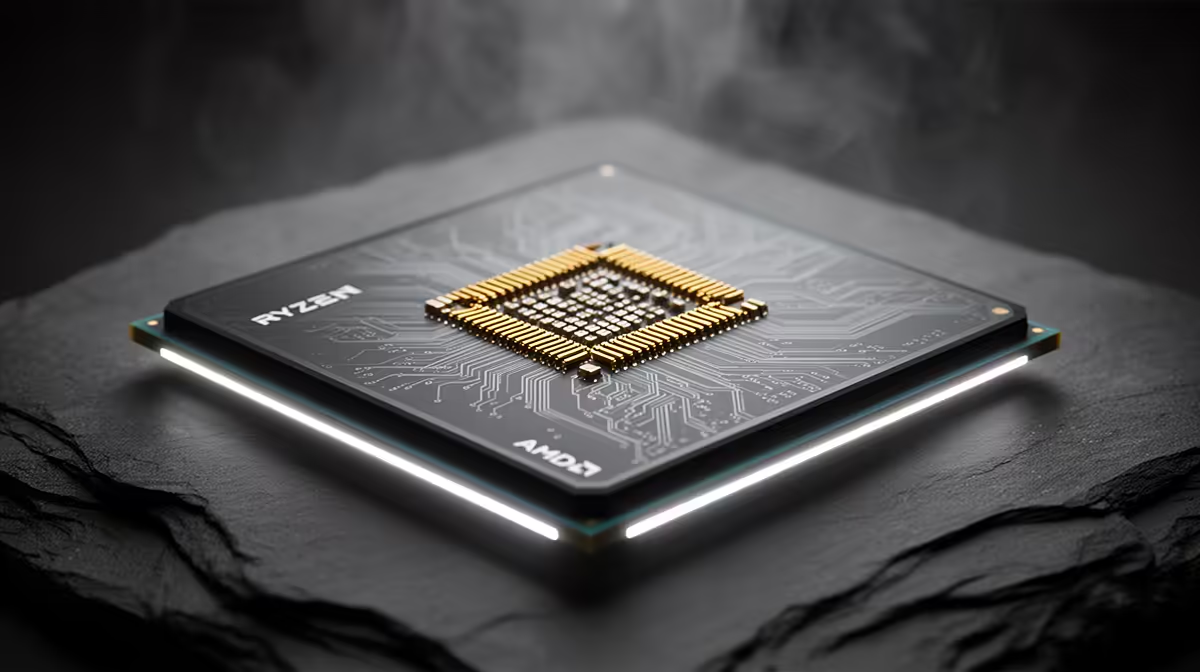
A Ryzen processor's advertised boost clock is a peak target for suitable cores under the right workload, temperature and power conditions. It is not the clock every core should hold during rendering. Seeing a lower all-core figure under sustained load can be normal stock behaviour.
Quick Answer
Check Effective Clock per core during a light single-thread test and a separate multi-core run. Confirm the BIOS is current, the cooler is mounted well and the power plan is sensible. Compare your result with the exact CPU's specification and a matching workload, not the number printed on a different Ryzen box.
Find the exact generation in the AMD CPU range, or compare the platform with current Intel processors. Core count, architecture and power behaviour matter as much as the advertised peak.
Peak Boost Has Conditions
Precision Boost chooses clocks many times per second using temperature, current, power and reliability limits. A lightly threaded task can place work on one preferred core and let it approach the stated maximum. A heavy all-core task spreads current and heat across the package, so the sustainable clock drops.
Silicon variation, motherboard firmware and background activity affect the brief peak you observe. Monitoring software can also miss a short event because its polling interval is slower than the boost change.
Read the Right Sensor
Core Clock may show a requested multiplier while a sleeping or stretched core does less work. Effective Clock reflects completed clock cycles across the sample period and gives better context for performance.
Watch package temperature, PPT, TDC and EDC beside it where the tool exposes them. Hitting one limit explains why the processor stopped climbing. A stock cooler may reach a thermal or acoustic balance sooner than a large tower cooler without indicating a fault.
Make a Fair Test
Load BIOS defaults, close background jobs and let temperatures settle. Run a single-thread benchmark for peak behaviour, then a multi-core test for sustained speed. Record score as well as clocks; a high sensor reading with poor work completed can signal clock stretching or a measurement problem.
Check whether Eco Mode, a custom power plan or a motherboard limit is active. Do not raise voltage or power just to chase the label. The advertised maximum is a ceiling, not a required all-core result.
When to Investigate Further
Look deeper if effective clocks stay far below comparable stock results while temperature and power headroom remain, or if performance has dropped since a firmware change. Check chipset drivers, Windows power settings and background monitoring. A cooler problem is more likely when temperature reaches the processor limit within seconds and the score falls across repeated runs.
FAQ
Should every core reach the advertised boost clock?
No. The maximum applies under defined conditions and may be reached by selected cores in light work.
Is a lower Cinebench clock proof of bad cooling?
No. Multi-core load changes power and current demand. Use temperature and limit sensors to judge cooling.
Why does monitoring software show different clock values?
Tools may report requested, instantaneous or effective clocks at different polling intervals.
Measure effective clock in separate single-core and multi-core tests, then read temperature and power-limit sensors before changing the processor.