Quick Answer
On a R80,000 SA budget, buy a 360mm AIO only if your case supports it cleanly and your CPU workload can use the extra radiator area. A good 240mm AIO is enough for many gaming CPUs, while 360mm makes more sense for Ryzen 9, Core i9, quiet builds, and long rendering sessions. Case fit is the deciding spec, not just the cooler name.
Cooling Difference
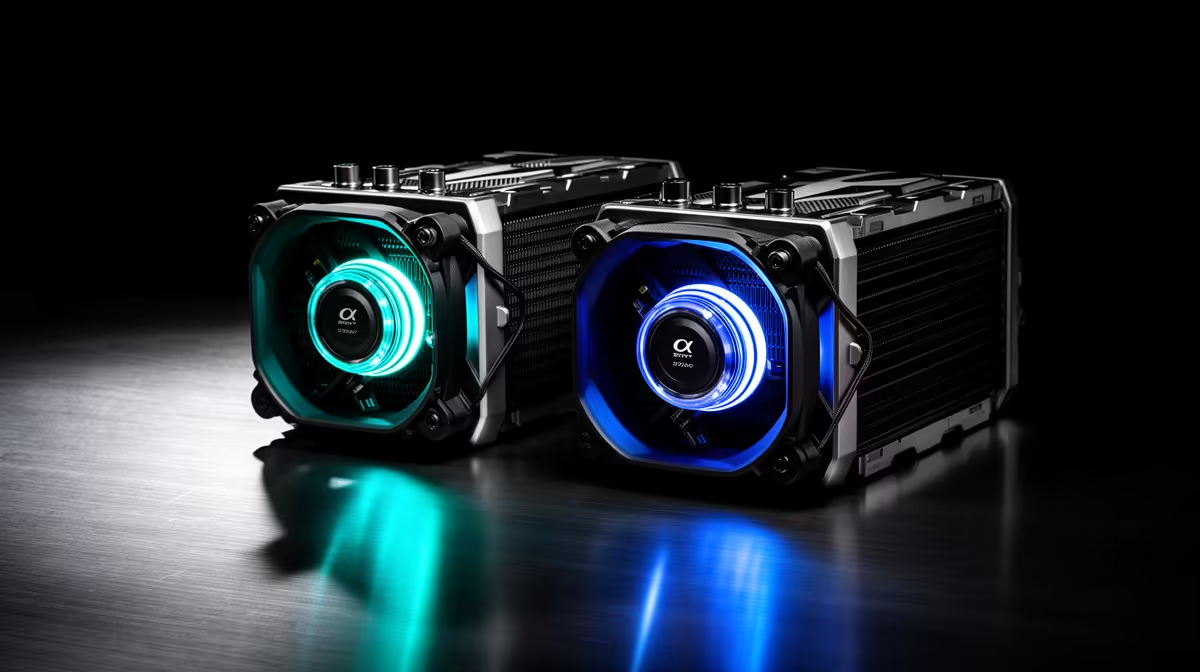
A 360mm radiator has 50% more fan positions than a 240mm unit, so it can move similar heat at lower fan speed. That helps with CPUs such as Ryzen 9 9950X3D or Intel Core i9-class chips under sustained load. For a Ryzen 5 or Ryzen 7 gaming build, the real fps difference may be 0-3 fps because the GPU is usually the limiter.
Fit And Airflow
Check whether your case supports 360mm at the top or front, and confirm radiator thickness against motherboard heatsinks and RAM height. A front radiator can raise GPU intake temperatures, while a top radiator may need a taller case. In South African summer rooms, case airflow and dust filters matter as much as the pump.
Budget Logic
Use the R80,000 to avoid starving the rest of the build. Broadly plan R1,500-R3,000 for good 240mm-class cooling and R2,500-R5,500 for 360mm AIO-class shopping, then confirm live stock. Named units such as Corsair H100i/H150i-class or ASUS ROG Ryuo-class coolers give a useful comparison point.
FAQ
Will a 360mm AIO give more fps?
Usually not by itself. It helps the CPU hold boost clocks and lowers noise, but the GPU decides most gaming fps at 1440p and 4K.
Is a 240mm AIO safer for smaller cases?
Yes. A 240mm unit fits more cases and leaves more room around the motherboard, which can make the build cleaner.
Should I front-mount or top-mount the radiator?
Top mount is often cleaner for GPU temperatures, while front mount can be easier in some cases. Use the case manual and check tube routing before buying.
Buyer Check
Measure top-panel radiator clearance with fans included; the missing 25mm fan thickness is the detail that catches many first-time builds.