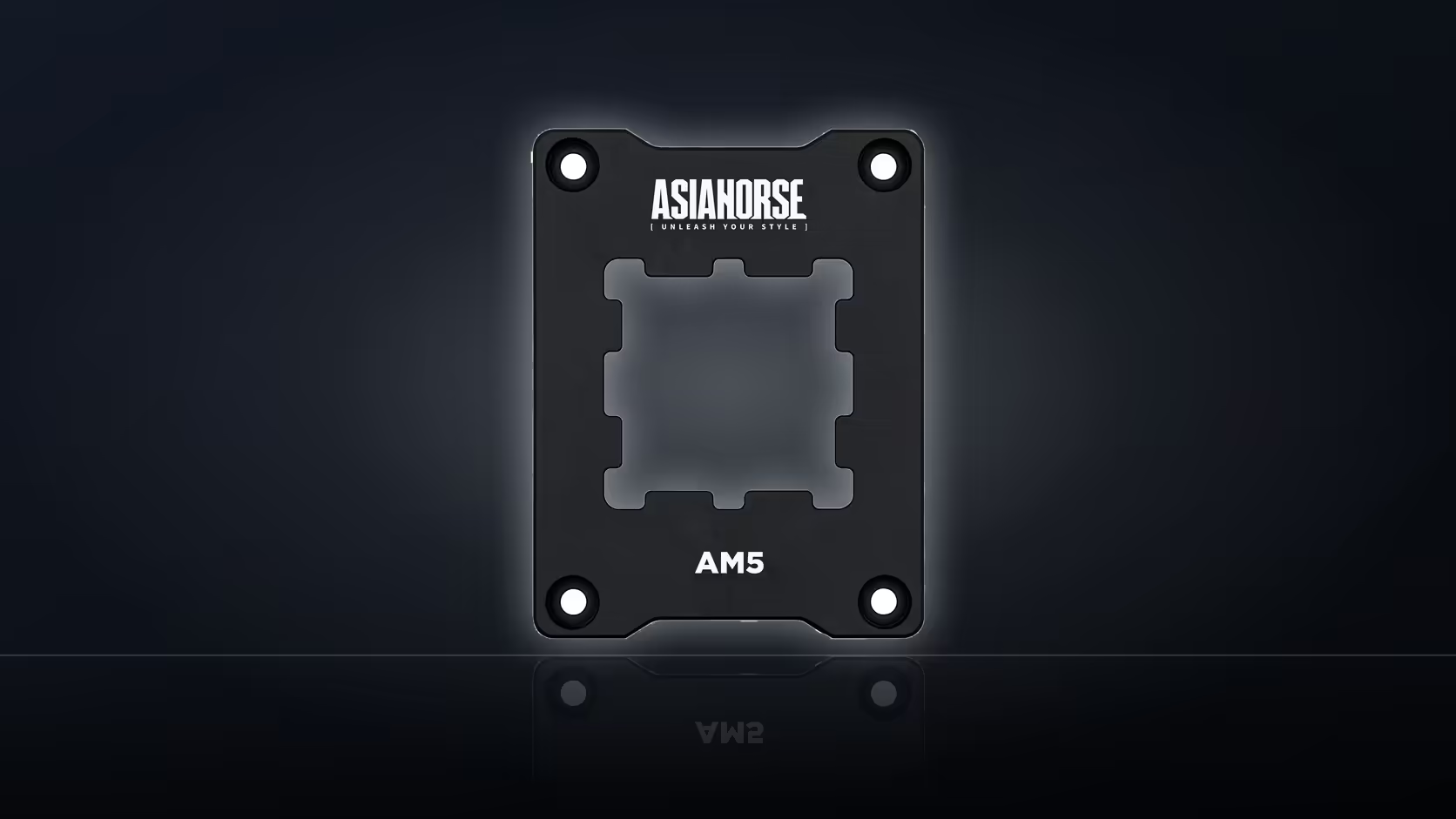
Standing in front of an open case with a CPU contact frame in hand, the first real decision is not about the frame at all - it is whether the motherboard stays bolted in or comes out first. Both approaches work, and which one suits you depends entirely on how your particular case is built around the socket.
Quick Answer
Fit the Pulsar frame (R299) in place if your case has a generous cutout behind the socket area, since the four mounting screws are reachable without disturbing anything else. If the tray has no cutout there, or a small offset one, pulling the board out first is the safer route - deciding before you start avoids finding halfway through that you simply cannot reach.
🔎 What actually decides the answer
The frame secures with four screws arranged around the socket, and reaching them from behind the board is what a rear cutout exists for. Many modern cases include one specifically so coolers can be swapped without a full teardown - if yours does, and it lines up with your board's socket position, fitting in place is usually the quicker and lower-risk option.
Not every case has that cutout in a useful spot, though, and smaller or older cases may have no rear access at all behind that area. In those cases, working blind with a screwdriver behind a board you cannot see is a worse trade than the extra time it takes to remove it properly.
A quick way to check before committing
Open the side panel opposite the usual working side and look directly behind where the socket sits. If you can see clear metal with enough room to fit a screwdriver at an angle, in-place fitting is realistic. If the view is obstructed by cable routing channels, a power supply shroud, or simply no opening at all, that answers the question for you.
⚖️ Weighing the two approaches
Working with the board in place
The main risk here is a dropped screw landing somewhere on the board itself, which is awkward to retrieve and best avoided by working over a soft surface or with the case laid flat rather than upright. Awkward angles through a small cutout also make even tightening across all four screws harder than it would be with full visibility, so extra care in the tightening stage matters more with this approach.
Removing the board first
Taking the board out means disconnecting every cable attached to it - power, front panel headers, storage, everything - and reconnecting each one correctly afterward. That is simply more steps, and each one is a small chance for something to end up loose or in the wrong header. The upside is full visibility and easy access on a flat surface, which some builders find worth the extra time regardless of what the case allows.
🖥️ Does cooler size change the calculation?
It can. A heavy tower cooler removed while the board is still vertical inside the case is more awkward to manage than the same cooler lifted off a board laid flat on a bench - there is more weight to control at an angle, and less room to manoeuvre it clear without catching on other components. If your cooler is large and your case cutout is marginal, that tips the decision toward removing the board even if the cutout technically allows in-place access.
Either way, keep a parts tray on hand for the small hardware involved, and have your next cooler ready from the cpu coolers range along with a fresh tube from thermal solutions before you start, so the job does not stall partway through waiting on paste.
Frequently Asked Questions
What decides the answer?
How much room the case leaves around the socket, and whether the tray cutout gives access to anything behind the board.
Which cases make it easy?
Those with large cutouts behind the socket area, which is a common feature on cases designed with cooler changes in mind.
What are the risks of working in place?
Dropped screws landing on the board, and awkward angles that make even tightening harder than it needs to be.
And of taking the board out?
Every cable is disconnected and refitted, which is more work and introduces its own chances of something being left loose.
Does a large cooler change it?
It can, since removing a heavy tower cooler with the board vertical is more awkward than with the board flat.
Is a tray a good idea either way?
Yes, since the job involves four new screws plus the original retention hardware, all of which are small.
When is removal clearly worthwhile?
When the case has no cutout in the relevant area, since working blind around a socket is best avoided.
Working out your own case's access?
Take a look through Evetech's cooler range so you know what you are fitting before deciding whether the board comes out.