


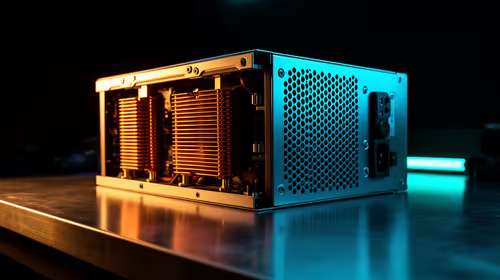
1000W PSU Planning for RTX 5090 Builds in SA
1000W for RTX 5090 needs a full-build check, not a simple yes. Review GPU guidance, CPU draw, transient load, connectors, PSU quality, and upgrade plans before deciding.
Read moreGPU or monitor priority on a R25,000 SA budget depends on the setup limit you feel most. Compare games, desk fit, upgrade room, warranty support, and daily use before spending in South Africa, and refresh any 2026 or budget assumptions before
The gpu or monitor priority call comes down to where each rand does the most work for how you actually play and create.
On R25,000, prioritise the option that lifts the experience you use most: spend on the component you will feel every session, and treat the rest as a sensible compromise. A balanced choice beats maxing one part and starving the others.
With R25,000 on the table, the smart split is the one that avoids a bottleneck. Decide what you do most, gaming, productivity, or streaming, then weight the build toward that. Over-investing in one part while another lags just leaves performance on the table, so aim for a balance that the whole system can actually use.
On R25,000, the upgrade you notice every session is the one to fund first. Map your hours: if you mostly game, the GPU and monitor lead; if you create, cores and RAM matter more. Then size the rest so nothing holds the lead part back.
Rand pricing shifts with stock and exchange rates, so on R25,000 build a shortlist and stay flexible. If one part jumps, the balanced plan still works because you were not betting the whole budget on a single model holding its price.
Take a moment to compare a couple of options side by side before you commit, since the right pick saves money and hassle later.
Pick the platform that keeps an upgrade path open. Spending a little smarter now on the socket or tier can save a full rebuild within a year.
The one that improves what you do most. Game-first builds lead with the GPU and monitor; creator builds lead with cores and RAM. Balance the rest so nothing bottlenecks the lead part.
Rank your weekly hours by activity, fund the lead component first, then size everything else to support it without overspending on features you will rarely use.
Build the balanced choice on R25,000 o
1000W for RTX 5090 needs a full-build check, not a simple yes. Review GPU guidance, CPU draw, transient load, connectors, PSU quality, and upgrade plans before deciding.
Read more
RTX 5080 Super with a 750W PSU is more comfortable than lower wattage if the unit is quality. SA builders should still confirm GPU guidance, CPU draw, connector type, airflow, and upgrade room.
Read more
How to fix FPS drops after a RX 9070 XT starts with driver cleanup, chipset updates, thermals, and power checks. For SA gaming PCs, confirm PCIe seating, monitor refresh, frame caps, and per-game graphics settings before replacing parts.
Read more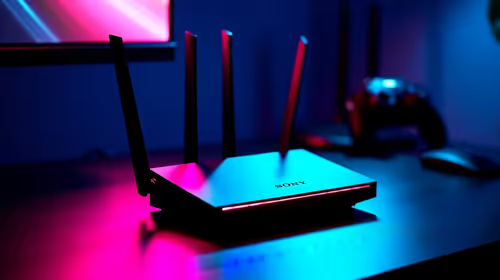
How to fix low FPS Windows 11 Wi-Fi 7 issues starts by checking whether the problem is frame rate or network lag. Test ping, drivers, power settings, Ethernet, and game FPS before adjusting visuals.
Read more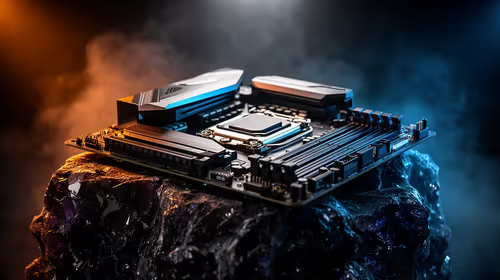
AM5 is smart for SA builders because it supports newer Ryzen CPUs, DDR5 memory, and a longer upgrade path. Compare board cost, cooling, gaming needs, and local part availability before choosing your next PC platform.
Read more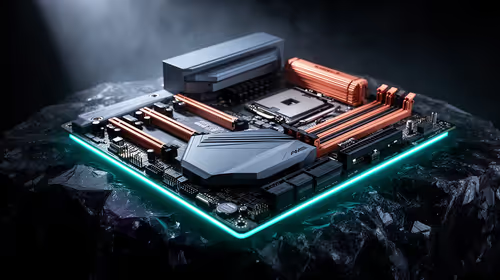
AM5 gives Randburg gaming builders a longer upgrade path. For SA buyers, DDR5 support, newer board features, and future CPU options can justify the platform. Weigh board cost, cooler support, BIOS maturity, and upgrade timing before choosing.
Read more
A fake 113GB GTA VI ISO reportedly used empty padding around a small malware payload. SA gamers should delete unofficial builds, keep Windows security active and wait for official channels.

Wi-Fi 6E vs Wi-Fi 6 matters for 4K video editing when files move across a network. The real-world difference between Wi-Fi 6E and Wi-Fi 6 for video editing in 4K depends on NAS access, cloud uploads, router range, and SA creator workflows.

The difference between PCIe 5.0 and PCIe 4.0 for SA gamers is mostly bandwidth headroom. Compare GPU slot needs, NVMe speed, motherboard support, and upgrade timing before paying extra for a newer platform.

Gaming PC stuck pixel checks in South Africa should confirm the monitor fault first. Use colour tests, screenshot comparison, cable swaps, display menu checks, and clear photos before deciding on support.

Shokz OpenFit Air 2 earbuds weigh 7.2g each and use a redesigned dual-driver open-ear layout. SA buyers should choose them for comfort and awareness, not maximum isolation.

AMD's current driver now lists a Radeon RX 9050 4GB, while product coverage details a narrowed memory system. SA buyers should weigh the low VRAM ceiling against current local Radeon options.

Samsung Display has demonstrated a 16-inch 2.5K OLED laptop panel running at 300Hz. SA buyers should wait for a named notebook, full panel specifications and a local price before planning an upgrade.

Microsoft says some Windows 11 game crashes after recent updates are linked to RGB-related drivers. Affected SA gamers should confirm the update and driver before using the published registry workaround.
Shokz OpenFit Air 2 earbuds weigh 7.2g each and use a redesigned dual-driver open-ear layout. SA buyers should choose them for comfort and awareness, not maximum isolation.
A fake 113GB GTA VI ISO reportedly used empty padding around a small malware payload. SA gamers should delete unofficial builds, keep Windows security active and wait for official channels.
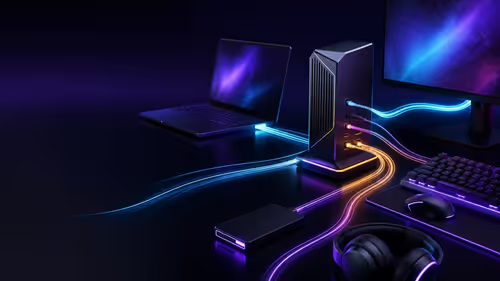
The ROG Flux Charger Dock combines 260W total output, 140W laptop charging and HDMI 2.1. SA buyers should check laptop USB-C limits, display needs and local warranty first.

ASRock's Rock 360 Digital AIO adds a 1.05-inch CPU temperature display, 360mm radiator and simplified wiring. SA builders should check case fit, socket support and local warranty.