Quick Answer
On R80,000, spend more on the GPU and pair it with a flagship panel, for example an RTX 5080 around R30,000-R40,000 with a 4K 240Hz or 1440p 240Hz OLED around R25,000-R35,000. The GPU sets the frame rate, so size it to the resolution you choose, then match the monitor.
Why the GPU still leads at R80,000
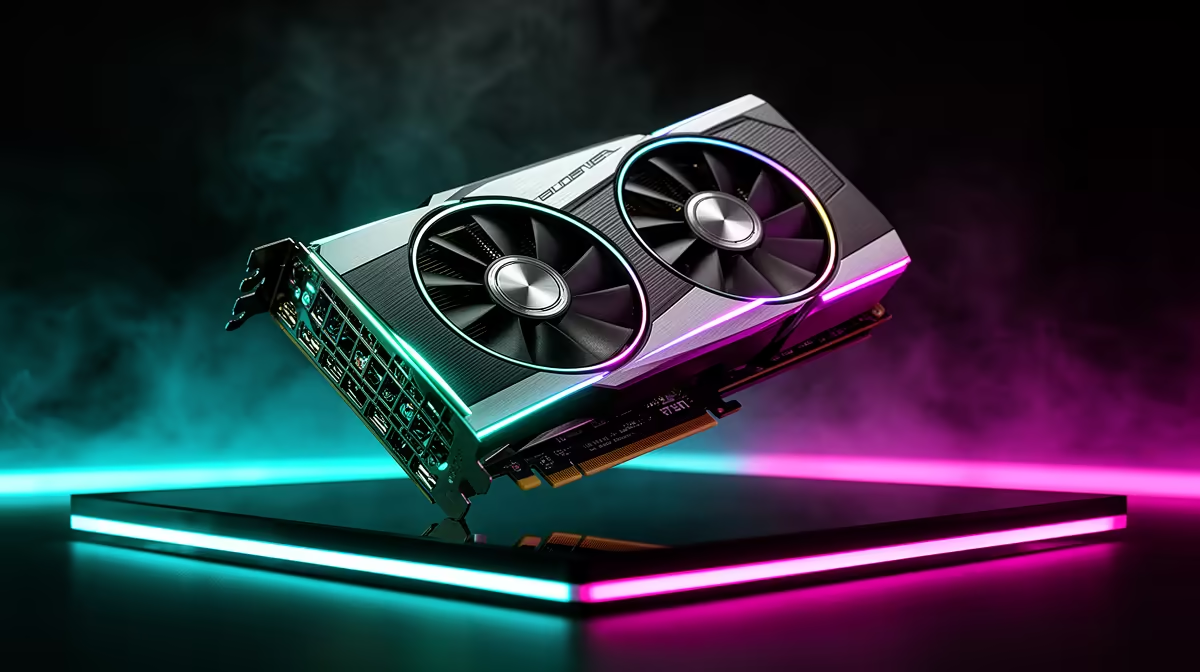
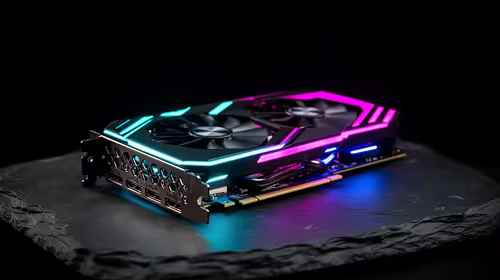
The graphics card determines how many frames the system renders, which is the hardest task at 4K and the foundation of the whole experience. An RTX 5080 pushes 1440p past 144fps and 4K past 100fps with DLSS in most titles, which is the performance a flagship OLED needs to shine. A weaker card behind a premium panel leaves the screen starved, so the larger slice belongs to the GPU. The monitor displays the card's output; it cannot create frames the GPU never rendered.
Matching the monitor at R80,000
With the GPU sized first, choose the panel by resolution preference. A 1440p 240Hz OLED suits competitive players who want maximum motion clarity, while a 4K 240Hz OLED suits those who prioritise sharpness and immersion and accept lower frame rates in the heaviest titles. Both around R25,000-R35,000 pair well with an RTX 5080. This GPU-led split gives you a near-flagship setup where the card feeds the panel rather than leaving it waiting.
FAQ
GPU or monitor first on R80,000?
The GPU, since it produces the frames the monitor displays. Allocate roughly R30,000-R40,000 to an RTX 5080-class card and R25,000-R35,000 to a flagship OLED.
1440p or 4K monitor with an RTX 5080?
Choose 1440p 240Hz for maximum competitive motion clarity, or 4K 240Hz for sharpness and immersion. The RTX 5080 feeds 1440p more consistently and handles 4K well with DLSS.
Can a flagship panel fix a weaker GPU?
No. The panel only shows the frames the GPU renders, so a weak card starves it. The GPU must come first to feed the display.
Buyer Tip
On R80,000, put R30,000-R40,000 into an RTX 5080 and pair it with a 1440p 240Hz OLED for competitive clarity or a 4K 240Hz OLED for sharpness.