Quick Answer
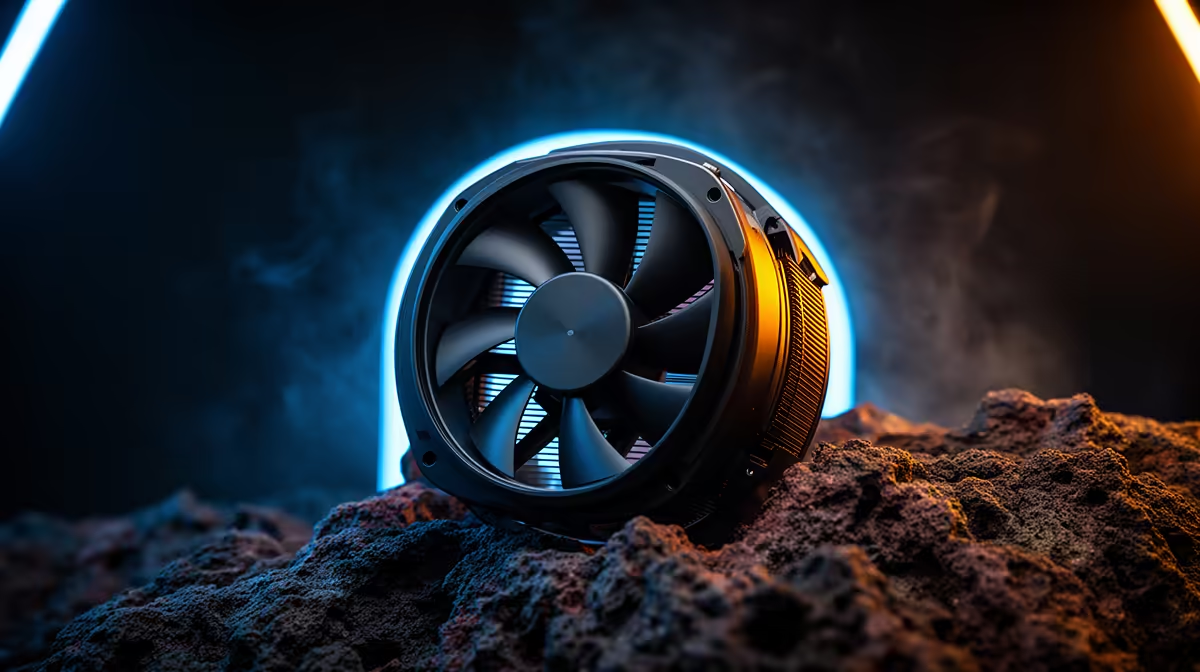
For case fans, SA buyers should weigh airflow and noise level together, but lead with airflow for a hot gaming rig and noise for a quiet room. A R150 to R450 large 120mm or 140mm fan delivers both, cooling a gaming CPU and GPU below their throttling points while running near 25 to 30 dBA.
Airflow Versus Noise: Lead With Your Priority
Airflow removes heat; noise level decides comfort, and the right balance depends on your setup. For a hot, high-performance gaming rig, lead with airflow so the CPU and GPU stay below the 80-to-84-degree throttling point and a demanding title holds a steady 144fps. For a quiet bedroom or shared room, lead with noise so the rig does not intrude. The good news is that large fans deliver both: a 140mm fan moves the same air as a 120mm fan at lower speed, giving strong airflow at a quiet 25 to 30 dBA.
You rarely have to choose extremes; a quality large fan gives most of both.
How To Get Both
Buy 120mm or 140mm PWM fans with good airflow or static pressure for their position, and set a fan curve that ramps only when temperatures climb. This keeps the rig quiet at idle and during light gaming while delivering full airflow under a heavy game. A positive-pressure layout with two intake and one exhaust fan cools effectively, and clean filters keep airflow strong so fans need not spin loud to compensate.
Match The Balance To The Room
In a warm or high-performance setup, accept slightly higher fan speeds for cooling headroom. In a quiet lounge or bedroom, favour large low-RPM fans and a gentle curve for near-silence near 25 to 30 dBA. Quality fans at R150 to R450 each run quieter and last longer than cheap sub-R100 units that rattle, so they serve both goals better.
FAQ
Should SA buyers pay more for airflow or noise level?
Weigh both, leading with airflow for a hot gaming rig and noise for a quiet room. Large 120mm or 140mm fans deliver both, giving strong airflow at a quiet 25 to 30 dBA, so you rarely choose extremes.
Can a fan be both quiet and high-airflow?
Yes. A 140mm fan moves the same air as a smaller fan at lower speed, so it cools well while staying quiet. Pair it with a gentle PWM curve for near-silence at idle and full airflow under load.
How do I balance cooling and noise?
Buy large PWM fans, set a curve that ramps only when temperatures rise, use a positive-pressure layout, and keep filters clean. This gives full cooling under load and quiet operation the rest of the time.
140mm fans and a PWM curve that ramps only under load; you get strong cooling when a game heats the rig and near-silence near 25 to 30 dBA the rest of the time.