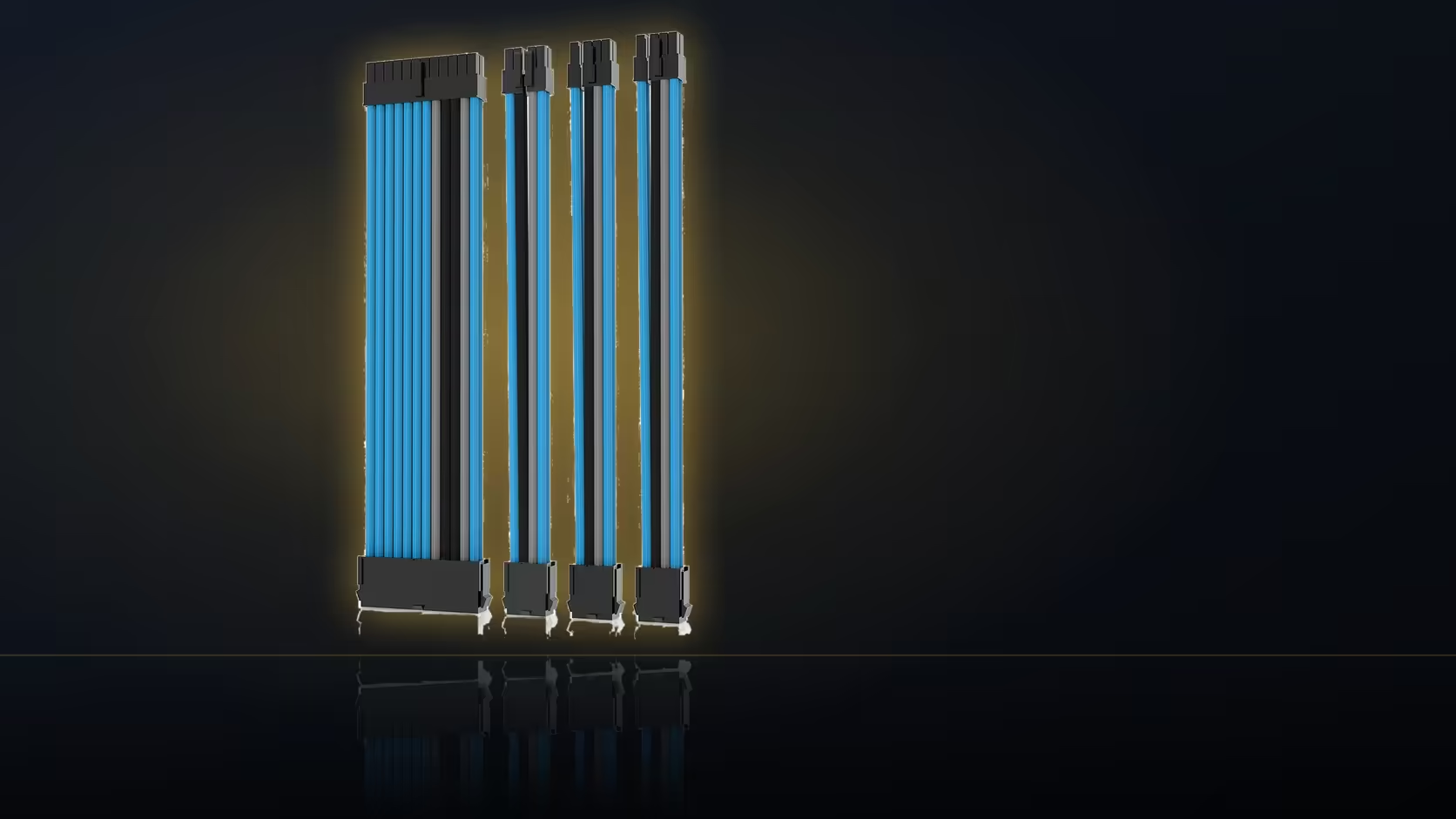
Every sleeved extension creates a cable junction somewhere along its run, and where exactly that junction ends up has more influence on how finished a build looks than almost any other single decision in the whole cabling job.
Quick Answer
The junction between factory lead and extension belongs behind the motherboard tray. It is the least attractive part of the run. Push it through the nearest grommet, because leaving it in the chamber undoes the sleeved look.
🙈 Why the junction wants to disappear
The sleeved section of an extension is the part worth showing off - the reason the kit was bought in the first place. The join itself, where the factory lead meets the new extension, is a plain double-connector with nothing decorative about it, and it draws the eye for entirely the wrong reason if it sits anywhere visible. Hiding it behind the tray, out of the window's sightline, is what lets the sleeved section do all the visual work uninterrupted.
🕳️ Which grommet to route it through
Send the junction through whichever grommet sits closest to the socket the lead is ultimately serving, so the length of sleeved cable left visible on the front side is just enough to cover the actual exposed run without excess slack bunching up. Feed the connector through gently rather than dragging the housing across the rubber lip, since pulling a hard-edged connector through repeatedly can tear a grommet over time.
🚫 When the chamber is the only option
Not every layout offers a clean route behind the tray for every lead. Where the junction genuinely has nowhere else to go, set it as low and as far back in the chamber as the route allows, and place a comb on the sleeved section just beyond it - that draws the eye forward onto the tidy part of the run rather than lingering on the join itself.
🔄 What flips this logic entirely
A build with the glass panel mounted on the tray side rather than the usual side flips this whole calculation. With the tray itself on display, the junction becomes the visible surface rather than something safely tucked away, and the sensible move is to route it into the main chamber instead, where the standard front-facing side is now hidden. If several junctions end up in view under this layout, aligning them at a similar height helps; where all four sit behind a hidden tray, exact positioning matters far less than simply confirming the side panel still closes without resistance afterwards. The one real cost of tucking a junction away is future access - reaching it again means removing a panel - which is a reasonable trade for something you will rarely need to touch once the build is finished. Cable solutions is a good next stop for what else the range offers, and a build set on avoiding any junction at all should compare against individually sleeved premium cables.
Frequently Asked Questions
Why hide the junction rather than the whole cable?
Because the sleeved section is the part worth showing. The join is a plain double-connector and it draws the eye for the wrong reason.
Which grommet should the join pass through?
The one closest to the socket it serves, so the sleeved length left in view is enough to cover the exposed run without excess slack.
What if the chamber is the only place it fits?
Then set it as low and as far back as the route allows, and use a comb on the sleeved section just beyond it to pull attention forward.
Does a right-side glass panel change this?
Completely. With the tray on show, the join becomes the visible surface, so it wants to move into the main chamber instead.
Is there a risk in pulling the join through a grommet?
Only to the rubber. Feed it gently rather than dragging the connector housing through, which can tear a grommet lip over time.
Should all four junctions sit at the same height?
Alignment helps if any of them are visible. Where all four are behind the tray, position matters far less than whether the panel still closes.
Does hiding the join make future access harder?
Slightly, since a panel has to come off to reach it. That is a reasonable cost for something you rarely need to touch.
Planning where your cable junctions will sit?
See Evetech's power supply range for extensions that route cleanly behind a standard motherboard tray.