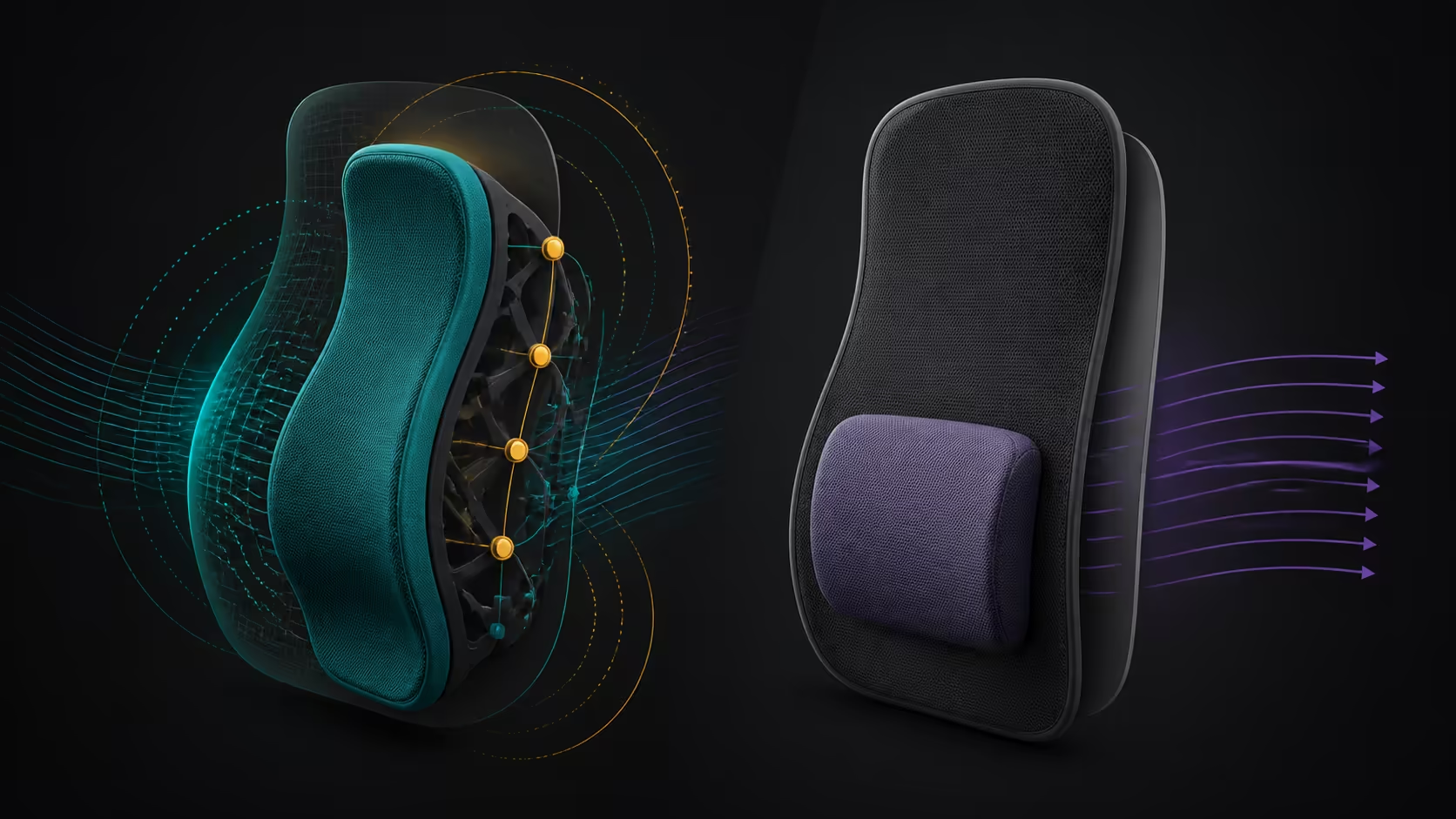
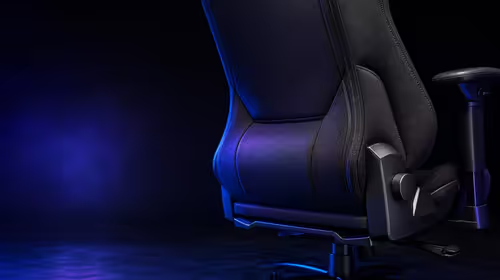
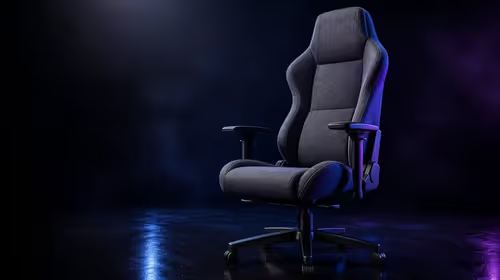
Smart tracking can reduce repeated adjustment, while a standard support can offer simple value when it already fits the user. A smart lumbar tracking versus standard chair support comparison should count corrections, not just controls. The HBADA X7 represents the automated side at R14,999.
Quick Answer
The X7 offers better value than standard support when its sensors, 1,000-feedback-per-second chip and linear motor reduce repeated manual lumbar adjustments.
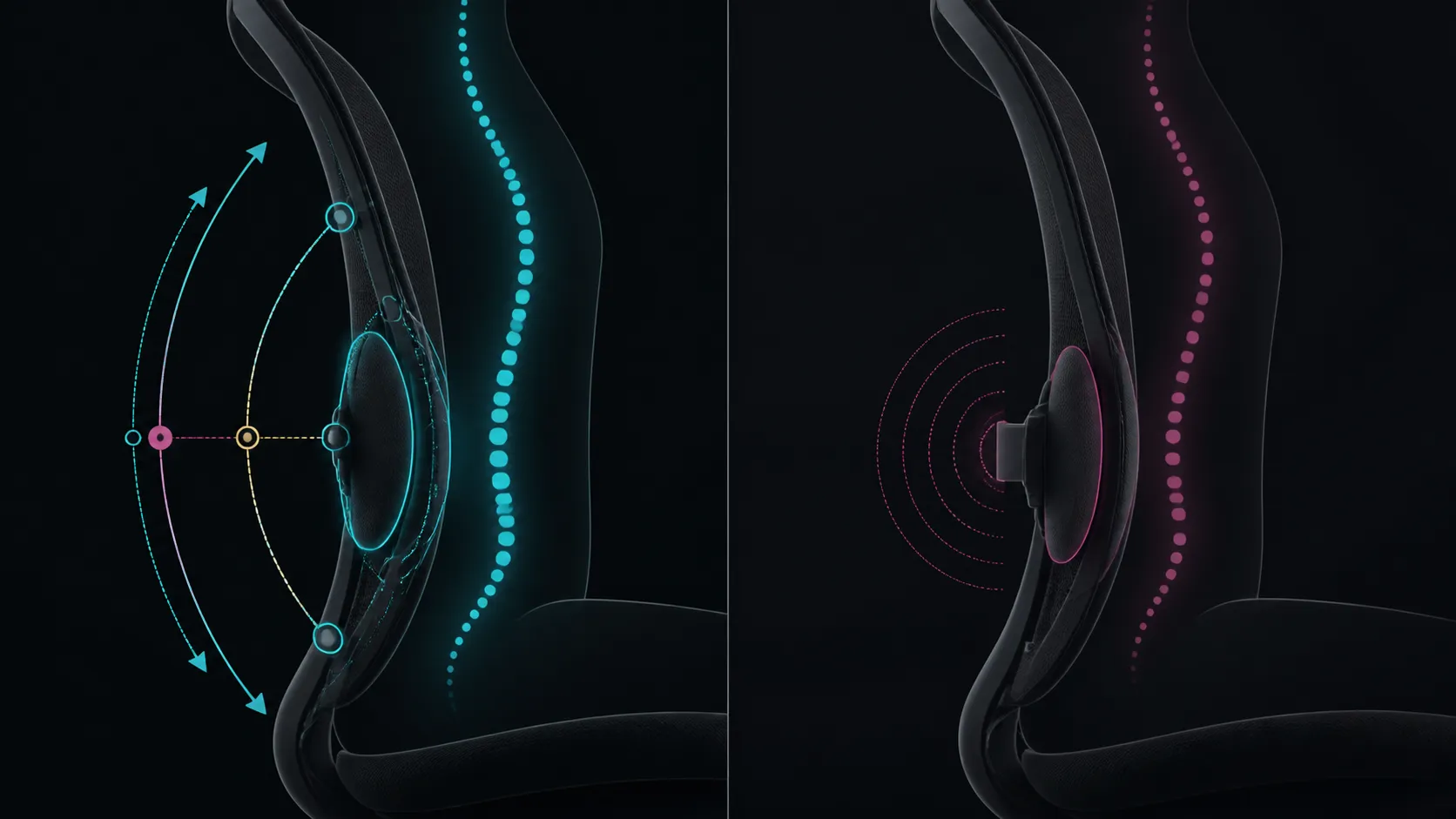
Smart lumbar tracking offers better value when it maintains useful contact through frequent posture changes and reduces manual correction. Standard support may be enough for a user with one stable desk position and a good fixed or manual fit. The R14,999 HBADA X7 combines automated tracking with multi-directional support, but it cannot promise a health advantage.
🧭 Compare movement, not feature count
Use a centred typing task, a forward reading movement, a turn toward another screen and a relaxed seated moment. Test each chair through the same sequence. Record support contact and how often the user needs to reset the position.
Find exact automated choices in Evetech's HBADA chair range. The X7's internal sensors or response timing are not needed for the value test; the user-facing result is enough.
🧭 Give standard support a fair baseline
Select an exact fixed or manually adjustable chair that fits the same desk. Allow the user to set it correctly, then repeat the task sequence. Simplicity can be valuable when the successful position is easy to restore.
Keep massage, heat and ventilation outside the lumbar comparison. Those X7 features answer separate comfort questions and could otherwise make automation appear better without proving support performance.
🧭 Calculate South African value after a week
Count manual corrections, pressure events and successful posture changes. Add the X7 battery cost because it is not included, but do not guess type or runtime. A standard chair can win when it clears support needs with less setup.
Compare broader models through Evetech office chairs. Use the same user, desk and work duration so the R14,999 figure is measured against an actual alternative rather than a generic category.
Use a blind correction diary
Ask the user to record each time support is corrected without immediately labelling the chair automated or standard. Note the task, posture change and reason for the correction. Review the chair type only after several sessions, reducing the chance that technology preference decides the outcome first.
Include moments when no correction was needed. A manual support that stays comfortable deserves that evidence, while automated tracking should receive credit when it follows the user's repeated movements. Avoid forcing extra posture changes to make the smart feature appear busier.
Compare the diary with the complete cost. Add the verified battery requirement to the X7 and the actual setup steps for the standard chair. Do not create monetary savings from corrections; keep frequency as a transparent practical measure beside Rand.
The final statement should be narrow: which user, desk and tasks produced better value. It should not claim that automation prevents pain or that standard support is outdated. Another South African buyer with a different movement pattern can then reproduce the method without inheriting a universal verdict.
Standard support can still suit a stable posture at a lower complexity. The X7 strengthens its case with remembered Smart Mode preferences, ten intensity levels and automatic waist-following that resumes on sitting, provided the feature has not been disabled.
Frequently Asked Questions
What is the main difference in control?
Automated tracking adapts through a smart system, while standard fixed or manual support relies more on initial fit and user adjustment.
When can automation offer more value?
It can add value when the user moves often and the support stays useful with fewer corrections through those transitions.
When may standard support be enough?
It may be sufficient when a well-fitted position serves a stable routine and can be restored easily without active control.
What does the HBADA X7 provide?
The X7 tracks lower-back movement automatically and lets the user adjust support in multiple directions.
Can the value comparison promise better health?
No. It compares support behaviour and effort, not prevention or treatment. Persistent symptoms need appropriate professional care.
How should South African buyers test value?
Use one desk, task sequence and trial period for exact smart and standard candidates. Count support corrections, verify complete cost and keep medical claims outside the result. The better value is the chair that clears mandatory fit with less repeated friction. Repeat the comparison after several days so novelty does not decide which control method wins.
Preserve a narrow conclusion tied to the tested user and desk after novelty has been removed by several days of comparison.
Ready to compare corrections avoided rather than controls added?
Browse Evetech chairs with one movement sequence and a week-long support record.