An AM4 processor can look like a simple drop-in purchase until firmware, cooling and graphics are placed beside it. What SA gamers should know before a 5800X3D upgrade is that R7,199 covers an eight-core Zen 3 CPU with 100MB cache, not every part needed to run it. The board, BIOS and finished hardware plan still decide whether the upgrade works.
Quick Answer
Verify the exact motherboard and required BIOS before buying the R7,199 Ryzen 7 5800X3D. It provides eight cores, 16 threads and 100MB cache, but no CPU cooler, and a discrete GPU is compulsory for display output. Prepare firmware with the old CPU where necessary and price the completed AM4 installation.
🇿🇦 Count the complete local spend
Start with the processor price, then add cooling and any genuinely required installation hardware. The 5800X3D carries a 105W rating, so choose an AM4 cooler that fits the case and works with its airflow. Evetech's CPU cooling choices help define that separate part of the budget.
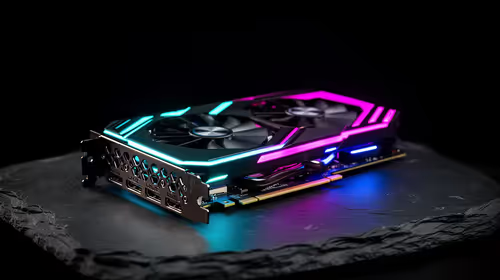
An existing graphics card can remain in a capable upgrade, but the CPU itself cannot produce an image. Connect the monitor to the discrete GPU. New-system buyers must also include the graphics card, power requirements and chassis space rather than treating R7,199 as a complete gaming-PC price.
🧩 Prove AM4 support first
The socket name is not enough. Find the full motherboard model and revision, locate its processor support page and confirm the BIOS needed for the Ryzen 7 5800X3D. If firmware must be updated, complete that preparation while the current CPU can still start the machine.
Keep a record of the working configuration and retain the old processor until validation is finished. After the swap, begin with stable settings, confirm memory and CPU detection, and monitor temperatures before benchmarking.
Evetech's AMD processor range can be compared once the supported shortlist is known.
🎮 Use game-specific expectations
The 100MB cache can help titles that reuse data effectively, while eight cores and 16 threads provide resources for gaming and concurrent tasks. Results vary by engine, graphics load, resolution and settings. A 3.5GHz base and a 4.5GHz maximum boost figure do not create one universal FPS gain.
Compare the same game scene before and after the change. If the GPU is already the limit, another component may deserve priority. The wider CPU selection helps frame alternatives without losing sight of the full-system cost.
Back up important work, photograph the interior and keep the current processor protected until the new build has passed its tests. Clean the old thermal material carefully, handle the AM4 CPU by its edges and install the cooler according to its mounting sequence. Recheck memory and GPU connections that may have been disturbed.
On startup, confirm that the BIOS identifies the processor and full memory capacity. Check fan or pump operation and observe temperatures before applying a heavy game load. The clock specification runs from a 3.5GHz base to a 4.5GHz boost ceiling, but stable operation matters more than seeing the peak immediately.
South African buyers should also check current availability when ready to order, because a good plan depends on the parts that can be purchased together. Do not replace a carefully matched cooler or processor with an assumed equivalent without repeating the fit and support checks.
Repeat a game route recorded before the upgrade, using the same patch, settings and resolution. Compare averages and uneven frame delivery. This evidence shows whether the CPU addressed the reason for spending, rather than whether the system merely starts.
Frequently Asked Questions
What should a South African AM4 owner verify first?
Confirm the exact motherboard model, revision and processor support entry. Note the required BIOS and complete any necessary update before removing the working CPU.
What does the R7,199 purchase include technically?
It buys an eight-core, 16-thread Zen 3 processor with 100MB cache. Cooling and graphics are separate requirements.
Which extra component is required for any display output?
A discrete graphics card must be installed, powered and connected to the monitor. Motherboard display ports cannot provide an image with this CPU.
How can the current system make this upgrade better value?
Documented board support, reusable memory and an adequate GPU can reduce replacement costs. Every retained component should still match the intended workload.
Why should game-specific evidence guide expectations?
Engines, scenes and graphics settings use the CPU differently. A benchmark from one title cannot guarantee the same frame-rate change in another.
What preparation reduces downtime during the swap?
Update the BIOS if required, record stable settings, prepare the cooler and keep the old processor safe. Confirm the graphics display path before first boot.
Want to make the R7,199 upgrade a complete plan rather than a parts guess?
Explore Evetech's AMD CPUs and cooler range, then verify board firmware and discrete graphics before the swap.