


1000W PSU Planning for RTX 5090 Builds in SA
1000W for RTX 5090 needs a full-build check, not a simple yes. Review GPU guidance, CPU draw, transient load, connectors, PSU quality, and upgrade plans before deciding.
Read moreSteel and nylon five-star bases should be compared through construction, rated load and durability evidence. The HBADA E3 Ultra uses an aluminium-alloy five-star base with an aluminium-alloy support bar, not steel.
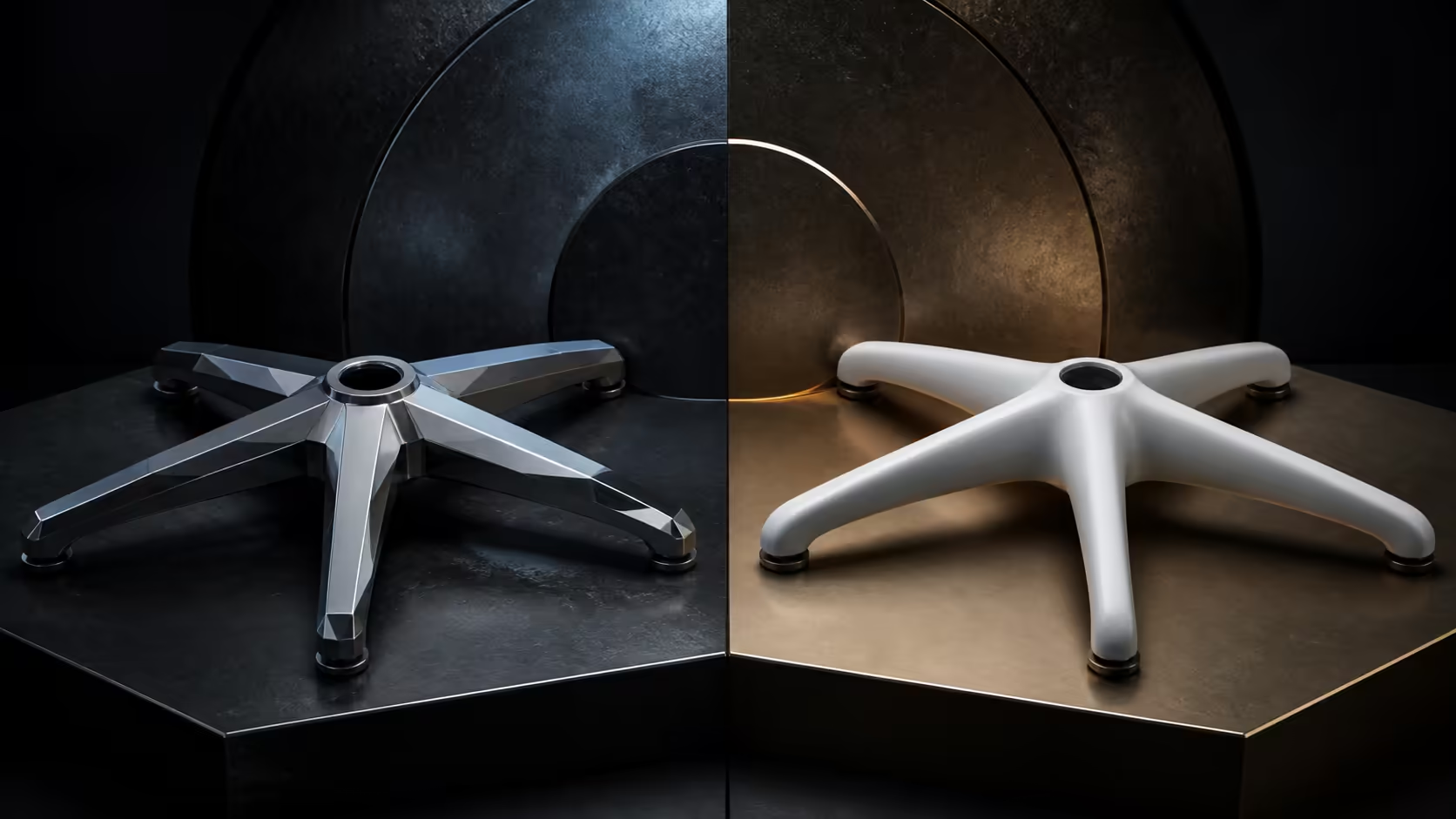
In a steel versus nylon chair base decision, the material name is only the beginning. Shape, engineering, fasteners, load rating and floor interaction all matter, and a third material should be evaluated without forcing it into either category.
The E3 Ultra uses an aluminium-alloy five-star base and support bar, so it belongs in neither the steel nor nylon base category.
Steel can offer a rigid structure, while engineered nylon can reduce weight and resist corrosion; neither word proves the stronger finished base. Compare each exact chair's rated capacity and construction. At R9,599, the HBADA E3 Ultra uses aluminium alloy for both its five-star base and support bar, not steel or nylon.
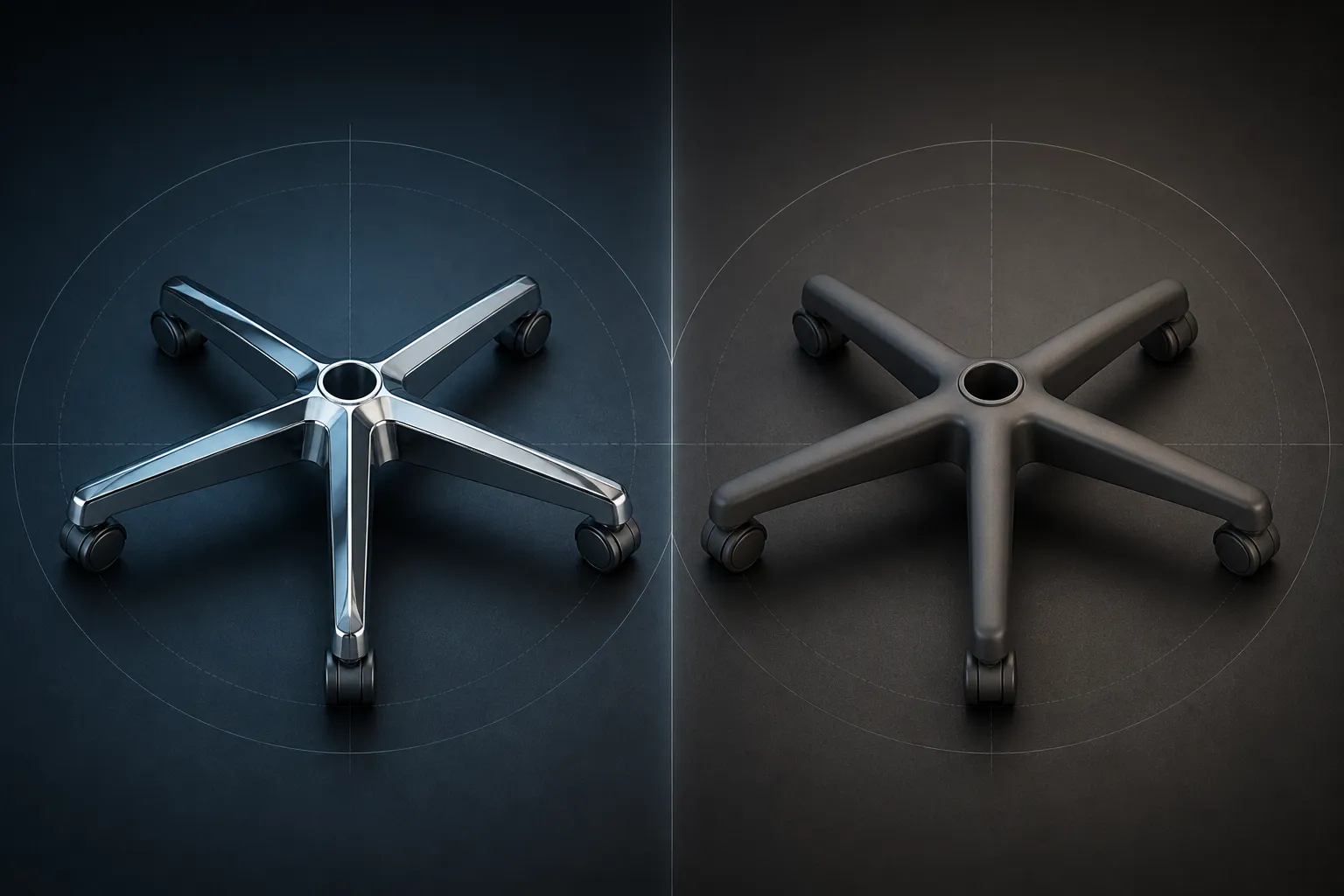
Material properties do not reveal wall thickness, geometry, casting or joint quality. Ask for the exact load rating and examine how the central column, legs and castors connect. A well-engineered base is a system rather than a material sample.
Steel also varies by grade and fabrication, while nylon formulations and reinforcement differ. Broad assumptions should not replace model-level information.
Consider how often the chair will move, whether stairs are involved and what cleaning conditions exist. Steel may need suitable finish protection; nylon may respond differently to heat, chemicals and ageing. These are comparison factors, not automatic outcomes.
Evetech's HBADA office chair family includes another construction route to consider. The E3 Ultra's five-legged base and its support bar are aluminium alloy, so assess that design as aluminium rather than treating it as steel.
Base stability also depends on footprint and castor behaviour on the intended surface. Test rolling, turning and stopping on the actual floor where possible. A hard-floor mat or appropriate castor may matter more to daily use than a material preference.
Do not infer a safe load from the aluminium, steel or nylon label. Capacity needs an explicit figure tied to the complete chair.
Create columns for construction material, supported load, base geometry, castor suitability, finish care and price. Keep unknown cells blank until the precise model answers them. This prevents appearance from becoming evidence.
Use Evetech's wider office chair category to fill that shortlist with comparable products. The E3 Ultra's R9,599 price should be weighed with its aluminium-alloy structure and adjustment features, not with an assumed steel advantage.
Condition should be part of any base inspection. Look for looseness, visible deformation, damaged castor sockets or fasteners that do not seat correctly, and stop using a chair that appears structurally compromised. Material comparisons assume an intact product; they should never excuse a defect.
Record floor behaviour with the user's ordinary movement rather than an aggressive stress test. Predictable rolling, turning and stopping on the intended surface offers more relevant information while respecting the chair's proper use.
For a shared or heavily used workspace, add maintenance access and replacement-part questions to the table. These do not change aluminium into steel or establish capacity, but they reveal whether the complete chair can be cared for appropriately in its intended environment.
Photograph the underside only as a private comparison aid, then label the exact model and material. Similar finishes across chairs can otherwise make later notes unreliable.
Judge a steel rival on its own grade and construction, and a nylon alternative on its engineering and load data. The E3 Ultra's known aluminium route offers a specific lightweight structural comparison without borrowing durability conclusions from either material label.
Keep base material completely separate from the lumbar and recline value calculation.
Keep the aluminium classification explicit throughout.
No. Grade, thickness, geometry, joints and the finished chair's rating decide much more than the generic material word.
Look for the precise composition, structural design, supported load and intended environment. Avoid transferring a result from one nylon base to another.
Its five-star base is made from aluminium alloy. The supporting bar uses that alloy as well, creating a construction distinct from this steel-nylon comparison.
No. The E3 Ultra's base is aluminium alloy rather than steel, and it should be judged according to that actual construction.
It cannot be calculated safely from the material name. Use an explicit capacity tied to the entire chair before deciding whether it fits a user.
The white E3 Ultra carries a South African price of R9,599. Treat that figure as one column alongside fit, controls and verified capacity.
Ready to compare chair bases beyond one material label? Browse Evetech's office seating with construction, capacity, castor and floor-use questions prepared for every candidate.
No. Grade, thickness, geometry, joints and the finished chair's rating decide much more than the generic material word.
Look for the precise composition, structural design, supported load and intended environment. Avoid transferring a result from one nylon base to another.
Its five-star base is made from aluminium alloy. The supporting bar uses that alloy as well, creating a construction distinct from this steel-nylon comparison.
No. The E3 Ultra's base is aluminium alloy rather than steel, and it should be judged according to that actual construction.
It cannot be calculated safely from the material name. Use an explicit capacity tied to the entire chair before deciding whether it fits a user.
The white E3 Ultra carries a South African price of R9,599. Treat that figure as one column alongside fit, controls and verified capacity.
1000W for RTX 5090 needs a full-build check, not a simple yes. Review GPU guidance, CPU draw, transient load, connectors, PSU quality, and upgrade plans before deciding.
Read more
RTX 5080 Super with a 750W PSU is more comfortable than lower wattage if the unit is quality. SA builders should still confirm GPU guidance, CPU draw, connector type, airflow, and upgrade room.
Read more
How to fix FPS drops after a RX 9070 XT starts with driver cleanup, chipset updates, thermals, and power checks. For SA gaming PCs, confirm PCIe seating, monitor refresh, frame caps, and per-game graphics settings before replacing parts.
Read more
How to fix low FPS Windows 11 Wi-Fi 7 issues starts by checking whether the problem is frame rate or network lag. Test ping, drivers, power settings, Ethernet, and game FPS before adjusting visuals.
Read more
AM5 is smart for SA builders because it supports newer Ryzen CPUs, DDR5 memory, and a longer upgrade path. Compare board cost, cooling, gaming needs, and local part availability before choosing your next PC platform.
Read more
AM5 gives Randburg gaming builders a longer upgrade path. For SA buyers, DDR5 support, newer board features, and future CPU options can justify the platform. Weigh board cost, cooler support, BIOS maturity, and upgrade timing before choosing.
Read more
RTX 5090 on a 550W PSU leaves almost no practical room for OC plans. Treat the setup as constrained, with CPU draw, power spikes, cable quality, thermals, and stability checks more important than chasing extra clocks.
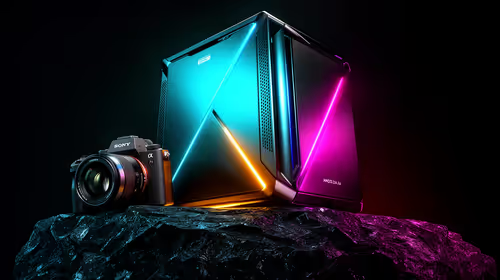
FPS drops on a Ryzen 9 9950X3D build often have a fixable cause. Check settings, drivers, thermals, background tasks, network conditions, and bottlenecks before assuming a part must be replaced.

The difference between PCIe 5.0 and PCIe 4.0 for SA gamers is mostly bandwidth headroom. Compare GPU slot needs, NVMe speed, motherboard support, and upgrade timing before paying extra for a newer platform.

Gaming PC stuck pixel checks in South Africa should confirm the monitor fault first. Use colour tests, screenshot comparison, cable swaps, display menu checks, and clear photos before deciding on support.

AMD's current driver now lists a Radeon RX 9050 4GB, while product coverage details a narrowed memory system. SA buyers should weigh the low VRAM ceiling against current local Radeon options.

Samsung Display has demonstrated a 16-inch 2.5K OLED laptop panel running at 300Hz. SA buyers should wait for a named notebook, full panel specifications and a local price before planning an upgrade.

Microsoft says some Windows 11 game crashes after recent updates are linked to RGB-related drivers. Affected SA gamers should confirm the update and driver before using the published registry workaround.
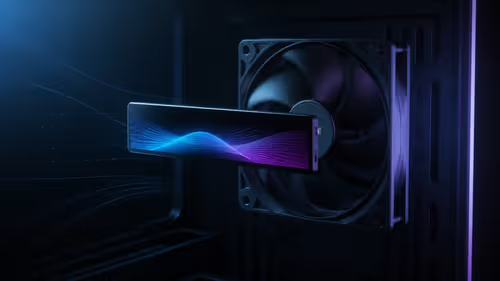
Thermalright's Fan Frame Vision-1 adds a 640x172 status screen to a standard 120mm fan. SA builders should check clearance, USB routing and local support before treating it as an easy upgrade.
1000W for RTX 5090 needs a full-build check, not a simple yes. Review GPU guidance, CPU draw, transient load, connectors, PSU quality, and upgrade plans before deciding.

Wi-Fi 6E vs Wi-Fi 6 matters for 4K video editing when files move across a network. The real-world difference between Wi-Fi 6E and Wi-Fi 6 for video editing in 4K depends on NAS access, cloud uploads, router range, and SA creator workflows.
RTX 5080 Super with a 750W PSU is more comfortable than lower wattage if the unit is quality. SA builders should still confirm GPU guidance, CPU draw, connector type, airflow, and upgrade room.

Wi-Fi 6E vs Wi-Fi 6 for Video Editing in 4K comes down to router support, latency, client devices, band support, and home network layout. SA buyers should match the choice to their setup instead of assuming one option always wins.