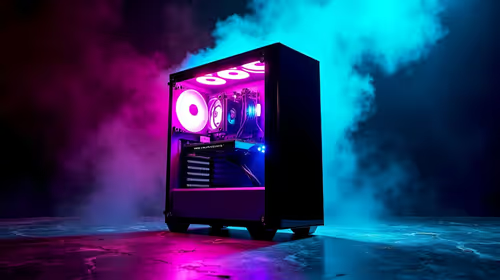
Tempered glass does more than let people see into a case - it turns every cable run inside into part of the finished look, whether that was the intention or not. Spacing that would happily pass unnoticed behind a solid metal panel becomes the first thing anyone notices the moment glass replaces it.
Quick Answer
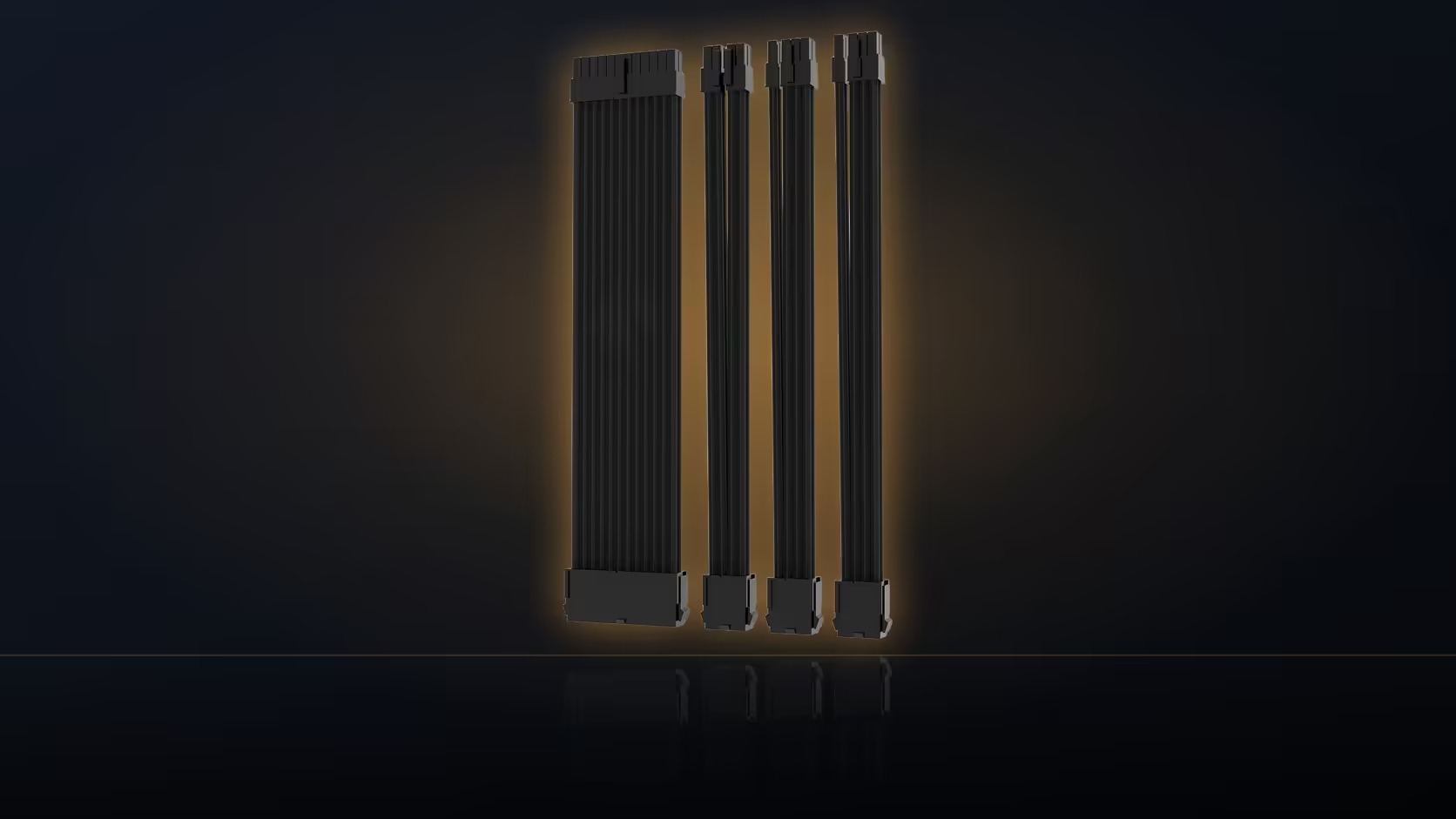
A glass panel puts cable runs under direct view. Spacing that would pass behind a solid panel becomes the first thing anyone notices. That is why AsiaHorse packs combs in with the four extensions as standard.
🪟 What changes when the panel is glass
Behind a solid side panel, cable routing is a purely functional job - nobody is judging how evenly the strands sit, because nobody can see them. Swap that panel for glass and the same cable work instantly becomes something judged on appearance, whether or not that was ever the plan when the build went together. The cabling itself does not change; only what is expected of it does.
⚠️ Which spacing faults show up first
Two particular faults tend to catch the eye fastest under glass: strands fanning out visibly near a connector, where the cable has not been fully straightened before combing, and runs that start off parallel near one end but visibly drift apart across the middle of the exposed section. Both are easy to overlook behind a solid panel and immediately obvious under glass, which is exactly why they are worth checking for specifically once a window is involved.
🌗 Does tinted glass forgive any of this
Tinted or smoked glass softens colour and lighting somewhat, but it does very little to hide shape - the underlying spacing and routing still read clearly through a tinted panel, even if the overall mood shifts. Treat a darker panel as changing the atmosphere rather than as forgiveness for careless cable work.
🔧 What combs fix and what they do not
Combs address spacing, not the underlying route the cable takes - a lead that follows an awkward path still looks awkward once combed, just now with evenly spaced strands along that same awkward path. Lighter finishes like Snow White tend to show line and spacing issues more plainly than darker braids, which are generally more forgiving under most lighting conditions. Before sealing the build, inspect from roughly where the machine will actually sit day to day - faults that stand out clearly at arm's length can disappear entirely at normal desk viewing distance, and the reverse holds true as well. Packing combs in as standard with every kit, rather than selling them separately, means the product arrives able to finish the whole job on its own - which matters most in exactly the glass-panel builds this kit is aimed at. The wider category is worth a look at cable solutions, and a showcase build sitting under glass that wants a fully bespoke finish should compare against individually sleeved premium cables.
Frequently Asked Questions
What does glass change compared with a solid panel?
Everything inside becomes part of the finished look, so cable work moves from a functional job to something judged on appearance.
Which spacing faults show up first?
Strands fanning out near a connector, and runs that start parallel then drift apart across the middle of the exposed section.
Does tinted glass hide any of it?
It softens colour and lighting, but shape still reads clearly. A darker panel changes the mood rather than forgiving the routing.
Are combs enough on their own?
They fix spacing, not routing. A cable taking an awkward path still looks awkward, just with evenly spaced strands along it.
Does the sleeve colour affect how faults show?
Lighter finishes such as Snow White show line and spacing more plainly, while darker braid is more forgiving under most lighting.
How close should I inspect before closing up?
From where the machine will actually sit. Faults obvious at arm's length often disappear at desk distance, and the reverse is also true.
Is this why the combs are bundled rather than sold on?
Packing them in means the kit arrives able to do the whole job, which matters most in exactly the glass-panel builds it is aimed at.
Fitting cables for a build behind a glass panel?
See Evetech's power supply range for extensions built with the combs a windowed case actually needs.