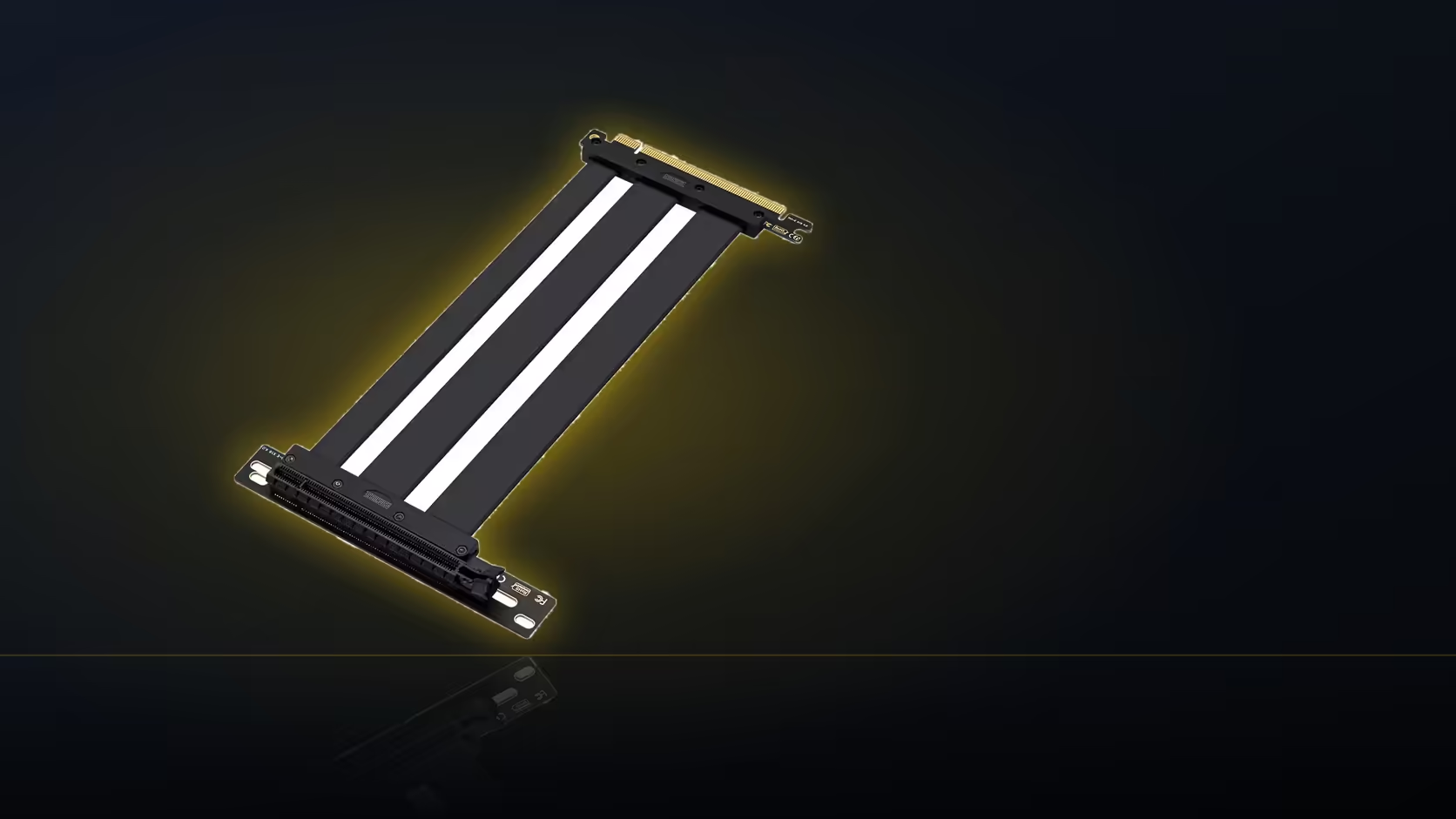
Look at the protective shell wrapped around a riser's connector and it is tempting to read it as more than what it is. The ABS shell on the AsiaHorse riser does a real job, but that job stops well short of supporting a graphics card's full weight.
Quick Answer
The ABS shell protects the cable's connector area from physical knocks; it does not support the weight of a graphics card. At R1,299 including VAT, this riser needs a separate mounting bracket to actually carry the card, since the shell was never designed as structural hardware.
🛡️ What the shell is actually for
AsiaHorse's listing describes a moulded plastic shell wrapped around the riser's connector end. Its role is to shield that connection point from knocks during handling, installation, and the general life of a build, since the connector is the most delicate part of the cable and the part most exposed to accidental contact when working inside a case. That protection is real and useful, but it is protection for the cable itself, not a structural feature designed to bear load.
⚖️ Why the distinction matters
It is easy to see a solid-looking shell wrapped around a connector and assume it must be doing more than shielding the plastic and pins underneath. Reading it as structural support, even unconsciously, can lead to a card ending up with nothing actually holding its weight beyond the riser and whatever it happens to be resting against. That is not a safe way to run a build, since card weight needs to be carried deliberately by hardware designed for that purpose, not by a cable's protective casing.
🪜 What actually carries the card's weight
The mounting bracket is the component doing the structural work, carrying the card's weight and fixing its position relative to the case. This is worth sourcing and fitting properly before the riser is treated as the finished solution, since the riser and the bracket solve entirely different problems that happen to work together in a vertical mount.
↕️ Card sag and vertical mounts
On a standard horizontal slot, a card's weight is supported along most of its length by the slot connection itself and any support bracket at the rear. Rotate that same card into a vertical position and gravity acts on it differently, pulling in a direction the original mounting was not designed around. This does not mean vertical mounting is a problem; it means the support requirements change rather than disappear, which is exactly why a proper bracket matters more here than it might seem to on paper.
What else the cable includes
Beyond the shell, AsiaHorse specifies gold-plated contacts, EMI-shielded 30AWG wiring, a right-angle slot connector, and the 200mm length itself. None of these, including the shell, are structural features. They describe a cable built to maintain a clean electrical connection over its route, which is a separate concern from what physically holds the card up.
Sourcing a bracket that actually carries the load is the real task here, and case accessories is where that search begins. A pass through graphics card accessories is worth adding too, for anything the mount needs beyond what the shell's own limited job covers.
🔧 Does the shell help during installation at all?
Yes, in a practical sense. Having a solid section to hold while seating the connector into the board slot makes the installation itself a little easier and reduces the chance of flexing the ribbon awkwardly during fitting. That is a genuine benefit, just not the same thing as structural support for the card.
Frequently Asked Questions
What does the ABS shell actually cover?
The connector area of the riser cable, protecting it from knocks during handling and installation.
Does the shell support the graphics card's weight?
No. Card weight is carried by the mounting bracket and the slot it sits in, not by the riser or its protective shell.
What happens without proper card support?
An unsupported card puts strain on its connector over time, which is worth avoiding regardless of how the electrical connection is made.
Is card sag different on a vertical mount?
Gravity acts on a rotated card differently than on a horizontal one, so support needs change rather than disappear.
What construction details does the cable have besides the shell?
Gold-plated contacts and EMI-shielded 30AWG wiring, alongside the 200mm length and the right-angle slot connector.
Does the shell help at all during fitting?
Yes, it gives a solid section to hold while seating the connector, which is a practical benefit even though it is not structural.
Sorting the structural side of a vertical GPU mount?
Check Evetech's case accessories to find a bracket built to actually carry the card's weight.