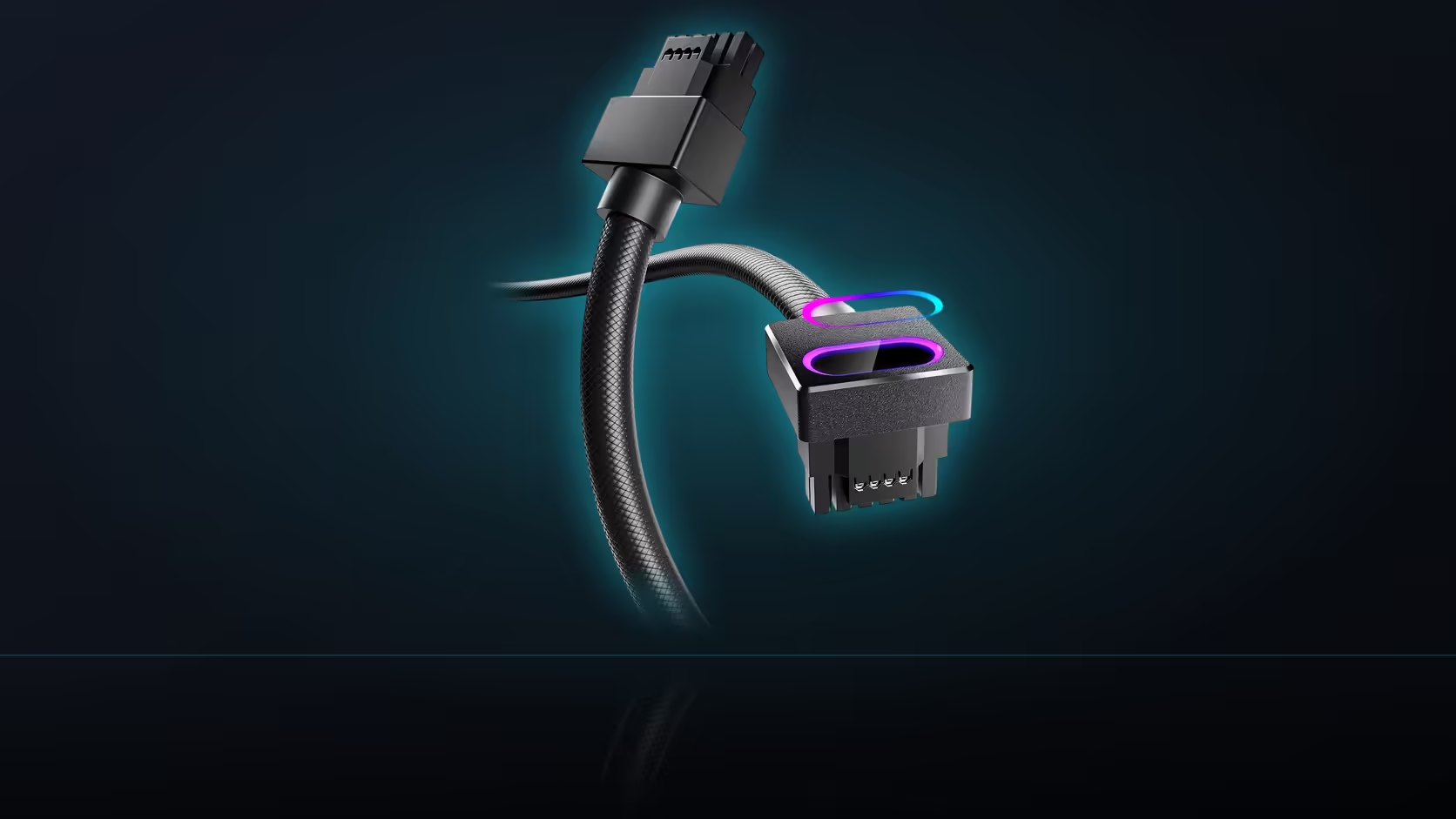
One head, two destinations. Everything about the Hydrus 16-pin cable appears to leave the card's power socket as a single bundle, but somewhere along the way a 5V 3-pin lead needs to peel off toward the motherboard while the power run continues on toward the supply - and deciding where that split happens is worth thinking about before the cable is dressed into its final position.
Quick Answer
Alongside its 16-pin power connection, this R699 AsiaHorse cable carries a 5V 3-pin lead terminating at an addressable header on the motherboard. That is a second destination the route has to account for, separate from where the power path itself is headed - worth planning before either lead gets tied down permanently.
Where each lead is actually going
The 16-pin connection runs from the power supply's modular socket to the card, carrying the current the GPU needs. The 5V 3-pin lead has a completely different endpoint: an addressable RGB header somewhere on the motherboard, which could sit near the top edge, along a side, or tucked behind the card depending on the board's layout. Both leave the same head at the card end, but they are headed in genuinely different directions from that point.
Choosing where the paths diverge
The two leads leave together but should not necessarily be routed together for their entire length. A sensible split point is wherever the shared route passes closest to whichever header you intend to use - from there, the lighting lead takes the shortest sensible path to that header rather than following the power cable's route any further than necessary.
Should the lighting lead be tied to the power cable?
Light cable ties along the shared portion of the route keep things tidy without much downside, provided they are not pulling the thinner lighting lead tight against the heavier power cable in a way that would make it hard to access or adjust later. Once the paths diverge toward the header, it generally makes sense to manage them as separate runs rather than continuing to bundle them.
Reach: is the lead long enough for any header?
The 5V 3-pin lead is sized to work with this specific cable, and whether it comfortably reaches your chosen header depends on where that header sits and how the main run is positioned. A header close to where the power cable naturally passes is an easy reach; one on the opposite side of the board from the graphics card can be considerably more of a stretch, worth checking before assuming it will simply work out.
What if no header is available
The card is powered normally through the 16-pin connection regardless of whether the lighting lead is ever connected to anything. If your board has no free addressable header, or you simply do not want the lighting synced, the lead can be left unattached entirely with zero effect on the cable's core job.
One more thing to keep clear of
Wherever the lighting lead is routed, keep it clear of the head itself so it does not obstruct the view when you come to check the power connector for a proper seat - a stray lead crossing right in front of the joint makes that inspection harder than it needs to be.
Browse comprehensive cable solutions for the cable range, and see graphics card accessories for the remainder of an ARGB-synced build.
Frequently Asked Questions
Where does the ARGB lighting lead actually terminate?
At an addressable header on the motherboard, using a standard 5V 3-pin connection separate from anything on the power supply.
Does the lighting lead follow the same path as the power cable?
It leaves from the same head, but the two paths have different destinations, so they diverge somewhere along the route.
Where is the best place to split the two leads?
Wherever the shared route passes nearest a suitable header, so the lighting lead takes the shortest path from that point.
Should the lighting lead be tied to the power cable along its length?
Light ties are fine for tidiness, provided they do not pull the thinner lead tight against the heavier one where it becomes hard to adjust later.
Is the lead guaranteed to reach any addressable header?
It is sized for the cable, but actual reach depends on where the chosen header sits and how the main run is positioned.
What if my motherboard has no free addressable header?
The card powers normally through the 16-pin connection with the lighting lead simply left unattached - no effect on the power path.
Does the lighting lead's routing affect the connector seating check?
No directly, but keep it clear of the head so it does not obstruct the view when inspecting the power connector for a proper seat.
Figuring out where to route the lighting lead on your board?
Locate a free addressable header first, then browse Evetech's graphics card accessories for the rest of your ARGB build.