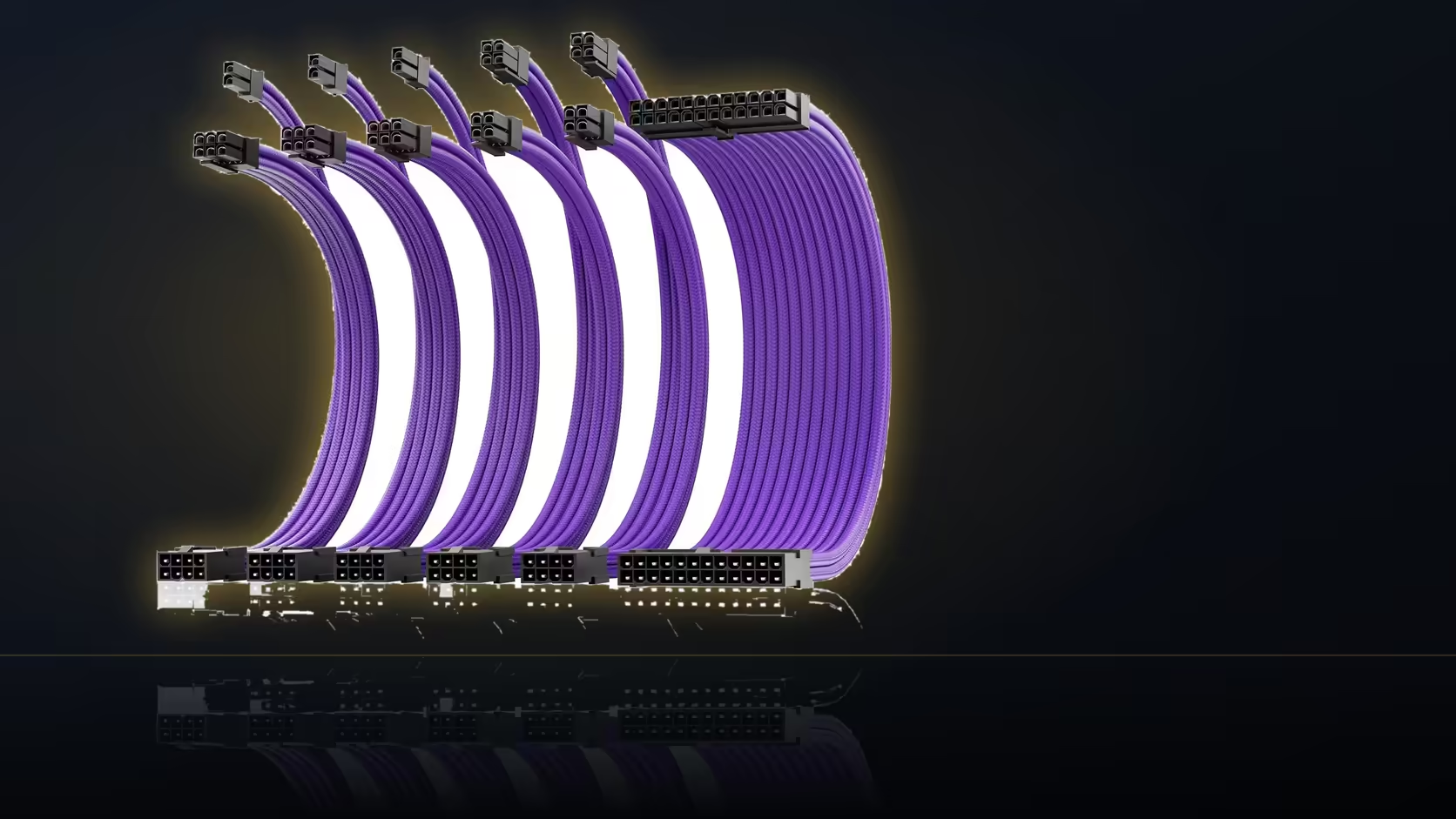
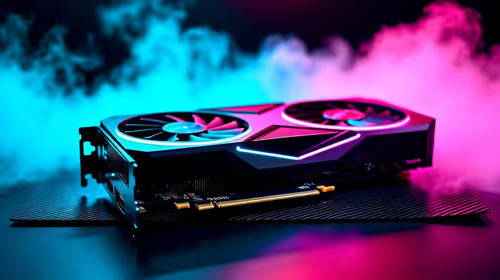
Six identical-looking sleeved leads sitting loose on a bench could easily turn into a guessing game about which piece goes where. The 6+2 split on every graphics extension, set against the 4+4 split on every processor extension, is precisely what stops that guessing game from ever starting.
Quick Answer
All three card extensions are 6+2 and both processor extensions are 4+4. Look at the split and the two groups cannot be confused. The housings are keyed as well, which stops a six-lead kit becoming a guessing game.
🚫 Can a processor lead reach a card socket
No - despite both being built around an eight-pin shell, a processor lead cannot seat in a graphics card socket, because the pin arrangement inside the housing and the physical keying that guides the connector differ between the two connector families. The plug simply stops well short of seating fully, rather than forcing its way in incorrectly, so there is no risk of a mismatched connection even under a rushed attempt.
👁️ The fastest visual check
Counting the split on any given plug settles the identification instantly: four pins and four pins marks the processor group, six pins and two pins marks the card group, and that rule holds without exception across every single piece in this kit. It is a faster and more reliable check than trying to remember which piece came from which part of the box, especially once several leads have been unpacked together.
🎨 Why colour will not help here
Within a single kit, every piece shares an identical sleeving finish, so colour offers absolutely no way to distinguish a processor lead from a card lead when both come from the same box - a Black kit gives you six black cables that look nearly identical at a glance. The split pattern is the only genuinely reliable identifier once the leads are loose and unlabelled, and it is worth relying on that rather than memory or guesswork.
🔧 Why the card lead splits at all
The card extension's 6+2 design exists specifically so a single cable can serve both six-pin and eight-pin graphics sockets without needing two separate pieces - the detachable two-pin section simply folds away neatly when a card only requires the smaller six-pin connection. That flexibility is built into the connector's physical shape, not something the sleeve or the extension itself adds on top.
⚠️ What happens trying the wrong connector
The physical keying built into every housing stops an incorrect connector well before any pins make contact, so the ordinary outcome of attempting the wrong plug is simply that it refuses to seat - not damage to either the connector or the socket it was being pushed toward. And the 24-pin main board lead sits entirely outside both of these eight-pin groups, standing alone as the piece serving the main board socket with none of the four-and-four or six-and-two logic applying to it at all. What else sits in this category shows up at cable solutions, while a build needing more than a standard six-piece kit supplies should look at individually sleeved premium cables next.
Frequently Asked Questions
Can a processor lead reach a card socket?
No. Both are eight-pin shells, but the pin arrangement and the keying differ, so the plug stops well short of seating.
What is the quickest visual check?
Count the split. Four and four is the processor group, six and two is the card group, and nothing in the kit breaks that rule.
Do the sleeve colours help tell them apart?
Not inside one kit, since every piece shares a finish. The split is the only reliable identifier when the leads are loose.
Why does the card lead split at all?
So one cable serves both six-pin and eight-pin sockets. The detachable two-pin section folds aside when a card only needs six.
Is there any risk in trying the wrong one?
The keying stops it before contact, so the normal outcome is simply that the plug refuses to go in.
Does the 24-pin lead fit into either group?
It stands alone, serving the main board socket, and nothing about the eight-pin groups applies to it.
Sorting six identical-looking leads before fitting?
Have a look at Evetech's power supply range and use each connector's split pattern to tell the pieces apart.