The number printed on a riser cable box tells you less than it seems to. Two hundred millimetres sounds like a straightforward measurement until you try to plan a route with it, and the moment a single bend enters the picture, that number stops behaving the way a straight ruler suggests it should.
Quick Answer
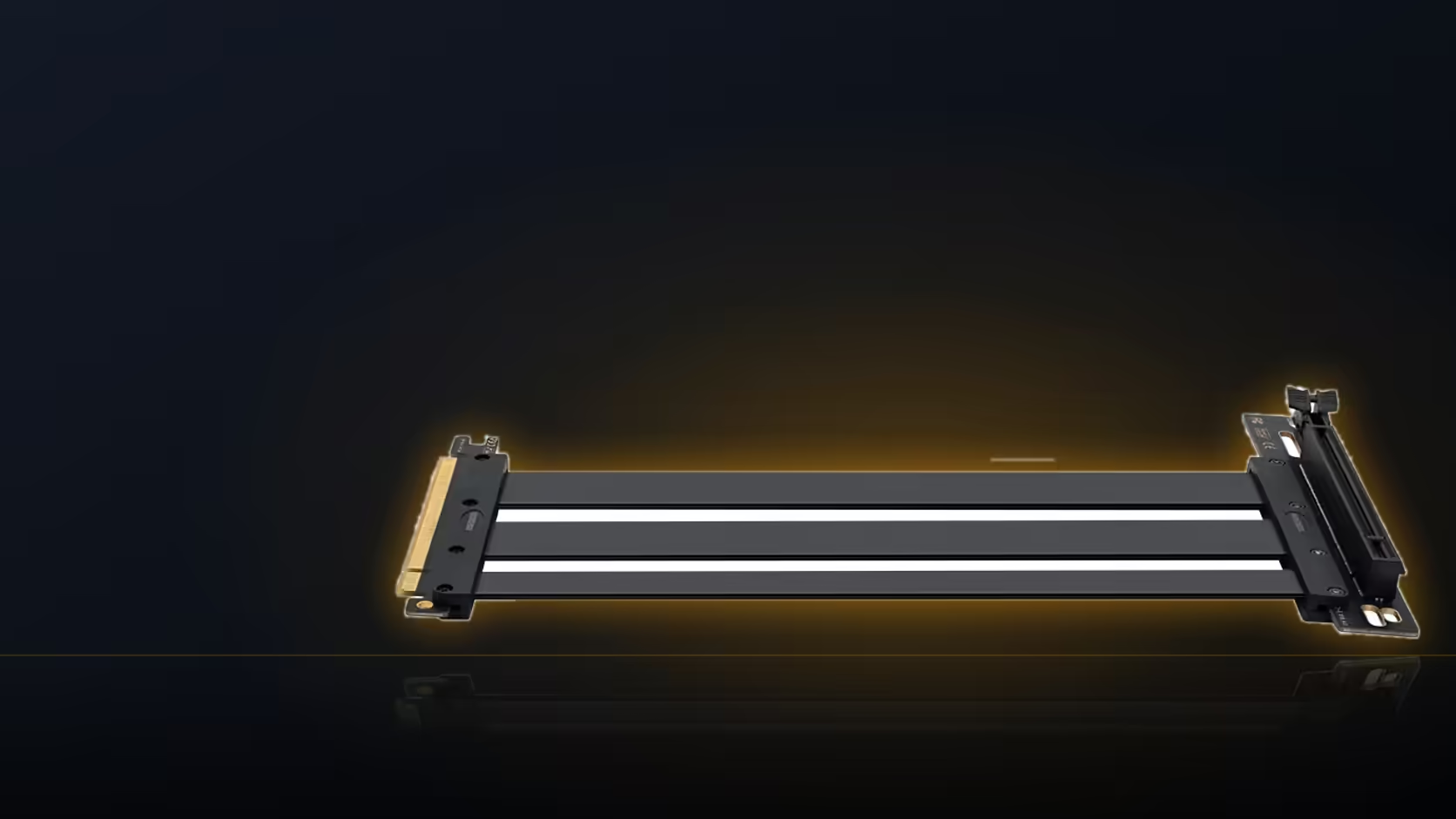
The 200mm figure describes the AsiaHorse riser cable itself, not a straight-line distance you can measure with a tape. At R1,299 including VAT, this single-length cable needs its actual route, including every turn, mapped out before ordering.
📐 Why the spec number and the route number differ
A cable's stated length is the length of the cable, full stop. It says nothing about how much of that length gets used covering a straight gap versus how much gets used turning a corner. A route measuring a clean 180mm in a straight line between two points can still exceed a 200mm cable once you add the bends the actual installation requires.
This is the single most common way a riser purchase goes wrong: someone eyeballs how far the bracket sits from the board slot, sees it looks comfortably under 200mm, and only discovers the shortfall once the cable is in hand and the route includes turns nobody accounted for.
🔄 How many turns a typical route has
Most vertical-mount routes involve at least two turns: one leaving the board slot, and another arriving at the card's connector on the bracket. Depending on the case layout, there are often more, particularly where the path has to work around other components, cooling fans, or power cabling on its way from one end to the other.
How tight a bend can be
Ribbon cables generally prefer gentle curves over sharp folds. A tighter bend uses less of the cable's physical length than a wide sweep would, but it is worth avoiding tight folds purely for the cable's own sake, since a sharp crease is a stress point that can weaken the ribbon over time.
🧵 The practical way to measure it
String or a strip of card, laid along the exact intended path and bent wherever the cable would bend, gives you the real number. Measure the string once it is straightened out, and compare that figure against the 200mm the cable provides, rather than trusting a tape measure held between the two end points.
🔀 Does the right-angle connector help?
It does, to a degree. AsiaHorse's riser uses a right-angle slot connector rather than one standing straight up from the board, which turns the cable immediately at the slot instead of requiring a separate bend further along the route. That can meaningfully shorten the effective distance needed, provided the direction it turns actually matches the route your case requires.
⚠️ If the route won't fit
AsiaHorse sells this riser in a single 200mm length, so there is no longer version to switch to. If the measured route exceeds that, the practical options are adjusting the bracket position, choosing a nearer x16 slot if the board has more than one, or accepting that this particular case and cable combination will not reach. For the wider planning around a vertical mount, case accessories is the better starting point since the bracket position drives the whole measurement; graphics card accessories fills out the search for anything else the relocation needs.
It is also worth leaving a small amount of slack rather than planning right to the cable's absolute limit, since a route with no margin makes fitting harder and leaves no room for future access to the case.
Frequently Asked Questions
Why do turns matter so much to the length?
Because a cable following a curve travels further than the straight-line distance between its two ends, sometimes considerably so.
How many turns does a typical route involve?
Usually at least two, one leaving the slot and one arriving at the bracket, with more where the path clears other components.
What is the most reliable way to measure?
String laid along the actual path, bent at every turn the cable will make, then measured once straightened out.
Does the right-angle connector save length?
Often yes, by turning the cable immediately at the slot rather than needing a separate bend elsewhere in the route.
What if the measured route exceeds 200mm?
This riser comes in one length only, so the route needs shortening through bracket or slot choice, since no longer version exists.
Should slack be built into the plan?
Yes, a small amount, since a route measured right to the limit is harder to fit and leaves no room for later adjustment.
About to measure a route for a vertical GPU mount?
Look through Evetech's case range for options with clearly documented vertical mounting positions.