Quick Answer
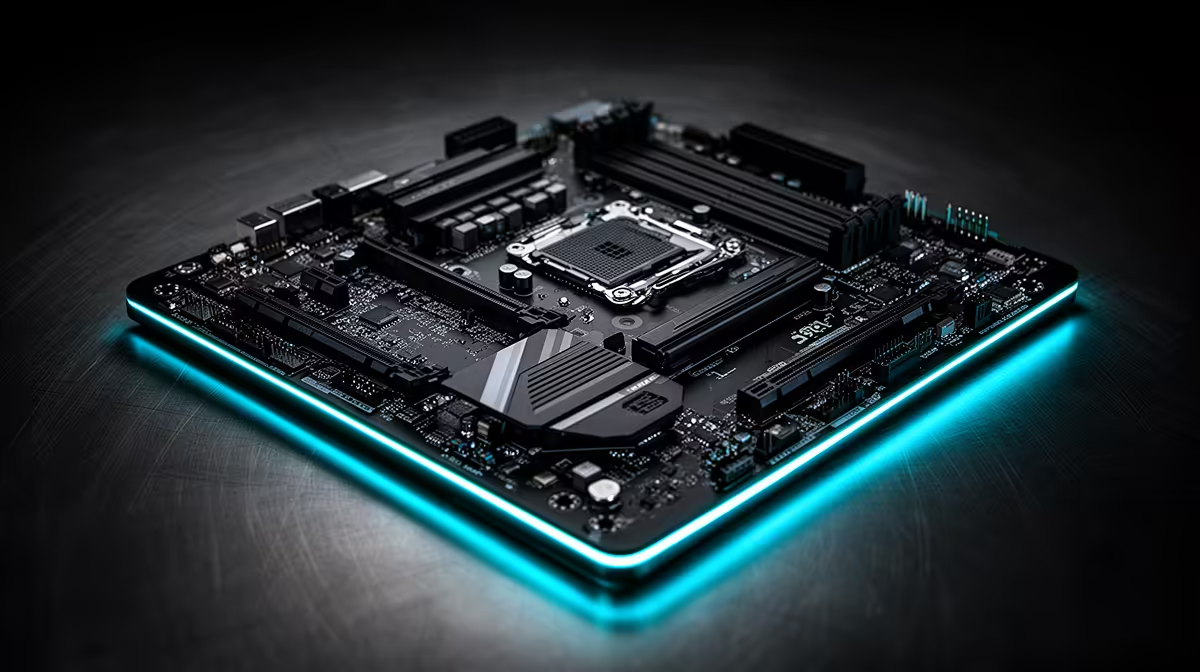
The no-regret choice is the motherboard that matches the job before it adds premium extras. For VR gaming, use MSI B650 Tomahawk, ASUS TUF Gaming B760-Plus and Gigabyte X670E AORUS Elite as the comparison baseline, check VRM phases, M.2 slots, PCIe 5.0 support, BIOS flashback and 2.5GbE LAN, and keep the first shortlist within about R1,800-R8,500 for mainstream boards, with premium boards climbing higher.
What To Check First
For VR gaming, the first filter is not the most expensive model; it is whether the product removes the problem that pushed you to shop. First check CPU socket, RAM type, case size, BIOS support, front-panel headers and future GPU clearance. In South Africa, verify warranty handling and courier timing before paying.
A named baseline: MSI B650 Tomahawk, ASUS TUF Gaming B760-Plus and Gigabyte X670E AORUS Elite. The board does not add fps by itself, but weak VRMs, poor BIOS support or too few M.2 slots can limit a build later.
Specs That Actually Change Daily Use
The useful spec floor is VRM phases, M.2 slots, PCIe 5.0 support, BIOS flashback and 2.5GbE LAN. That is the part of the purchase that changes daily use.
Spend more when you need extra M.2 slots, stronger VRMs, USB-C, Wi-Fi or clean BIOS recovery. Tie the final choice to the real bottleneck: heat, noise, storage, wattage, desk space, latency, comfort or compatibility.
Where SA Buyers Overspend
The planning band here is about R1,800-R8,500 for mainstream boards, with premium boards climbing higher; go higher only for stronger materials, lower noise, extra capacity or useful I/O.
Before checkout, write down the one problem this purchase must solve. If the answer is still broad, measure watts, desk space, fan clearance, capacity, hand size, coverage or target fps.
FAQ
How much should SA buyers budget for motherboard?
Use about R1,800-R8,500 for mainstream boards, with premium boards climbing higher as a cautious planning band, then confirm live stock and warranty terms before checkout.
Which spec matters most for VR gaming?
Start with VRM phases, M.2 slots, PCIe 5.0 support, BIOS flashback and 2.5GbE LAN. Then check CPU socket, RAM type, case size, BIOS support, front-panel headers and future GPU clearance against the room, desk, case or platform already in use.
What is the easiest mistake to avoid?
Avoid buying features for a future build while the current CPU, RAM and case cannot use them. That single check prevents many returns and surprise add-on purchases.